в ИндияТудей
In 1924 a birth control league was established in Bombay and the secretary wrote to [Mahatma] Gandhi, seemingly to ask for his blessings as it would help the Indian population problem. Gandhi responded: "I am totally opposed to artificial means of controlling the birth rate, and it is not possible for me to congratulate you or your co-workers on having brought into being a League whose activities, if successful, can only do great moral injury to the people." Margaret Sanger entered the ensuing debate writing to Gandhi in protest.
Gandhi replied that he was open to further education on the subject and Sanger started planning a visit to India. … She came following an invitation to speak at the All-India Women's Conference, which the previous year had passed a resolution favouring birth control and now wanted to draw up a practical programme of action. How could she refuse? It seems that India was ready for her; by the time she completed her stay, she had travelled 10,000 miles, presided over more than 40 public meetings and had established some 50 birth control information centres. And she was more than ready to take her crusade to the subcontinent and to its perceived moral leader. Although originally expected to arrive on November 26, 1935, it was not until a week later that, after a bullock cart ride from Wardha railway station, Sanger arrived at Gandhi's headquarters on December 2, a Monday, Gandhi's day of silence. … The next day, after having accompanied Gandhi on his accustomed early morning walk, she was granted an interview at 11 and it continued till 3 o'clock.
Margaret Sanger's diary notes that the arguments in the formal interview "were along the same lines as in the morning", and she felt that "his personal experience at the time of his father's death was so shocking and self-blamed that he can never accept sex as anything good, clean or wholesome." During the interview … Gandhi counselled celibacy: "I have felt that during the years still left to me if I can drive home to women's minds the truth that they are free, we will have no birth control problem in India. If they will only learn to say 'no' to their husbands when they approach them carnally! … The real problem is that many do not want to resist them."
Not unexpectedly, Sanger raised the phantasmagoria of "irritations, disputes, and thwarted longings that Gandhiji's advice would bring into the home", citing cases of "great nervous and mental breakdowns as a result of the practice of self-control."
Gandhi countered that this would only be the case with "imbeciles", not with "healthyminded people". When Sanger insisted that his advice was not practical, that it would "mean a revolution in the home" and lead to divorce because "the average marriage contract assumes that intercourse and the married relationship shall be harmonious", Gandhi tried to draw a distinction between love and lust: "When both want to satisfy animal passion without having to suffer the consequences of their act it is not love, it is lust."
Sanger did not accept the analogy, explaining that "sex expression is a spiritual need" and that the quality of the expression is "more important than the result". She tried to get Gandhi to admit that he was against "sex lust" rather than "sex love"; however when she asked him whether he thought "it possible for two people who are in love, who are happy together, to regulate their sex act only once in two years, so that relationship would only take place when theywanted a child?", Gandhi answered that "I had the honour of doing that very thing". Sanger saw it as "illogical to contend that sex union for the purpose of having children would be love and union for the satisfaction of the sexual appetite was lust, for the same act was involved in both." Gandhi explained that he knew that all sexual unions partook of the nature of lust from his own personal experience because "as long as I looked upon my wife carnally, we had no real understanding. Our love did not reach a high plane."
Sanger responded by asking if that meant that "the sexual union takes place only three or four times in an entire lifetime?" In response to the woman who, like Olive Schreiner 30 years before her, had been a lover of Havelock Ellis, the pioneer of sexology and author of the seven- volume Studies in the Psychology of Sex, Gandhi responded: Why should people not be taught that it is immoral to have more than three or four children and that after they have had that number they should sleep separately? … If husband and wife have four children, they would have had sufficient animal enjoyment."
Not long before his discussion with Margaret Sanger, Gandhi received a letter from a councillor of the Municipal Corporation of Bombay asking him to support the opening of a birth control clinic … and issuing posters advising people to take advantage of it. Gandhi replied: "Everybody would welcome sex gratification without having to have children. Therefore the means of ensuring this are spreading like intoxicants. If there is any cause for regret, it is only that what is morally bad is being regarded as morally desirable."
In her autobiography Sanger notes that even though Gandhi appeared to be going along with her in their discussions, as soon as she stopped he continued "as though he had not heard you", putting up a "stone wall of religion or emotion or experience" which she could not "dynamite him over".
However, he had heard her, and tried hard to counter her arguments, and perhaps Sanger had slightly more impact on him than she imagined or he admitted to. At the end of the session of interviews, Gandhi conceded that he thought highly of Sanger's purpose, otherwise he "would not have given time to this subject". As a conclusion to the section of his article that contains the interview with Margaret Sanger, Desai wrote:
"And yet as Mrs Sanger was so dreadfully in earnest Gandhiji did mention a remedy which could conceivably appeal to him. That method was the avoidance of sexual union during unsafe periods confining it to the 'safe' period of about ten days during the month. That had at least an element of self-control which had to [be] exercised during the unsafe period."
What had induced this change? Later a close friend and member of his secretariat, Rajkumari Amrit Kaur [independent India's first health minister], was to recall how the talks with Sanger "grew tense and strangely exciting, as if longburied trains of thought were emerging".
Gandhi biographer Martin Green claims that the encounter left [the Mahatma] exhausted, resulting in his hospitalisation and a breakdown in his health that "was very painful to him because it involved an episode of involuntary sexual excitement." Green appears to be making a causal link between Gandhi's seminal discharge and the resurfacing of buried emotions, particularly those that had led to the platonic yet sexually charged love affair (or spiritual marriage) with Sarala Devi Chaudhurani [pioneering women's rights activist, Rabi- ndranath Tagore's niece and wife of Punjab Congress leader Rambhuj Dutt Chaudhary] that had fleetingly threatened his own marriage in 1920.
This is not an outrageous interpretation.
In her interviews, Sanger had put to Gandhi that, "If we have a choice in our mates [as he did not] there is a natural sex attraction between two people. You then have a different experience and in the experience an expression of love which makes you a finer human being ... and contributes to a finer understanding and a greater spiritual harmony."
GANDHI'S response was illuminating: "I had a woman with whom I almost fell. It is so personal that I did not put it in my autobiography. We have considered if there can be this spiritual companionship. The marriage relationship is a matter of contract. Your parents arrange it in your childhood and you have nothing to do with it. I came in contact with an illiterate woman. Then I met a woman with a broad, cultural education. Could we not develop a close contact, I said to myself? This was a plausible argument, and I nearly slipped. But I was saved."
In an article on birth control that appeared in his paper only a few months later, Gandhi reiterated that he would agree to at least consider the rhythm method of birth control, even though he did it reluctantly. Although she had no luck in convincing Gandhi of her position, her lecture tour of India led to the opening of several birth control clinics in the country. When, in 1959, Prime Minister Nehru declared that a large sum of money would go to family planning in India, Margaret Sanger was standing at his side.
- Extracted with permission from Going Native: Gandhi's Relationship with Western Women (Roli Books Lotus Collection; Rs 295). Weber, who teaches at Melbourne's La Trobe University, has been researching and writing on Gandhi's life for over 20 years.
November 15, 2010


November 13, 2010
в следущем году 90 лет
November 11th - 13th 1921
In her opening speech at the Conference, Sanger made some interesting points about the importance of exchanging ideas, the diverse perspectives of the crowd, and about the necessity of birth control:
надо бы узнать список участников
In her opening speech at the Conference, Sanger made some interesting points about the importance of exchanging ideas, the diverse perspectives of the crowd, and about the necessity of birth control:
“The idea in calling this Conference was to bring together not our old friends, the advocates of Birth Control, whose worth we know and whose courage has stood the test of opposition; but rather to bring together new people, with other ideas, the people who have been working in social agencies and in other groups for the same results as we, namely a better nation and the banishment of disease, misery, poverty, delinquency and crime.”[Read the full speech here.]
“There are two instincts which have ever guided the destiny of mankind. These instincts are hunger and sex. The instinct of hunger has received consideration in practically every civilized country and man has adapted his institutions to meet its needs. But the instinct of sex has been ignored. Not I claim, and most of us who make a study of the subject know, that this instinct is just as deep, just as fundamental, as the instinct of hunger. It cannot be crushed. It cannot be denied. But we must understand it. We will then utilize it, as we utilize music and prayer for out highest powers and for higher illumination.”
“Our definite aim is to repeal the laws so that the medical profession may give women at their request knowledge to prevent conception. We believe that with the assistance of the intelligent members of the community we can bring this about in a very short time, but we need your help. We need your courage. We need you to come out and stand with us on out platform. We also want your guidance, your assistance, your suggestions.”
The Town Hall Raid
надо бы узнать список участников
November 11, 2010
фото: жаба и монтаж
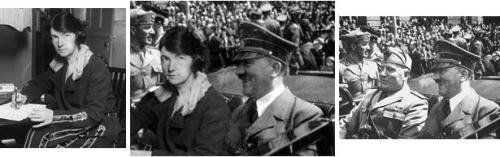
“The first thing I want to say in relation to my attitude regarding the present War and World Peace is that before Hitler came into power in Germany I was one of the few Americans who joined the Anti-Nazi Committee and gave money, my name and any influence I had with writers and others, to combat Hitler’s rise to power in Germany.”
“When Hitler got into the saddle and burned all books he considered (not immoral) but dangerous to the State, my three books were destroyed and have not been allowed to circulate in Germany. The publisher and translator were put into concentration camps and I have never heard of them since.”
“I firmly believe that Europe will not have a just Peace until Germany gets rid of Hitler, but also shall Italy, England and France get rid of their own leaders whom History will certainly identify as War Lords.”
источник блог МСБП и сам проект
November 8, 2010
Питирим Сорокин о сексуальной революции
цитата 1956 года:
Among the many changes of the last few decades, a peculiar revolution has been taking place in the lives of millions of American men and women… it goes almost unnoticed. … Unmarked by dramatic events on a large scale, it is free from civil war, class struggle, and bloodshed. …It does not try to overthrow governments… Without plan or organization, it is carried on by millions of individuals, each acting on his own….Its name is the sexual revolution.
дальше истошнег порет ахинею:
In 1870 there was one divorce for every 33.7 marriages. By 1956 that number had already changed to 1 divorce for every 3 marriages (Revolution, p. 8). This is not a significant difference from where we are today, with roughly 1 divorce for every 2 marriages.
-- не мудрено: продоложительность жизни то возросла, а попробуй поживи лет 20, хотя в браке трудно только первые 70 лет
но +
In the late nineteenth century, Sigmund Freud would argue that “sexual love [is] the prototype of all happiness.” Among other things, this definition implied that love is based ultimately on the pursuit of pleasure-a quest to satisfy the self rather than others. Thus the self-sacrificial love of agape, rooted in the Christian worldview, would begin to be supplanted by the self-centered desire of eros or erotic love, rooted in the autonomous self.
On the heels of Freud came Margaret Sanger, founder of the American Birth Control League in 1921, which would go on to become Planned Parenthood. Sanger, like Freud, argued that the repression of sexual desires was harmful, adding that such repression would result in negative health consequences and even the inhibition of intellectual capacity-not an uncommon theory in her era. From our vantage point, we easily see Sanger as a moral monster. However, Sanger’s argument for abortion as a tool for population control and poverty alleviation gained traction precisely because there was growing agreement with Darwinism and eugenics among elites, which was buoyed by a racism among the populace that was prevalent at the time.
Among the many changes of the last few decades, a peculiar revolution has been taking place in the lives of millions of American men and women… it goes almost unnoticed. … Unmarked by dramatic events on a large scale, it is free from civil war, class struggle, and bloodshed. …It does not try to overthrow governments… Without plan or organization, it is carried on by millions of individuals, each acting on his own….Its name is the sexual revolution.
дальше истошнег порет ахинею:
In 1870 there was one divorce for every 33.7 marriages. By 1956 that number had already changed to 1 divorce for every 3 marriages (Revolution, p. 8). This is not a significant difference from where we are today, with roughly 1 divorce for every 2 marriages.
-- не мудрено: продоложительность жизни то возросла, а попробуй поживи лет 20, хотя в браке трудно только первые 70 лет
но +
In the late nineteenth century, Sigmund Freud would argue that “sexual love [is] the prototype of all happiness.” Among other things, this definition implied that love is based ultimately on the pursuit of pleasure-a quest to satisfy the self rather than others. Thus the self-sacrificial love of agape, rooted in the Christian worldview, would begin to be supplanted by the self-centered desire of eros or erotic love, rooted in the autonomous self.
On the heels of Freud came Margaret Sanger, founder of the American Birth Control League in 1921, which would go on to become Planned Parenthood. Sanger, like Freud, argued that the repression of sexual desires was harmful, adding that such repression would result in negative health consequences and even the inhibition of intellectual capacity-not an uncommon theory in her era. From our vantage point, we easily see Sanger as a moral monster. However, Sanger’s argument for abortion as a tool for population control and poverty alleviation gained traction precisely because there was growing agreement with Darwinism and eugenics among elites, which was buoyed by a racism among the populace that was prevalent at the time.
November 5, 2010
проверить: что за люди?
Voltairine do Clayre, a
Louise Michel, an
Emma Goldman, or an
Elizabeth Flynn
хотя 2х последних знаю
ссылка
Louise Michel, an
Emma Goldman, or an
Elizabeth Flynn
хотя 2х последних знаю
ссылка
What Every Girl Should Know

о программе по истории контроля рождаемости в 1910 е гг
Layne Craig, a lecturer in the Department of English at The University of Texas at Austin, recently used materials from the Ransom Center’s collections to supplement her class “Literature of the Birth Control Movement.
linx:
- The Literature of Birth Control
- case of Mary McCarthy
- Final papers (regulatiobs)
- Birth Control time line (mostly US)
First Birth Control Clinic Opened
Jul 1, 1878 12:00 pm
Aletta Jacobs opened the first-ever clinic in Amsterdam. Sanger and Stopes used the Netherlands as an example of progressive birth control legislation throughout their careers.
Annie Besant arrested
Jul 1, 1877 12:00 pmBesant and her husband were arrested in England for publishing Charles Knowlton's Fruits of Philosophy, a book outlining some contraception methods.
Link: http://books.google.com/books?...age&q&f=false November 3, 2010
short list of Sanger's Lovers
из статейки некой католички (в целом бессердечно лицемерной и со стандартным набором подлогов):
- sexologist Havelock Ellis,
- writers H. G. Wells and
- Hugh de Salincourt,
- anarchist Lorenzo Portet, and
- architect Angus Snead McDonald
November 2, 2010
Feminists for Choice Explore Issues of Sanger and Race
Нашёл проект сэнгеровских бумаг на wordpress'е
On the Feminists for Choice blog, Serena Freewomyn posted “Was Margaret Sanger a Racist?” The post offers a quick look at a topic much in the blogosphere, and while we don’t entirely agree with the author’s analysis, it at least adds some context to the debate . The comments posted on the article are just as interesting as the blog itself.
In the interest of adding to the conversation, we’d like to provide a bit more information about Sanger and the Negro Project.
The Negro Project was an attempt to empower the black community to rise out of poverty through the use of birth control. The project was widely supported by black leaders, including Mary McLeod Bethune, W. E. B. DuBois, and Rev. Adam Clayton Powell, Jr.
Furthermore, Sanger did not enter the project without first observing a desire for reproductive health information from black women in the communities that she intended to work within.
Hazel Moore, a veteran lobbyist and health administrator, ran a birth control project under Sanger’s direction and found that black women in several Virginia counties were very responsive to birth control education. A 1938 trip to Tennessee further convinced Sanger of the desire of African-Americans in that region to control their fertility and the need for specific programs in birth control education aimed at the black community.
After observing this need Sanger teamed up with the Birth Control Federation of America to get funding for a campaign that would teach Southern black women about contraception. Unfortunately once they secured funding the project left Sanger’s control. She had wanted to train a black minister and a black doctor to tour the South, preaching about contraception in every city, church, and organization that they could. She believed that this step was necessary to drum up support and gain the community’s trust before launching a practical campaign that would actually supply contraception to black mothers.
The men running the Birth Control Federation of America decided that they wanted to go a different route, to include working birth control services for the black community into the general public health program, without any prior education in the community. They also refused Sanger’s idea to build a black-staffed clinic within the community, choosing instead a more mobile plan that swept in and out of the area like the vaccination caravans of the time.
The Negro Project was fairly problematic because, as devised, it centralized control in the hands of white physicians, which did not empower the black community. It is important to note that this was not Sanger’s vision, this is what happened after her input in the project was ignored and her influence taken away.
Margaret Sanger’s papers make it clear that she wanted to develop a project that would empower black community leaders to bring contraception options and education to the people of their own communities. It’s unfortunate that she lost control of the project and it did not become what she had envisioned. It is also unfortunate that her efforts on behalf of people of color and other impoverished mothers have been turned into an example of some evil plot by writers who do not take the time to understand Sanger’s intentions.
ещё про негритянский проект
On the Feminists for Choice blog, Serena Freewomyn posted “Was Margaret Sanger a Racist?” The post offers a quick look at a topic much in the blogosphere, and while we don’t entirely agree with the author’s analysis, it at least adds some context to the debate . The comments posted on the article are just as interesting as the blog itself.
In the interest of adding to the conversation, we’d like to provide a bit more information about Sanger and the Negro Project.
The Negro Project was an attempt to empower the black community to rise out of poverty through the use of birth control. The project was widely supported by black leaders, including Mary McLeod Bethune, W. E. B. DuBois, and Rev. Adam Clayton Powell, Jr.
Sanger proposed this project because she wanted to help “a group notoriously underprivileged and handicapped to a large measure by a ‘caste’ system that operates as an added weight upon their efforts to get a fair share of the better things in life. To give them the means of helping themselves is perhaps the richest gift of all. We believe birth control knowledge brought to this group, is the most direct, constructive aid that can be given them to improve their immediate situation.”Sanger was targeting the black community because, at the time, most of that community was at a disadvantage. The racism that wove through American history made it consistently more difficult for people of color to get ahead was the ‘caste’ system that left the black community, “notoriously underprivileged and handicapped” according to Sanger. In conceiving this project Sanger wasn’t trying to use birth control as a means of getting rid of people of color; instead, she wanted the Negro Project to give a marginalized community power over their bodies and the ability to decide how many children to have. This would, in turn, make it easier for them to provide for themselves and get ahead.
- Margaret Sanger to Mary Lasker on July 10, 1939. [Source]
Furthermore, Sanger did not enter the project without first observing a desire for reproductive health information from black women in the communities that she intended to work within.
Hazel Moore, a veteran lobbyist and health administrator, ran a birth control project under Sanger’s direction and found that black women in several Virginia counties were very responsive to birth control education. A 1938 trip to Tennessee further convinced Sanger of the desire of African-Americans in that region to control their fertility and the need for specific programs in birth control education aimed at the black community.
After observing this need Sanger teamed up with the Birth Control Federation of America to get funding for a campaign that would teach Southern black women about contraception. Unfortunately once they secured funding the project left Sanger’s control. She had wanted to train a black minister and a black doctor to tour the South, preaching about contraception in every city, church, and organization that they could. She believed that this step was necessary to drum up support and gain the community’s trust before launching a practical campaign that would actually supply contraception to black mothers.
The men running the Birth Control Federation of America decided that they wanted to go a different route, to include working birth control services for the black community into the general public health program, without any prior education in the community. They also refused Sanger’s idea to build a black-staffed clinic within the community, choosing instead a more mobile plan that swept in and out of the area like the vaccination caravans of the time.
The Negro Project was fairly problematic because, as devised, it centralized control in the hands of white physicians, which did not empower the black community. It is important to note that this was not Sanger’s vision, this is what happened after her input in the project was ignored and her influence taken away.
Margaret Sanger’s papers make it clear that she wanted to develop a project that would empower black community leaders to bring contraception options and education to the people of their own communities. It’s unfortunate that she lost control of the project and it did not become what she had envisioned. It is also unfortunate that her efforts on behalf of people of color and other impoverished mothers have been turned into an example of some evil plot by writers who do not take the time to understand Sanger’s intentions.
ещё про негритянский проект
October 16, 2010
16 октября
In 1916, Margaret Sanger opened the first birth control clinic, in Brooklyn, N.Y.
(The clinic ended up being raided by police and Sanger was arrested.)
94 года, так штоли?
вот времечко летит :)
(The clinic ended up being raided by police and Sanger was arrested.)
94 года, так штоли?
вот времечко летит :)
October 9, 2010
йа! креведко
| Ваш Тотем раскрылся! Это... Лосось |
Это создание всю жизнь проводит в постоянном движении, уходя из родного гнездышка и возвращаясь, чтобы вывести свое собственное потомство, причем никогда не сходит с намеченного еще далекими предками маршрута. Жизнь порой кажется вам скучной и однообразной, но вы отнюдь не стремитесь выбиться из родного течения и отправиться исследовать другие возможные пути. Такие как вы отличаются поразительным хладнокровием и некоторой флегматичностью, иными словами, вы не спешите принимать решения, да и вообще не любите действовать. Зачем что-то менять, если знаешь, что лучшего уже не найдешь? И все же, иногда стоит иметь запасные пути оступления, иначе вы рискуете угодить на "медвежий нерест". Почему бы вам не попробовать что-нибудь новое, впустить свежую струю в свою жизнь? Старая вода уже порядком застоялась. А уверенность в новых начинаниях вам придаст подарок Тотема - Жемчужина. |
| Пройти тест |
October 7, 2010
the Hepburns
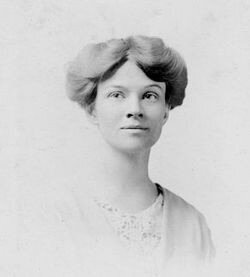
I was, and still am, a big old Hollywood movie fan. So I proposed as a topic the political/activist role of women in Hollywood (viz., Bette Davis' landmark but unsuccessful lawsuit against her studio, which chipped away at the stable system, where actors were contracted to big studios and had little control of their careers).
Ok, to the Reader's Guide to Periodical Literature [RGPL], an index the younger generation probably know nothing about. There was a certain art to looking through the RGPL: by year, by decade, indices.
What I was to find out when I looked up Bette Davis was one thing. But when I looked up references for Katharine Hepburn I was taken far from Hollywood and to the dark side of our liberal tradition.
If you type Hepburn's name into your Internet search, you will get all listings about the famed and admired actress. But via RGPL, interestingly, you would find another Katharine Hepburn: the actress's mother of the same name. The elder Hepburn was a prominent activist, alleged social reformer, woman's suffragist, and an early birth control advocate. Hepburn the daughter has said she was also a Communist.
While the only sign I could find of overt Hepburn activism was her political support of the Communist Party-backed, democratic socialist Henry Wallace in 1948 in his presidential bid, and against Harry Truman, the elder Hepburn's record was a pretty rich one. And disturbing to behold.
Disturbing because the Hepburn mother was one of the founders, with Margaret Sanger, of Planned Parenthood [first called the Birth Control League]. These crusading women advocated not only legalizing abortions but also sterilizations ... of Black and Asian women.
For whatever the elder Hepburn's true political affiliations, she dared to equate poverty with color and [to her logic] reasonably thought an end to poverty would come when poverty ceased to produce poor babies, ergo, sterilize the poor.
Before Hepburn the actress died, Planned Parenthood honored the elder Hepburn and named a fund after her both women in the 1980's.
Further, Bryn Mawr College, the prestigious women's college that both Hepburns attended, honored mother and daughter for their achievements.
The Hepburn revelation was one of my first introductions into the nasty underbelly of the liberal politics we marginalized are supposed to ignore - those marginalized include people of color, the poor, lgbtq's, women, not to forget men who dare to walk a different path, queer or straight, in spite of public rebuke.
I myself have held Planned Parenthood in particular and the abortion issue in general at a chilly distance ever since.
It has been the recognition of these crimes against humanity, demands for social justice, reparations, regime and system changes that has gotten the reactionaries to mobilize to dismantle social and public services, especially our public schools. In fact, a whole elaborate propaganda system has been fortified, which includes our mass media and increasingly includes our "intellectuals" in the universities. It has certainly impacted public education, note Ronald Reagan's desire to shut down the US Dept of Education, Bush I's education presidency, Bush II's No Child Left Behind, and Obama's Race to the Top.
The assault - the crime - continues to infect our rising generations with ignorance and compliance to a brutal system that wants only part-time labor from them, then to throw them away when finished.
The US "medical" crime in Guatemala is interesting. It comes just before our successfully toppling its democratically elected government in 1954, with the direct assistance of the CIA. So the war aims included not only saving United Fruit [precursor to Chiquita Bananas] but also for Nazi medical experiments.
The elder Hepburn was no Nazi, and she did make ample pronouncements which would make her communist sympathies believable and admired, but she also testified to US Congressional committees that Black and Asian women needed to be sterilized, that it was cruel to allow them to produce children they could not care for, etc. She did this rather than offer a radical critique of a capitalist system which had barely ended chattel slavery for Blacks and Asian workers and had made wage slaves of all workers: from this comes poverty, not color.
And what of the actress Hepburn's father? She described Thomas N. Hepburn as a "dyed-in-the-wool socialist." Dr. Hepburn was a physician and, like his wife, an activist in his own right. His concern was around venereal diseases and starting various private organizations to tackle this serious issue.
What was his role or knowledge, if any, in the crimes against Guatemala? Further, the records about that experiment show that the same doctors were involved in the domestic Tuskegee Experiment, where Black men were left untreated for syphilis and told erroneously they were being treated.
Dr. Hepburn was no small, local doctor with a pet interest. He was actively involved in addressing - to his credit - a serious health issue. Certainly someone with his involvement would have known about these things. But can he be as implicated in these experiments with "good" intentions as his wife was to her campaign?
We must no longer be shocked and awed by these revelations. There has always been a strange disconnect between the narrative of our supposed masters and that of the masses of humanity who suffer. Unfortunately, we must assume the worst from our rulers and the least from our collective response.
источник можно обнаружить по ссылке через картинку
источник можно обнаружить по ссылке через картинку
September 30, 2010

September 20, 2010
In honor of the birthday of Planned Parenthood’s founder, Margaret Sanger, feminist writer and commentator Gloria Feldt discusses Sanger’s life and work, the history of the birth-control movement, the role that birth control plays in women’s equality and empowerment, and what activists today can learn about leadership from Sanger’s organizing. This event took place at the Elizabeth A. Sackler Center for Feminist Art on September 13, 2009. Video courtesy Elizabeth A. Sackler Foundation.
September 19, 2010

September 15, 2010

September 14 Birth Control Crusader Born
Margaret (Higgins) Sanger was born on September 14, 1879, the sixth of 11 children, in Corning, New York. Her father was a poor Irish tombstone cutter. Her mother died at the age of 48 of tuberculosis. When she was 17, Margaret came to New York. She married William Sanger, an architect; joined the Socialist Party and nursed tenants in the tenements of Manhattan’s Lower East Side.
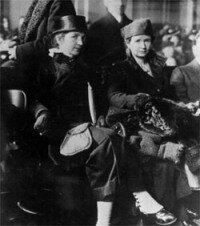 On a hot, muggy day in July, 1912, Nurse Sanger was called to attend Sadie Sachs, 28, a mother of three who was near death from attempting to abort another child on the way. Sadie begged Sanger and the doctor to tell her what she could do to prevent having more babies. The doctor told her to tell her husband to sleep on the roof. When Sadie Sachs died three months later of another self-induced abortion, Margaret Sanger felt it was time to crusade for birth control.
Margaret traveled to birth control clinics in France and Scotland in 1913. On her return to New York she began publishing a magazine called Woman Rebel with the motto: “No Gods, No Masters.” In this issue she forecast future articles on birth control. Postal inspectors confiscated copies and Sanger was indicted for sending birth control information through the mail. She fled to Europe to give herself time to prepare her defense. When she returned to the states, she discovered she was gaining public support in her efforts. There had been no actual writings in the first issue of her magazine regarding birth control. The indictment was withdrawn by the government.
But Sanger had not seen the last of trouble with the law. On October 16, 1916, she opened the first birth control clinic in the nation at 46 Amboy St. in Brooklyn. No fewer than 150 baby-buggy-pushing women from the Brownsville area lined up to pay a 10- cent registration fee. On October 25, policemen and, to her chagrin, a policewoman raided her clinic. Sanger was charged with distributing birth control information and was imprisoned for 30 days.
Sanger was not so tied up in her cause not to have suitors, such as writer H.G. Wells and pioneer sexologist Havelock Ellis. After her divorce in 1922 from her first husband, she married millionaire maker of Three-in-One oil (used mainly on sewing machines) J. Noah H. Slee, but only after he agreed to ensure her independence and allow her to use the name Margaret Sanger. They would also occupy separate apartments in the same building. The agreement shocked conventional minds of the ’20s, but the marriage held up.
The use of contraceptives remained illegal throughout the 1920s and ’30s. Though the use of them spread, few admitted to the “crime.” Sanger campaigned futilely for the mail to be opened to birth control information and devices. In 1937 the government finally gave in, but it was not until 1965 that Connecticut became the last state to allow birth control clinics.
That crusade at last successful, Sanger decided it was time to fight to secure the freedom of the individual woman. The female, in her terms, was: “a brood animal for the masculine civilizations of the world.” In the meantime, she became a role model for many women who wanted to control their own destinies and to achieve the goal of making every child a wanted child through birth control.
Margaret Sanger died in Tucson, Arizona on September 6, 1966.
by Vernon Parker (history@brooklyneagle.net), published online 09-14-2010 brooklyneagle
Для улучшения понимания см: The black community should ask why both the Democratic Party and black leaders oppose school vouchers and support abortion.
Margaret traveled to birth control clinics in France and Scotland in 1913. On her return to New York she began publishing a magazine called Woman Rebel with the motto: “No Gods, No Masters.” In this issue she forecast future articles on birth control. Postal inspectors confiscated copies and Sanger was indicted for sending birth control information through the mail. She fled to Europe to give herself time to prepare her defense. When she returned to the states, she discovered she was gaining public support in her efforts. There had been no actual writings in the first issue of her magazine regarding birth control. The indictment was withdrawn by the government.
But Sanger had not seen the last of trouble with the law. On October 16, 1916, she opened the first birth control clinic in the nation at 46 Amboy St. in Brooklyn. No fewer than 150 baby-buggy-pushing women from the Brownsville area lined up to pay a 10- cent registration fee. On October 25, policemen and, to her chagrin, a policewoman raided her clinic. Sanger was charged with distributing birth control information and was imprisoned for 30 days.
Sanger was not so tied up in her cause not to have suitors, such as writer H.G. Wells and pioneer sexologist Havelock Ellis. After her divorce in 1922 from her first husband, she married millionaire maker of Three-in-One oil (used mainly on sewing machines) J. Noah H. Slee, but only after he agreed to ensure her independence and allow her to use the name Margaret Sanger. They would also occupy separate apartments in the same building. The agreement shocked conventional minds of the ’20s, but the marriage held up.
The use of contraceptives remained illegal throughout the 1920s and ’30s. Though the use of them spread, few admitted to the “crime.” Sanger campaigned futilely for the mail to be opened to birth control information and devices. In 1937 the government finally gave in, but it was not until 1965 that Connecticut became the last state to allow birth control clinics.
That crusade at last successful, Sanger decided it was time to fight to secure the freedom of the individual woman. The female, in her terms, was: “a brood animal for the masculine civilizations of the world.” In the meantime, she became a role model for many women who wanted to control their own destinies and to achieve the goal of making every child a wanted child through birth control.
Margaret Sanger died in Tucson, Arizona on September 6, 1966.
by Vernon Parker (history@brooklyneagle.net), published online 09-14-2010 brooklyneagle
Для улучшения понимания см: The black community should ask why both the Democratic Party and black leaders oppose school vouchers and support abortion.
September 13, 2010
history of contraceptives
Dittrick Medical History Center in Cleveland pays tribute to history of contraceptives
CLEVELAND -- Women who were desperate to prevent pregnancy took some frightful health risks, such as eating a poisonous plant called pennyroyal or douching with Lysol.
This is just one horrifying fact in a concise exhibition about the development of the birth control pill, which became available in America in 1960 and turned 50 this year.
This show, "Virtue, Vice and Contraband: A History of Contraception in America," is on permanent view at the Dittrick Medical History Center and might surprise two generations of American women.
Gen X-ers and Millennials, who were born into a world where oral contraceptives are advertised on television, may not know about the scientific and political efforts that were necessary to make the Pill so readily available.
If you go
The center, part of Case Western Reserve University, owns a major collection of contraceptive literature and devices amassed over 40 years by Percy Skuy, a Canadian executive with the company Ortho, a maker of oral contraceptives. Donated in 2004, the 800-item collection also includes prototypes.
In the 1800s, literature about childbirth and reproduction was scant. American couples eager to learn about those subjects turned to "Aristotle's Masterpiece" and Charles Knowlton's 1832 book "Fruits of Philosophy, or the Private Companion of Young Married People."
Condoms existed in America during the 1800s; their code names were "French letters," "safes" or "armour." They cost $1 when a week's pay was about $14. The French called them "redingotes," meaning "English riding coats."
A section devoted to sex during the Civil War reveals that more than 100,000 incidents of sexual misconduct resulted in courts-martial. The Union Army alone recorded 183,000 cases of venereal disease.
Alarmed by these statistics, Union Army leaders, from 1863-65, authorized government-sanctioned prostitution in Nashville and Memphis, Tenn., and hired doctors to conduct regular medical exams.
There's a good reason many Americans understood little about conception. It wasn't until 1930 that two doctors, one Japanese and the other Austrian, discovered the time of a woman's ovulation, the period when she is most fertile.
That discovery led to the "rhythm method," a natural form of birth control in which intercourse was avoided when the woman was ovulating.
During a visit to Austria in 1930, engineer Gilmore "Tilly" Tilbrook had conversations with doctors about reproductive health. He invented a precise but complicated device like the "Rythmeter."
A 1915 graduate of the Carnegie Institute of Technology, Mr. Tilbrook patented the daunting-looking device in 1944 and 1947. The inventor warned people not to use it to calculate the time of ovulation unless they had a record of a woman's previous nine menstrual cycles.
The man who tried valiantly to explain the rhythm method to Americans was Leo J. Latz, a physician, devout Catholic and author of "The Rhythm of Sterility and Fertility in Women."
By 1942, more than 200,000 copies of his work were in print; Roman Catholic priests often gave out the pamphlet as a prize to winners of parish bingoes.
Dr. Latz believed couples could use the "rhythm method" to space the births of their children. Two years after he published his research, he was fired from his teaching job at Loyola University in 1934. Apparently, Dr. Latz was ahead of his time. In 1951, Pope Pius XII sanctioned rhythm as a natural form of birth control.
This show highlights the work of Margaret Sanger, who founded Planned Parenthood and coined the phrase "birth control." Ms. Sanger worked closely with suffragist Katharine McCormick, who earned a biology degree at M.I.T. and was the heiress to a large fortune from the International Harvester Co. Mrs. McCormick bankrolled research on oral contraceptives in the 1950s. Contraception also became part of popular culture. The exhibition includes a recording by country singer Loretta Lynn, who was married at 14 and had six children. By the time the songwriter wrote and recorded her own anthem, "The Pill," in 1975, millions of women were taking oral contraceptives.
Ms. Lynn's lyrics express the freedom from repetitive childbearing that oral contraceptives gave women.
"This old maternity dress I've got is goin' in the garbage. The clothes I'm wearin' from now on won't take up so much yardage."
Sunday, September 12, 2010
By Marylynne Pitz, Pittsburgh Post-Gazette
CLEVELAND -- Women who were desperate to prevent pregnancy took some frightful health risks, such as eating a poisonous plant called pennyroyal or douching with Lysol.
This is just one horrifying fact in a concise exhibition about the development of the birth control pill, which became available in America in 1960 and turned 50 this year.
This show, "Virtue, Vice and Contraband: A History of Contraception in America," is on permanent view at the Dittrick Medical History Center and might surprise two generations of American women.
Gen X-ers and Millennials, who were born into a world where oral contraceptives are advertised on television, may not know about the scientific and political efforts that were necessary to make the Pill so readily available.
If you go
The center, part of Case Western Reserve University, owns a major collection of contraceptive literature and devices amassed over 40 years by Percy Skuy, a Canadian executive with the company Ortho, a maker of oral contraceptives. Donated in 2004, the 800-item collection also includes prototypes.
In the 1800s, literature about childbirth and reproduction was scant. American couples eager to learn about those subjects turned to "Aristotle's Masterpiece" and Charles Knowlton's 1832 book "Fruits of Philosophy, or the Private Companion of Young Married People."
Condoms existed in America during the 1800s; their code names were "French letters," "safes" or "armour." They cost $1 when a week's pay was about $14. The French called them "redingotes," meaning "English riding coats."
A section devoted to sex during the Civil War reveals that more than 100,000 incidents of sexual misconduct resulted in courts-martial. The Union Army alone recorded 183,000 cases of venereal disease.
Alarmed by these statistics, Union Army leaders, from 1863-65, authorized government-sanctioned prostitution in Nashville and Memphis, Tenn., and hired doctors to conduct regular medical exams.
There's a good reason many Americans understood little about conception. It wasn't until 1930 that two doctors, one Japanese and the other Austrian, discovered the time of a woman's ovulation, the period when she is most fertile.
That discovery led to the "rhythm method," a natural form of birth control in which intercourse was avoided when the woman was ovulating.
During a visit to Austria in 1930, engineer Gilmore "Tilly" Tilbrook had conversations with doctors about reproductive health. He invented a precise but complicated device like the "Rythmeter."
A 1915 graduate of the Carnegie Institute of Technology, Mr. Tilbrook patented the daunting-looking device in 1944 and 1947. The inventor warned people not to use it to calculate the time of ovulation unless they had a record of a woman's previous nine menstrual cycles.
The man who tried valiantly to explain the rhythm method to Americans was Leo J. Latz, a physician, devout Catholic and author of "The Rhythm of Sterility and Fertility in Women."
By 1942, more than 200,000 copies of his work were in print; Roman Catholic priests often gave out the pamphlet as a prize to winners of parish bingoes.
Dr. Latz believed couples could use the "rhythm method" to space the births of their children. Two years after he published his research, he was fired from his teaching job at Loyola University in 1934. Apparently, Dr. Latz was ahead of his time. In 1951, Pope Pius XII sanctioned rhythm as a natural form of birth control.
This show highlights the work of Margaret Sanger, who founded Planned Parenthood and coined the phrase "birth control." Ms. Sanger worked closely with suffragist Katharine McCormick, who earned a biology degree at M.I.T. and was the heiress to a large fortune from the International Harvester Co. Mrs. McCormick bankrolled research on oral contraceptives in the 1950s. Contraception also became part of popular culture. The exhibition includes a recording by country singer Loretta Lynn, who was married at 14 and had six children. By the time the songwriter wrote and recorded her own anthem, "The Pill," in 1975, millions of women were taking oral contraceptives.
Ms. Lynn's lyrics express the freedom from repetitive childbearing that oral contraceptives gave women.
"This old maternity dress I've got is goin' in the garbage. The clothes I'm wearin' from now on won't take up so much yardage."
September 7, 2010
US historically legal abortion
In fact, abortion was legal in the U.S. up until the mid-1800s, when Victorian, Christian moralists pushed forward a national censorship campaign to rid the country of “pornography” and other sexual deviances. In 1873, the Comstock Act criminalized contraception throughout the country and Anthony Comstock himself sought to arrest Margaret Sanger decades later when she returned from Europe with “new” contraceptive methods based on practices dating back thousands of years.
...Philosophers, such as Aristotle, Plato, and Socrates, midwives and abortionists, including Dame Trotula of Salerno and Madame Restelle, and activists, such as Emma Goldman and Margaret Sanger, are memorialized through their portraits.
have a look @ 40 Days for Life
abortion timeline from 3000s BCE till Roe v Wade
статейко оказалось весьма провокативной и полезной :)
...Philosophers, such as Aristotle, Plato, and Socrates, midwives and abortionists, including Dame Trotula of Salerno and Madame Restelle, and activists, such as Emma Goldman and Margaret Sanger, are memorialized through their portraits.
have a look @ 40 Days for Life
The 40-day campaign tracks Biblical history, where God used 40-day periods to transform individuals, communities ... and the entire world. From Noah in the flood to Moses on the mountain to the disciples after Christ's resurrection, it is clear that God sees the transformative value of His people accepting and meeting a 40-day challenge.
source: 4000 Years for Choiceabortion timeline from 3000s BCE till Roe v Wade
статейко оказалось весьма провокативной и полезной :)
9/6, 1966
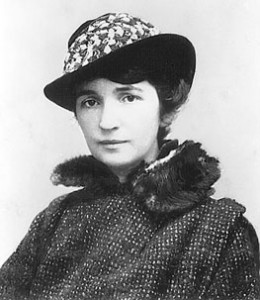
Sanger’s battle began in earnest in 1912 whilst working as a maternity nurse in New York City’s impoverished Lower East Side. Having already observed her own mother’s slow and painful death at the age of forty-eight, her body ruined after eighteen pregnancies, Sanger witnessed multitudes of similarly worn-out women plunged into panic and despair at the thought of a fifth or sixth pregnancy. Many resorted to self-induced abortions, often leading to death; some even chose suicide. Sanger concluded that the only way to end such perpetual misery was through the introduction of birth control. But with no one from her socialist circle willing to help champion such a radical social problem, Sanger felt compelled to act alone.
First came her series of articles called “What Every Girl Should Know”, followed by the aforementioned newspaper The Woman Rebel, in which Sanger – determined to educate these desperate women – blatantly defied federal laws against supplying contraceptive information. In October 1916, Sanger and her sister opened America’s first birth control clinic in Brooklyn. But within ten days, the clinic was shut down and the sisters arrested and sentenced to thirty days in prison. Despite continuing legal harassment, however, Sanger indefatigably continued her campaign to educate women and lobby for legislative change. Forming the American Birth Control League in 1921, Sanger kept up the momentum until, at long last, public opinion began to turn in her favour. And by the 1940s, the birth control movement had won the acceptance of the medical profession. Legal change, however, was painfully slow to follow. And it was not until 1972 that all unmarried women in America were guaranteed the right to use contraceptives – a benchmark every bit as significant and momentous as the right to vote. For, as Margaret Sanger herself said, “No woman can call herself free until she can consciously choose whether she will or will not be a mother.”
source
Labor Day
For the labor side there were Eugene V. Debs, John L. Lewis, Walter Reuther, and others. Their only weapons were courage and right. Opposing generals, super-rich industrialists, had names like Vanderbilt, Duke, and Gould, and were backed by armed federal troops, marshals and local police.
There were female generals in this war, too, fighting against the forces that would keep them subservient and dependent on men. Margaret Sanger was one, and Jane Addams, and from my hometown of Cleburne, Lucy Ella Gonzales Parsons, whose husband Albert Parsons was one of the "usual suspects" hanged for their alleged participation in Chicago's infamous Haymarket Affair.
....
Labor Day began September 6, 1894, to honor workers with a paid holiday to march in their parades. This is what President Grover Cleveland said. But a few months earlier, he had used the military to break the Pullman sleeping car strike, in which a number of strikers were killed. So what Labor Day effectively commemorates, Dr. Feldman told us many years ago, is the government's continuing willingness to support the plutocracy in its use of others in any way it sees fit to do the work, as cheaply as possible, work that it is unwilling, and unable, to do itself.
Tom Dodge is a writer from Midlothian.
There were female generals in this war, too, fighting against the forces that would keep them subservient and dependent on men. Margaret Sanger was one, and Jane Addams, and from my hometown of Cleburne, Lucy Ella Gonzales Parsons, whose husband Albert Parsons was one of the "usual suspects" hanged for their alleged participation in Chicago's infamous Haymarket Affair.
....
Labor Day began September 6, 1894, to honor workers with a paid holiday to march in their parades. This is what President Grover Cleveland said. But a few months earlier, he had used the military to break the Pullman sleeping car strike, in which a number of strikers were killed. So what Labor Day effectively commemorates, Dr. Feldman told us many years ago, is the government's continuing willingness to support the plutocracy in its use of others in any way it sees fit to do the work, as cheaply as possible, work that it is unwilling, and unable, to do itself.
Tom Dodge is a writer from Midlothian.
Subscribe to:
Posts (Atom)


 Posts
Posts


