Showing posts with label ally. Show all posts
Showing posts with label ally. Show all posts
January 14, 2014
William
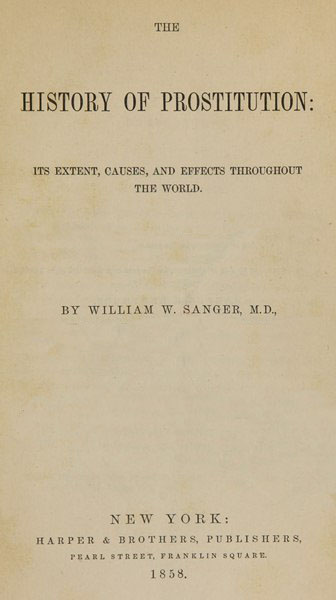
на гутенберговском проекте присутствуют три работы МС, а рядом талмуд Уильяма Сэнгера про историю проституции -- любоптыно, не так ли?


July 19, 2013
Sharon Camp
Сегодня пришло инфо-письмецо:
 Гутмахеровский институт связан исторически с именем Сэнгер, поскольку сам Гутмахер был из ранних её сотрудников (возглавлял и парентхуд, не национальный, а отраслевой, и евгеническое общество), но нонешнее поколение живёт в мире бюрократии и экономии мысли. В частности, (мной) диспут с институтом ведётся по поводу его оценок преваленса аборта в РФ. Процедура конструирования оценки, применяемая институтом Гутмахера, незамысловата, выбирается национальный эксперт, который и конструирует. Две особенности:
Dear Unknown,Sharon Camp, a longtime family planning advocate who led the Guttmacher Institute for the last decade, stepped down this week.
- эксперт остаётся неизвестным, следовательно, процедура выделение этого эксперта также неизвестна и
- этот труд не оплачивается, что не стимулирует.
June 24, 2013
by any means
As a nurse she knew a pregnancy termination by any means was a danger to the mother.by any means -- на руской мове = палюбасу, что неверно в корне :)
тем не менее, практически все, кто пишет про аборт - так или иначе пишет о его вредности. Где деньги, Зин? то=есть, док.база?
в статье упомянуты ещё Clarence Darrow (защитник в суде pro bono), Upton Sinclair (прокукарекал о её аресте в 1914?)
remember “Rosie the Riveter” -- какая-то неизвестная реальность (???)
June 19, 2013
Hans Harmsen
в ФБ вдруг вплыло имя
немецкого специалиста по демографии СССР, см сабж
далее с античойсового сайта:
Hans Harmsen, a German physician, was an important scientific and academic supporter of Nazi policies in the 1930s and 1940s, such as the inhumane 1933 sterilization law that mandated coercion.
As a bureaucrat in Nazi Germany, he was responsible for approving eugenic sterilizations performed on the disabled. He “supported forced sterilizations of the mentally handicapped and helped to carry them out in the Protestant Inner Mission institutions for which he was responsible.” (Report by Monika Simmel-Joachim and Elke Kiltz to the National Board of Pro Familia, May 16, 1984, quoted and translated in Atina Grossmann, Reforming Sex: The German Movement for Birth Control and Abortion Reform, 1920-1950 [New York: Oxford University Press, 1995], 211)
Harmsen became the president of Pro Familia, the German affiliate of Sanger’s International Planned Parenthood Federation, in 1952. He continued to promote ostensibly “voluntary” eugenic sterilization and campaigned for a new law in the post-Nazi age. In 1980, after decades of leadership roles within Pro Familia, he was awarded an honorary presidency. Only in 1984 was he forced to resign (Grossmann, op. cit., 204-11).
For excerpts a Harmsen speech from 1931, see the German History in Documents and Images site, “Hans Harmsen: Contemporary Questions in Eugenics (1931).”
см Sanger’s Racist Friend: Hans Harmsen
немецкого специалиста по демографии СССР, см сабж
далее с античойсового сайта:
Hans Harmsen, a German physician, was an important scientific and academic supporter of Nazi policies in the 1930s and 1940s, such as the inhumane 1933 sterilization law that mandated coercion.
As a bureaucrat in Nazi Germany, he was responsible for approving eugenic sterilizations performed on the disabled. He “supported forced sterilizations of the mentally handicapped and helped to carry them out in the Protestant Inner Mission institutions for which he was responsible.” (Report by Monika Simmel-Joachim and Elke Kiltz to the National Board of Pro Familia, May 16, 1984, quoted and translated in Atina Grossmann, Reforming Sex: The German Movement for Birth Control and Abortion Reform, 1920-1950 [New York: Oxford University Press, 1995], 211)
Harmsen became the president of Pro Familia, the German affiliate of Sanger’s International Planned Parenthood Federation, in 1952. He continued to promote ostensibly “voluntary” eugenic sterilization and campaigned for a new law in the post-Nazi age. In 1980, after decades of leadership roles within Pro Familia, he was awarded an honorary presidency. Only in 1984 was he forced to resign (Grossmann, op. cit., 204-11).
For excerpts a Harmsen speech from 1931, see the German History in Documents and Images site, “Hans Harmsen: Contemporary Questions in Eugenics (1931).”
см Sanger’s Racist Friend: Hans Harmsen
May 1, 2013
Nellie Bly
 |
| Похожа на Е. Носову |
В частности, она прокралась в сумасшедший дом, и там обнаружила женщину, упрятанную мужем за неверность.
Прочитав Жюля Верна "Вокруг света за 80 дней", она подбила Пулитцера организовать такое же путешествие и закончила его за 72 days, 6 hours, 11 minutes and 14 seconds
Как и Сэнгер она вышла из большой (15 детей) семьи, а потом вышла замуж за миллионера и приняла участие в управлении (по соц.вопросам и улучшению условий труда и оплаты).
March 30, 2013
Norman Haire, her Australian contemporary

Вышла книжка про него, из рецензии на эту книгу он и стал мне известен. В принципе: в каждой стране должен был быть такой человек или небольшая группа, т.наз, лидеров, вокруг которых идеи и практики кристализуются, и движуха кипит.
Был геем, при переезде в Англию (1919) поменял имя по аналогии с именем отца Zajac. В Англии занимался естествоиспытаниями, которые (не его усилиями) привели к созданию виагры. Он купил дом на Harley Street и владел ролсройсом с шофёром, при этом работая в гин.клинике для бедных, которых втих.оря подучивал уклоняться от беременности. Бабло видимо шло от секспросвета (sex sells), на этом поприще он был оч плодовит.
На конфе в Амстердаме (1921) встретил любовь всей свое жизни.
К конц 30х здорвье ухудшилось, развился диабет, и на фоне евробезумия он решил вернуться домой. Домашняя инсулиновая терапия и удалённость войны поправили здоровье, и он стал писать для журнала Woman (ed by ) в качестве Dr Wykeham Terriss (a play on Wickham Terrace, the Brisbane equivalent of London's Harley Street). Много выступал по радио, в частности для американских войск в северной Австралии по поводу вензаболеваний. После войны, последовавшего бебибума и антимальтузанского господства Colina'a Clark'a, оптимистическая книжка которого у меня есть уехал взад в Лондон.
Умер в 1952 году, передав свой архив университету Сиднея. До появления книжки был забыт, патамушта был мужыг, даромшта гей.
Да, забыл: родился в огромной семье, наблюдал свою многодетную мать, проникся и вполне логично стал мальтузианцом.
January 6, 2013
She was jailed eight times

This month, federal courts rejected a claim by the religious owner of (типа мудилы Бойко) the Hobby Lobby store chain, who says his faith won't allow him to help employees avoid pregnancy. But other courts upheld claims by two church-owned schools, Wheaton College and Belmont Abbey College
January 4, 2013
Gerda Lerner died
 умерла родоначальница женской истории, herstory, Gerda Hedwig Kronstein ( April 30, 1920, in Vienna -- Jan 2, 2012, Madison, Wis), комунистка (между прочим)
подробнее see NYT obituary
December 24, 2012
Anarchy in the U.S.A.
‘Sasha and Emma,’ by Paul Avrich and Karen Avrich
новая книжка про им.порт и импорт.ёров анархии и террора в США, вышла недавно. Пол Аврич -- оч известный историк анархизма, одесситреценция NYT
 |
| Саша и Эмма |
 |
| Выступление Э. Голдман |
непонятная фраза: Except for a brief period after Berkman’s release 14 years later, their sexual relationship ended, but they remained friends and comrades and maintained their — one can only call it love — for the rest of their lives.
(видимо отношения между ними были какой-то разновидностью постреволюционного БДСМ, мб, Тургенев-Виардо, только хуже)-- Berkman was a difficult man, kind to those close to him but constitutionally incapable of accepting authority
любопытно: Candace Falk, the director of the Emma Goldman Papers project
почти Вовочка: Berkman’s life. Born in 1870, the son of a wealthy merchant in Russia, he was inspired by the political ferment that resulted in the assassination of Czar Alexander II in 1881.
фактура: In 1919, after serving their sentences, Goldman and Berkman, neither of whom was an American citizen, were deported to Russia. Critical of the authoritarian Bolsheviks, they left the Soviet Union in 1921 and began years of exile in Europe, mostly in France. Berkman died in Nice in 1936, killing himself in response to continued ill health. Goldman, who had the opportunity to work with anarchist forces during the Spanish Civil War, died in Toronto in 1940.
When she petitioned to be allowed to enter the United States in 1934, her request was supported by Sherwood Anderson, John Dewey, Sinclair Lewis, Margaret Sanger, Eugene O’Neill and Dorothy Canfield Fisher. “Everyone is an anarchist who loves liberty and hates oppression,” Goldman declared during that visit. That would be pretty much everyone.
December 21, 2012
Sandra Fluke
 |
| Sandra Fluke |
source
December 17, 2012
Aletta Jacobs
 Алетта Якобс -- пионерка современного контроля рождаемости, первая женщина, выпускница Гронингенского университета
- про неё на сайте университета
- в обеде (Бруклинского музея), вагинальные тарелки, её страница
- англовики
- еврейской женской энциклопедии (англ), самы большой текст, автор = Harriet Feinberg
- Амстердамский институт женских историй, Aletta: Institute for Women's History, кстати, оч полезный сайт с историей евросексуальности
упг: с сотрудником ежэ снюхался, обещано содействие, но уже праздники, и ваще подозреваю, что автора уже нет с нами
November 15, 2012
Who is Dorothy Brush ?
Dorothy H. Brush, Planned Parenthood activist, whose wealth came from Charles Francis Brush (1849–1929), who invented the arc lamp for street lights and founded the Brush Electric Company. Draper's version of Planned Parenthood was to pass the Involuntary Sterilization laws in 15 different U.S. States.
November 9, 2012
Eleanor Roosevelt
September 28, 1933
In 1933, Sanger was enmeshed in a multi-year lobbying campaign to remove birth control from the list of obscene materials that could not be mailed in the United States. This battle would not be won in Congress, but three years later in the courts, with the U.S. v. One Package decision. Sanger’s papers document the struggles women endured to secure reproductive freedom, and should serve as a warning about what might occur should we be unwilling to work to keep them.
For more on Sanger and Eleanor Roosevelt, see our newsletter article, “Margaret Sanger and Eleanor Roosevelt – The Burden of Public Life.”
source
It was President Roosevelt who had the courage, foresight and vision to raise his voice on behalf of the forgotten man, and is it not time for the enlightened women of this country to raise a voice in unison on behalf of the most forgotten of all living creatures, the overburdened child-bearing woman? Why not a new deal for the 43 million women of child-bearing age in this country whose future life, liberty and pursuit of happiness depend absolutely upon the knowledge of how to control the physiological function of motherhood?
We ask a “new deal” for the mother immortalized in poetry but neglected in fact–
A New Deal for the mother whose life is shadowed by constant fears of unwanted pregnancies–a New Deal for the mother who goes down into the valley of the shadow of death for every baby born–
A new consideration for the women who appeal for contraceptive knowledge to hospitals, clinics, and social agencies, and are denied this by priest and politician alike.
The solidarity of woman is as noble as the brotherhood of man and the opportunity is here today for all of us whose lives have been benefited by such knowledge to pass that right and privilege on to the underprivileged woman who is too poor, too weak, too inarticulate to battle for her own rights.
In 1933, Sanger was enmeshed in a multi-year lobbying campaign to remove birth control from the list of obscene materials that could not be mailed in the United States. This battle would not be won in Congress, but three years later in the courts, with the U.S. v. One Package decision. Sanger’s papers document the struggles women endured to secure reproductive freedom, and should serve as a warning about what might occur should we be unwilling to work to keep them.
For more on Sanger and Eleanor Roosevelt, see our newsletter article, “Margaret Sanger and Eleanor Roosevelt – The Burden of Public Life.”
source
May 21, 2012
April 18, 2012
Sandra Fluke Continues Battle that Margaret Sanger Began

An hour before her live Q&A with the Huffington Post, Sandra Fluke met with me at a Starbuck's (even though she doesn't drink coffee) to talk about her campaign to empower women.
The contraception debate and Rush Limbaugh's personal insults are what placed Fluke in the spotlight, and her concerns are not over. The Affordable Health Choices Act requires all university health care plans to provide free contraception starting in August 2012. But religiously affiliated universities are allowed to request a one-year delay in providing contraception -- and those requests are being made right now, often without student input.
"This is inevitable at this point -- there's no reason to deny coverage for another year and make these women wait longer when they have real medical needs right now," Fluke said, who goes to a Georgetown Law -- a university affiliated with the Catholic Church. She encourages students to find out what decisions their administrations are making, and take action to make sure contraception is on the agenda. "Students will soon become engulfed in finals, so the time for action is today."
But Fluke is also using her media spotlight to highlight a number of other issues that women in America are facing today -- continuing a century-long struggle that Margaret Sanger began in the 1910's.
Sanger, who was one of eleven children, devoted her life to legalizing birth control, beginning her advocacy during a time when women did not even have the right to vote. Although birth control prevented unwanted pregnancies, Sanger was concerned with the health risks associated with many womens' self-conducted abortions (often leading to illness or death). Of women who aborted their own pregnancies, 76 percent faced health complications.
In 1921, after years of opposition and getting herself arrested for providing contraception illegally, she founded the American Birth Control League, which later became Planned Parenthood. But although Sanger can be criticized for some of her other political positions, Fluke says the women's activist started a war for justice that women are still fighting today.
"I'm not sure it's even a different battle, it's just an ongoing one," Fluke said. "Clearly, Ms. Sanger lived in a different time and not all of her positions are ones that I would agree with, but she was definitely a pioneer in thinking about women's reproductive health and needs and standing up for them."
Particularly important to Fluke is the Violence Against Women Act - a bill that is up for reauthorization this year. Some members of Congress are attempting to make the services that the bill gives to victim's of sexual assault less available to women, by lowering the age group that services are available to (including counseling, legal aid, victim programs, and funding for rape crisis centers, and protections for victims of domestic violence).
"Domestic violence is still rampant in our country and that's unacceptable in the type of industrialized wealth country that we have," Fluke said. "I'm hoping that young women will contact their senators about that. What we need is for Senator Harry Reid to bring the bill to the floor for a vote as soon as the Senate gets back in session in April."
What disappointments Fluke is that the bill, which has been around since 1994, is causing bipartisanship in Congress, with conservatives fighting against expanding the budget for domestic violence programs. The new version of the bill would increase free legal assistance to victims of domestic violence, include women who are victims of stalking, and increase coverage to include illegal immigrants and same-sex couples.
Another cause that Fluke, who is unsure about her own post-graduation plans, is taking up: bringing more women into politics. Currently, women make up only 17 percent of Congress, and Fluke thinks this number should be closer to 50.
"If we had equal representation in government, we'd pay more attention to the issues that affect women," she said. But those women who do make it into powerful political positions are the ones that Fluke admires.
"Women who are in powerful political positions are real role models for us and I'd love to see more and more women going in that direction," she said.
Her own role model? Sandra Day O'Conner, the first female member of the US Supreme Court.
"She was the first woman on the Supreme Court and she had the same first name that I did," Fluke said, remembering her childhood heroes. "I thought that was just really cool when I was really little. She went on the court in 1981, and I was born in 1981, so when I was little that was a pretty big deal - it's still a pretty big deal."
Although rumors about Fluke running for office have been spread by the media, one thing is clear: she will continue to fight for women's issues.
"There are so many issues, and to assume as a generation that the work has been done for us and we can just move on without engaging on those issues is just absolutely wrong," she said, before rushing to her Live Q&A with the Huffington Post.
February 7, 2012
The woman who changed women's lives
- The Free Lance-Star (Fredericksburg, Va.)
TOWSON, MD. - Almost 100 years ago, in the fall of 1916, a courageous visionary opened a birth control clinic in Brooklyn. After the death of a patient from a botched abortion in 1912, Margaret Sanger had begun preaching her solution: If women had access to birth control, there would be fewer of the dangerous procedures that cost desperate women their lives in a nation that outlawed all abortions.
One of 11 children and trained as a nurse, Sanger was all too familiar with the pleas of women seeking information about controlling their pregnancies. But under the 1873 Comstock Act, Congress had classified all birth-control materials and devices as obscene, pornographic matter. Those involved in its marketing, circulation, and advertisement were subject to five years in jail.
In an act of civil disobedience that ended in her imprisonment, Sanger traveled through Brooklyn promoting her clinic: "Mothers," read the placards written in Italian, Hebrew and English, "Can you afford to have a large family? Do you want more children? If not, why do you have them?" When her clinic on Amboy Street opened, the women came - nearly 500 in the 10 days before the clinic was closed by the police and she was hauled off to jail. So began Margaret Sanger's lifelong crusade to provide women with safe, effective, convenient and cheap contraceptives.
In these early days her strategy was fourfold: In serial steps she would first agitate, next educate, then organize, and finally lobby for her cause. All the while she would search for a more effective contraceptive than the cumbersome spermicidal douches and what this generation called pessaries and we know as diaphragms. After her release from prison, she took her crusade on the road, lecturing and promoting "Family Limitation," the banned pamphlet she had written in 1915 and that more than anything else in print, explicitly informed readers about the various techniques of preventing pregnancy.
"I come," she proclaimed in her speeches, "not from the stake of Salem where women were tried for blasphemy, but from the shadow of Blackwell's Island, where women are tortured for obscenity."
Sanger faced hostile audiences and locked lecture halls, the latter often closed after Catholic priests threatened local authorities. She endured harassment from doctors who dismissed her as an attention-seeking hysteric. As well she suffered a hesitant public, some of whom, like the suffrage leader Carrie Chapman Catt, considered talk of birth control vulgar. But Sanger also discovered a vast, previously invisible female audience that hungered for some way to control the timing and frequency of their pregnancies. "No woman is free who does not control her own body," she counseled.
In an environment of declining fertility rates, Sanger's intention was to make birth control a legal, public matter supported by physicians (the latter profession overwhelmingly opposed to birth control until the late 1930s) and scientific research. For Sanger, discussion of sexual anatomy was no more obscene than considerations of the functions of the heart or stomach. She encouraged a new generation's tolerance through her books, two of which sold more than a half-million copies in three years.
Having no choice but to become an educator on matters of sex, she responded to thousands of pathetic entreaties from American women with too many children too closely spaced, with unemployed husbands - some of these women suffering from the ill health that came from constant, exhausting pregnancies.
"Dear Mrs. Birth Control," went one letter to Sanger. "I am 28 years old and have six children. I suffer from tuberculosis. Can you send me some information so that I will not have another baby?"
By the 1920s, propelled by Sanger and the impersonal forces of urbanization and modernization, American public opinion on the matter of birth control was shifting. Fewer Americans disdained information about contraception as pornographic; rather, as Sanger repeated, spacing babies was a public health matter. Not everyone, including some organized churches and synagogues, still accepted the obdurate Catholic position that artificial methods of birth control were sinful and that children trooped down from heaven at the will of God.
In 1921, Sanger, with the dissemination of specific information still against the law, set about the organizational phase of her campaign. She established the American Birth Control League, the national arm of her growing social movement and the home of the influential, Sanger-edited Journal of Contraception. By 1930, in a measure of her success, Margaret Sanger was
included in a list of the most influential living Americans.
Relief from the Comstock law finally came in a case orchestrated by Sanger who had encouraged a Japanese physician to send a package of contraceptive supplies to her clinic. The supplies were promptly confiscated by U.S. Customs under the prohibitions of the Comstock Act, and the doctor in charge of Sanger's clinic sued for their release. In 1935 a New York appeals court ruled that the language of the Comstock Act could no longer be construed literally. Advances in medicine had rendered contraception safe and practical; that ancient arbiter of judicial change - common sense - called for a reinterpretation of the Comstock Act. Although Sanger was out of the country at the time, her lawyers agreed that she had educated the judges on the matter.
There was still work to do. At the Sanger-organized international conferences she had listened to a new generation of scientists in the emerging field of endocrinology discuss the possibilities of a hormone that would prevent ovulation. In 1952, she persuaded her wealthy friend Katherine McCormick to invest in the laboratory of Dr. Gregory Pincus in Worcester, Mass. From the beginning of her campaign, Sanger had sought some kind of contraceptive pill, while for years Pincus had been working on mammalian eggs and the effect of the hormone progesterone on ovulation.
With McCormick's money and Sanger's incessant advocacy, Pincus developed Sanger's dream. In 1960, when the pharmaceutical company Searle released Enovid, Sanger became one of those rare, signal reformers who lived long enough to see her reform enacted and whose contributions made hers the eponym for the birth-control movement.
Today Margaret Sanger is inaccurately vilified by those whose agenda is to stifle her organizational legacy, Planned Parenthood of America. She is dismissed as a racist and a eugenicist, even labeled by the uninformed Herman Cain as a supporter of "planned genocide" who placed her clinics in black neighborhoods in order to prevent the birth of black babies.
The facts suggest otherwise: Black leaders such as W.E.B. DuBois and Franklin Frazier had asked her to establish a clinic in Harlem. Sanger despised racial segregation. Moreover her version of the pervasive tenets of eugenicism was to adopt birth control for fewer, better babies, spaced according to a mother's health and energy. In 1966 86-year-old Margaret Sanger died, but her legacy to all Americans survives.
---
ABOUT THE WRITER
Jean H. Baker is a professor of history at Goucher College. She is the author of the recently published "Margaret Sanger: A Life of Passion." Readers may send her email at jean.baker@goucher.edu. She wrote this for The Free Lance-Star in Fredericksburg, Va.
This essay is available ar McClatchy-Tribune News Service.
TOWSON, MD. - Almost 100 years ago, in the fall of 1916, a courageous visionary opened a birth control clinic in Brooklyn. After the death of a patient from a botched abortion in 1912, Margaret Sanger had begun preaching her solution: If women had access to birth control, there would be fewer of the dangerous procedures that cost desperate women their lives in a nation that outlawed all abortions.
One of 11 children and trained as a nurse, Sanger was all too familiar with the pleas of women seeking information about controlling their pregnancies. But under the 1873 Comstock Act, Congress had classified all birth-control materials and devices as obscene, pornographic matter. Those involved in its marketing, circulation, and advertisement were subject to five years in jail.
In an act of civil disobedience that ended in her imprisonment, Sanger traveled through Brooklyn promoting her clinic: "Mothers," read the placards written in Italian, Hebrew and English, "Can you afford to have a large family? Do you want more children? If not, why do you have them?" When her clinic on Amboy Street opened, the women came - nearly 500 in the 10 days before the clinic was closed by the police and she was hauled off to jail. So began Margaret Sanger's lifelong crusade to provide women with safe, effective, convenient and cheap contraceptives.
In these early days her strategy was fourfold: In serial steps she would first agitate, next educate, then organize, and finally lobby for her cause. All the while she would search for a more effective contraceptive than the cumbersome spermicidal douches and what this generation called pessaries and we know as diaphragms. After her release from prison, she took her crusade on the road, lecturing and promoting "Family Limitation," the banned pamphlet she had written in 1915 and that more than anything else in print, explicitly informed readers about the various techniques of preventing pregnancy.
"I come," she proclaimed in her speeches, "not from the stake of Salem where women were tried for blasphemy, but from the shadow of Blackwell's Island, where women are tortured for obscenity."
Sanger faced hostile audiences and locked lecture halls, the latter often closed after Catholic priests threatened local authorities. She endured harassment from doctors who dismissed her as an attention-seeking hysteric. As well she suffered a hesitant public, some of whom, like the suffrage leader Carrie Chapman Catt, considered talk of birth control vulgar. But Sanger also discovered a vast, previously invisible female audience that hungered for some way to control the timing and frequency of their pregnancies. "No woman is free who does not control her own body," she counseled.
In an environment of declining fertility rates, Sanger's intention was to make birth control a legal, public matter supported by physicians (the latter profession overwhelmingly opposed to birth control until the late 1930s) and scientific research. For Sanger, discussion of sexual anatomy was no more obscene than considerations of the functions of the heart or stomach. She encouraged a new generation's tolerance through her books, two of which sold more than a half-million copies in three years.
Having no choice but to become an educator on matters of sex, she responded to thousands of pathetic entreaties from American women with too many children too closely spaced, with unemployed husbands - some of these women suffering from the ill health that came from constant, exhausting pregnancies.
"Dear Mrs. Birth Control," went one letter to Sanger. "I am 28 years old and have six children. I suffer from tuberculosis. Can you send me some information so that I will not have another baby?"
By the 1920s, propelled by Sanger and the impersonal forces of urbanization and modernization, American public opinion on the matter of birth control was shifting. Fewer Americans disdained information about contraception as pornographic; rather, as Sanger repeated, spacing babies was a public health matter. Not everyone, including some organized churches and synagogues, still accepted the obdurate Catholic position that artificial methods of birth control were sinful and that children trooped down from heaven at the will of God.
In 1921, Sanger, with the dissemination of specific information still against the law, set about the organizational phase of her campaign. She established the American Birth Control League, the national arm of her growing social movement and the home of the influential, Sanger-edited Journal of Contraception. By 1930, in a measure of her success, Margaret Sanger was
included in a list of the most influential living Americans.
Relief from the Comstock law finally came in a case orchestrated by Sanger who had encouraged a Japanese physician to send a package of contraceptive supplies to her clinic. The supplies were promptly confiscated by U.S. Customs under the prohibitions of the Comstock Act, and the doctor in charge of Sanger's clinic sued for their release. In 1935 a New York appeals court ruled that the language of the Comstock Act could no longer be construed literally. Advances in medicine had rendered contraception safe and practical; that ancient arbiter of judicial change - common sense - called for a reinterpretation of the Comstock Act. Although Sanger was out of the country at the time, her lawyers agreed that she had educated the judges on the matter.
There was still work to do. At the Sanger-organized international conferences she had listened to a new generation of scientists in the emerging field of endocrinology discuss the possibilities of a hormone that would prevent ovulation. In 1952, she persuaded her wealthy friend Katherine McCormick to invest in the laboratory of Dr. Gregory Pincus in Worcester, Mass. From the beginning of her campaign, Sanger had sought some kind of contraceptive pill, while for years Pincus had been working on mammalian eggs and the effect of the hormone progesterone on ovulation.
With McCormick's money and Sanger's incessant advocacy, Pincus developed Sanger's dream. In 1960, when the pharmaceutical company Searle released Enovid, Sanger became one of those rare, signal reformers who lived long enough to see her reform enacted and whose contributions made hers the eponym for the birth-control movement.
Today Margaret Sanger is inaccurately vilified by those whose agenda is to stifle her organizational legacy, Planned Parenthood of America. She is dismissed as a racist and a eugenicist, even labeled by the uninformed Herman Cain as a supporter of "planned genocide" who placed her clinics in black neighborhoods in order to prevent the birth of black babies.
The facts suggest otherwise: Black leaders such as W.E.B. DuBois and Franklin Frazier had asked her to establish a clinic in Harlem. Sanger despised racial segregation. Moreover her version of the pervasive tenets of eugenicism was to adopt birth control for fewer, better babies, spaced according to a mother's health and energy. In 1966 86-year-old Margaret Sanger died, but her legacy to all Americans survives.
---
ABOUT THE WRITER
Jean H. Baker is a professor of history at Goucher College. She is the author of the recently published "Margaret Sanger: A Life of Passion." Readers may send her email at jean.baker@goucher.edu. She wrote this for The Free Lance-Star in Fredericksburg, Va.
This essay is available ar McClatchy-Tribune News Service.
December 15, 2011
Birth control does not mean abortion
By George J. Marlin Wednesday, 14 December 2011
Excerpt:
Yet despite her harangues against the Church and her insistence that “for the welfare of children, for the happiness of husbands and wives, and for the full realization of Women’s rights, birth control by scientific methods of contraception [should] properly and wisely be exercised,” she did make one exception to an otherwise thorough pro-choice agenda: abortion.
That’s right. Margaret Sanger actually stated that: “Birth control does not mean abortion.” Here are her exact words:
“The real alternative to birth control is abortion,” wrote Dean Inge, [Dean of St. Paul’s Cathedral, London]. It is an alternative that I cannot too strongly condemn. Although abortion may be resorted to in order to save the life of the mother, the practice of it merely for limitation of offspring is dangerous and vicious. [Emphasis added] I bring up the subject here only because some ill-informed persons have the notion that when we speak of birth control we include abortion as a method. We certainly do not. Abortion destroys the already fertilized ovum or the embryo; contraception, as I have carefully explained, prevents the fertilizing of the ovum by keeping the male cells away. Thus it prevents the beginning of life.
I bet you never heard that Sanger considered abortion “dangerous and vicious.” You can take it to the bank that there are no posters hanging on the walls of Planned Parenthood clinics quoting those particular words of the founder.
Margaret Sanger actually believed that abortion destroys an innocent life because she was honest enough to recognize that life begins at the moment of conception (without reference). Hence, she would have disagreed with the U.S. Supreme Court’s conclusion in Roe v. Wade.
the rest
Excerpt:
Yet despite her harangues against the Church and her insistence that “for the welfare of children, for the happiness of husbands and wives, and for the full realization of Women’s rights, birth control by scientific methods of contraception [should] properly and wisely be exercised,” she did make one exception to an otherwise thorough pro-choice agenda: abortion.
That’s right. Margaret Sanger actually stated that: “Birth control does not mean abortion.” Here are her exact words:
“The real alternative to birth control is abortion,” wrote Dean Inge, [Dean of St. Paul’s Cathedral, London]. It is an alternative that I cannot too strongly condemn. Although abortion may be resorted to in order to save the life of the mother, the practice of it merely for limitation of offspring is dangerous and vicious. [Emphasis added] I bring up the subject here only because some ill-informed persons have the notion that when we speak of birth control we include abortion as a method. We certainly do not. Abortion destroys the already fertilized ovum or the embryo; contraception, as I have carefully explained, prevents the fertilizing of the ovum by keeping the male cells away. Thus it prevents the beginning of life.
I bet you never heard that Sanger considered abortion “dangerous and vicious.” You can take it to the bank that there are no posters hanging on the walls of Planned Parenthood clinics quoting those particular words of the founder.
Margaret Sanger actually believed that abortion destroys an innocent life because she was honest enough to recognize that life begins at the moment of conception (without reference). Hence, she would have disagreed with the U.S. Supreme Court’s conclusion in Roe v. Wade.
the rest
November 20, 2011
Planned Parenthood in the Archives
the American Birth Control League (ABCL) over leadership issues in 1928. In 1938, the Clinical Research Bureau (the first doctor-controlled, legal birth control clinic) which she opened in 1923 merged with the ABCL to become the Birth Control Federation of America. In 1942, its name was changed to the less feminist, more family-friendly Planned Parenthood Federation of America, a name Sanger loathed.
E Katz correction to Birth Control in the Cabinet: Planned Parenthood in the Archives Posted by Jill Lepore
contains a nice slide show
E Katz correction to Birth Control in the Cabinet: Planned Parenthood in the Archives Posted by Jill Lepore
contains a nice slide show
Jean H. Baker book
As for her connection with the eugenics movement, Baker examines Sanger’s beliefs (along with others who espoused eugenics, such as Woodrow Wilson and Oliver Wendell Holmes) and concludes that she “embraced eugenics as a female cause with a female solution,’’ focusing primarily on a woman’s right to bring only healthy and wanted children into the world. However one parses this, Sanger’s insistence that, as she wrote, “[a] woman’s body belongs to herself alone’’ still sounds revolutionary.
MARGARET SANGER: A Life of Passion By Jean H. Baker Hill and Wang, 349 pp., illustrated, $35
upg:
MARGARET SANGER: A Life of Passion By Jean H. Baker Hill and Wang, 349 pp., illustrated, $35
upg:
Emma Goldman and Margaret Sanger
November 5, 2011
A Woman with a Plan: The Real Story of Margaret Sanger
 | |
| by Ellen Chesler, | The Roosevelt Institute |
Birth control pioneer Margaret Sanger is back in the news this week thanks to GOP presidential candidate and abortion rights opponent Herman Cain, who claimed on national television that Planned Parenthood, the visionary global movement she founded nearly a century ago, is really about one thing only: “preventing black babies from being born.” Cain’s outrageous and false accusation is actually an all too familiar canard -- a willful repetition of scurrilous claims that have circulated for years despite detailed refutation by scholars who have examined the evidence and unveiled the distortions and misrepresentations on which they are based (for a recent example, see this rebuttal from The Washington Post’s Glenn Kessler).
It’s an old tactic. Even in her own day, Sanger endured deliberate character assassination by opponents who believed they would gain more traction by impugning her character and her motives than by debating the merits of her ideas. But when a presidential candidate from a major U.S. political party is saying such things, a thoughtful response is necessary.
So what is Sanger’s story?
Born Margaret Louisa Higgins in 1879, the middle child of a large Irish Catholic family, Sanger grew into a follower of labor organizers, free thinkers, and bohemians. Married to William Sanger, an itinerant architect and painter, she helped support three young children by working as a visiting nurse on New York’s Lower East Side. Following the death of a patient from a then all-too-common illegal abortion, she vowed to abandon palliative work and instead overturn obscenity laws that prevented legal access to safe contraception.
Sanger’s fundamental heresy was in claiming every woman’s right to experience her sexuality freely and bear only the number of children she desires. Following a first generation of educated women who had proudly forgone marriage in order to seek fulfillment outside the home, she offered birth control as a necessary condition to the resolution of a broad range of personal and professional frustrations.
The hardest challenge in introducing Sanger to modern audiences, who take this idea for granted, is to explain how absolutely destabilizing it seemed in her own time. As a result of largely private arrangements and a healthy trade in condoms, douches, and various contraptions sold under the subterfuge of feminine hygiene, birth rates had already begun to decline. But contraception remained a clandestine and delicate subject, legally banned under obscenity statutes, and women were still largely denied identities or rights independent of their relationships with men, including the right to vote.
By inventing the term “birth control,” Sanger brought the practice -- and by implication, women’s entitlement to sexual pleasure -- out into the open and gave them essential currency. She went to jail in 1917 for opening a clinic to distribute primitive diaphragms to immigrant women in Brooklyn, New York, and appeal of her conviction led to a medical exception that licensed doctors to prescribe contraception for reasons of health. Under these constraints she built a network of independent local women’s health centers that eventually came together under the banner of Planned Parenthood. She also lobbied for the repeal of federal obscenity statutes that prevented the legal transport of contraception by physicians across state lines, which were struck down in federal court in 1936.
Sanger sought and won scientific validation for various contraceptive methods, including the birth control pill, whose development she supported and found the money to fund. In so doing, she helped lift the religious shroud that had long encased reproduction and secured the endorsement of contraception by physicians and social scientists. From this singular accomplishment, which some still consider heretical, a continuing controversy has ensued.
Sanger always remained a wildly polarizing figure, which clarifies the logic of her decision after World War I to jettison “birth control” and adopt the more socially resonant term “family planning.” This move was particularly inventive but in no way cynical, especially when the Great Depression brought attention to collective needs and the New Deal created a blueprint for bold public endeavors.
Some have falsely charged that Sanger defined family planning as a right of the privileged but a duty or obligation of the poor. To the contrary, she showed considerable foresight in lobbying to include universal voluntary family planning programs among public investments in social security. Had the New Deal incorporated basic public health and access to contraception, as most European countries were then doing, protracted conflicts over welfare and health care policy in the U.S. might well have been avoided.
Having long enjoyed the friendship and support of Franklin and Eleanor Roosevelt, Sanger also had ample reason to believe the New Dealers would fully legalize and endorse contraception as a necessary first step to her long-term goal of transferring responsibility and accountability for voluntary clinics to the public health sector. What she failed to anticipate was the force of opposition family planning continued to generate from a coalition of religious conservatives, including urban Catholics and rural fundamentalist Protestants, that held Roosevelt Democrats captive much as today’s evangelicals have captured the GOP.
The U.S. government would not overcome cultural and religious objections to public support of family planning through its domestic anti-poverty and international development programs until the late 1960s, after the Supreme Court protected contraceptive use under the privacy doctrine created in Griswold v. Connecticut. At this time, Planned Parenthood clinics became major government contractors, since there were few alternative primary health care centers serving the poor. Today, one in four American women funds her contraception through government programs, many of them still run by Planned Parenthood -- a number likely to rise under the Affordable Care Act.
Sanger’s eagerness to mainstream her movement explains her engagement with eugenics, a then widely popular intellectual movement that addressed the manner in which human intelligence and opportunity is determined by biological as well as environmental factors. Hard as it is to believe, eugenics was considered far more respectable than birth control. Like many well-intentioned reformers of this era, Sanger took away from Charles Darwin the essentially optimistic lesson that humanity’s evolution within the animal kingdom makes us all capable of improvement if only we apply the right tools. University presidents, physicians, scientists, and public officials all embraced eugenics, in part because it held the promise that merit would replace fate -- or birthright and social status -- as the standard for mobility in a democratic society.
But eugenics also has some damning and today unfathomable legacies, such as a series of state laws upheld in 1927 by an eight-to-one progressive majority of the U.S. Supreme Court, including Justices Oliver Wendell Holmes and Louis Brandeis. Their landmark decision in Buck v. Bell authorized the compulsory sterilization of a poor young white woman with an illegitimate child on grounds of feeble mindedness that were never clearly established. This decision, incidentally, was endorsed by civil libertarians such as Roger Baldwin of the ACLU and W.E.B. Dubois of the NAACP, both of whom Sanger counted among her supporters and friends.
For Sanger, eugenics was meant to begin with the voluntary use of birth control, which many still opposed on the grounds that the middle class should be encouraged to have more babies. She countered by disdaining what she called a “cradle competition” of class, race, or ethnicity. She publicly opposed immigration restrictions and framed poverty as a matter of differential access to resources like birth control, not as the immutable consequence of low inherent ability or character.
As a nurse, Sanger also understood the adverse impacts of poor nutrition, drugs, and alcohol on fetal development and encouraged government support of maternal and infant health. She argued for broad social safety nets and proudly marshaled clinical data to demonstrate that most women, even among the poorest and least educated populations, eagerly embraced and used birth control successfully when it is was provided.
At the same time, Sanger did on many occasions engage in shrill rhetoric about the growing burden of large families of low intelligence and defective heredity — language with no intended racial or ethnic content. She always argued that all women are better off with fewer children, but unfortunate language about “creating a race of thoroughbreds” and other such phrases have in recent years been lifted out of context and used to sully her reputation. Moreover, in endorsing Buck v. Bell and on several occasions the payment of pensions or bonuses to poor women who agreed to limit their childbearing (many of whom enjoyed no other health care coverage), Sanger quite clearly failed to consider fundamental human rights questions raised by such practices. Living in an era indifferent to the obligation to respect and protect individuals whose behaviors do not always conform to prevailing mores, she did not always fulfill it.
The challenge as Sanger’s biographer has been to reconcile apparent contradictions in her beliefs. She actually held unusually advanced views on race relations for her day and on many occasions condemned discrimination and encouraged reconciliation between blacks and whites. Though most birth control facilities conformed to the segregation mores of the day, she opened an integrated clinic in Harlem in the early 1930s. Later, she facilitated birth control and maternal health programs for rural black women in the south, when local white health officials there denied them access to any New Deal-funded services.
Sanger worked on this last project with the behind-the-scenes support of Eleanor Roosevelt and Mary McLeod Bethune, founder of the National Council for Negro Women and then a Roosevelt administration official. Their progressive views on race were well known, if controversial, but their support for birth control was silenced by Franklin’s political handlers — at least until he was safely ensconced in the White House for a third term, when the government rushed to provide condoms to World War II soldiers.
Sanger’s so-called Negro Project has been a source of controversy first raised by black nationalists and some feminist scholars in the 1970s and later by anti-abortion foes. Respecting the importance of self-determination among users of contraception, she recruited prominent black leaders to endorse the goal, especially ministers who held sway over the faithful. In that context, she wrote an unfortunate sentence in a private letter about needing to clarify the ideals and goals of the birth control movement because “we do not want the word to go out that we want to exterminate the Negro population.” The sentence may have been thoughtlessly composed, but it is perfectly clear that she was not endorsing genocide.
America’s intensely complicated politics of race and gender has long ensnarled Sanger and all others who have sought to discipline reproduction. As many scholars of the subject in recent years have observed, much of the controversy proceeds from the plain fact that reproduction is by its very nature experienced individually and socially at the same time. In claiming women’s fundamental right to control their own bodies, Sanger remained mindful of the dense fabric of cultural, political, and economic relationships in which those rights are exercised.
In most instances the policies Sanger advocated were intended to observe the necessary obligation of social policy to balance individual rights of self-expression with the sometimes contrary desire to promulgate and enforce common mores and laws. She may have failed to get the balance quite right, but there is nothing in the record to poison her reputation or discredit her noble cause. Quite the contrary.
The Reverend Martin Luther King, Jr. may have put it best in 1966, when he accepted Planned Parenthood’s prestigious Margaret Sanger Award and spoke eloquently of the “kinship” between the civil rights and family planning movements. Here is what he said, since it bears repeating:
There is a striking kinship between our movement and Margaret Sanger’s early efforts. She, like we, saw the horrifying conditions of ghetto life. Like we, she knew that all of society is poisoned by cancerous slums. Like we, she was a direct actionist; a nonviolent resister. She launched a movement which is obeying a higher law to preserve human life under humane conditions. Margaret Sanger had to commit what was then called a crime in order to enrich humanity, and today we honor her courage and vision; for without them there would have been no beginning.
Subscribe to:
Posts (Atom)


 Posts
Posts


