arrived via FB
May 21, 2012


April 18, 2012
Sandra Fluke Continues Battle that Margaret Sanger Began
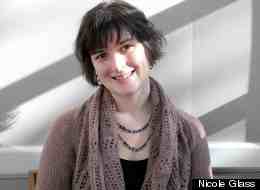
An hour before her live Q&A with the Huffington Post, Sandra Fluke met with me at a Starbuck's (even though she doesn't drink coffee) to talk about her campaign to empower women.
The contraception debate and Rush Limbaugh's personal insults are what placed Fluke in the spotlight, and her concerns are not over. The Affordable Health Choices Act requires all university health care plans to provide free contraception starting in August 2012. But religiously affiliated universities are allowed to request a one-year delay in providing contraception -- and those requests are being made right now, often without student input.
"This is inevitable at this point -- there's no reason to deny coverage for another year and make these women wait longer when they have real medical needs right now," Fluke said, who goes to a Georgetown Law -- a university affiliated with the Catholic Church. She encourages students to find out what decisions their administrations are making, and take action to make sure contraception is on the agenda. "Students will soon become engulfed in finals, so the time for action is today."
But Fluke is also using her media spotlight to highlight a number of other issues that women in America are facing today -- continuing a century-long struggle that Margaret Sanger began in the 1910's.
Sanger, who was one of eleven children, devoted her life to legalizing birth control, beginning her advocacy during a time when women did not even have the right to vote. Although birth control prevented unwanted pregnancies, Sanger was concerned with the health risks associated with many womens' self-conducted abortions (often leading to illness or death). Of women who aborted their own pregnancies, 76 percent faced health complications.
In 1921, after years of opposition and getting herself arrested for providing contraception illegally, she founded the American Birth Control League, which later became Planned Parenthood. But although Sanger can be criticized for some of her other political positions, Fluke says the women's activist started a war for justice that women are still fighting today.
"I'm not sure it's even a different battle, it's just an ongoing one," Fluke said. "Clearly, Ms. Sanger lived in a different time and not all of her positions are ones that I would agree with, but she was definitely a pioneer in thinking about women's reproductive health and needs and standing up for them."
Particularly important to Fluke is the Violence Against Women Act - a bill that is up for reauthorization this year. Some members of Congress are attempting to make the services that the bill gives to victim's of sexual assault less available to women, by lowering the age group that services are available to (including counseling, legal aid, victim programs, and funding for rape crisis centers, and protections for victims of domestic violence).
"Domestic violence is still rampant in our country and that's unacceptable in the type of industrialized wealth country that we have," Fluke said. "I'm hoping that young women will contact their senators about that. What we need is for Senator Harry Reid to bring the bill to the floor for a vote as soon as the Senate gets back in session in April."
What disappointments Fluke is that the bill, which has been around since 1994, is causing bipartisanship in Congress, with conservatives fighting against expanding the budget for domestic violence programs. The new version of the bill would increase free legal assistance to victims of domestic violence, include women who are victims of stalking, and increase coverage to include illegal immigrants and same-sex couples.
Another cause that Fluke, who is unsure about her own post-graduation plans, is taking up: bringing more women into politics. Currently, women make up only 17 percent of Congress, and Fluke thinks this number should be closer to 50.
"If we had equal representation in government, we'd pay more attention to the issues that affect women," she said. But those women who do make it into powerful political positions are the ones that Fluke admires.
"Women who are in powerful political positions are real role models for us and I'd love to see more and more women going in that direction," she said.
Her own role model? Sandra Day O'Conner, the first female member of the US Supreme Court.
"She was the first woman on the Supreme Court and she had the same first name that I did," Fluke said, remembering her childhood heroes. "I thought that was just really cool when I was really little. She went on the court in 1981, and I was born in 1981, so when I was little that was a pretty big deal - it's still a pretty big deal."
Although rumors about Fluke running for office have been spread by the media, one thing is clear: she will continue to fight for women's issues.
"There are so many issues, and to assume as a generation that the work has been done for us and we can just move on without engaging on those issues is just absolutely wrong," she said, before rushing to her Live Q&A with the Huffington Post.
April 13, 2012
Sanger and Mike Wallace
by estherkatz
To commemorate the death last week of hard-hitting journalist Mike Wallace, I would like to recall his controversial 1957 interview with a frail 78-year old Margaret Sanger, as described in the Margaret Sanger Papers Project Newsletter, # 38, Winter 2004/5, in an article by our associate editor, Peter C. Engelman. The 39 year-old Wallace invited Sanger to appear on his ABC program, Mike Wallace Interview on June 3, 1957, but she was reluctant to be interviewed because she had heard "things" about the program. She finally agreed to appear, when Wallace cancelled the program, bowing to the demand of his sponsor, Philip Morris, which was being pressured by the Catholic Church. Angered by these threats and Wallace's response, Sanger reacted by tentatively scheduling an interview with a Wallace’s old show Night Beat. Wallace responded by quickly signing Sanger to a contract for the interview.
“Good evening," Wallace began his live program at 10pm on Saturday night, September 21, 1957, opposite the formidable Western program,Gunsmoke, "what you’re about to witness is an unrehearsed, uncensored interview on the issue of Birth Control. It will be a free discussion of an adult topic, the topic that we feel merits public examination. My name is Mike Wallace, the cigarette is Philip Morris." On a bare, darkened set with cigarette smoke curling, sat Wallace under one spotlight, as he introduced Margaret Sanger, sitting opposite under another spotlight, as as a crusader who opened the first birth control clinic, went to jail eight times, suffered long separations from her children, a break-up of her first marriage, and "constant harrowing social abuse" for her allegiance to the cause of birth control.
Sanger looked all of her 78 years, the poor lighting and smoky haze accentuating her withered appearance. Weakened by heart problems over the past decade and a host of other ailments, Sanger also seemed uncomfortable, fidgety, unsure where to look at times. But the interview started off well. She handled Wallace’s first question, about the origins of her crusade, with relative ease. "I saw women,," she told him, "who asked to have some means whereby they wouldn’t have to have another pregnancy too early, after the last child, the last abortion, which many of them had. Certainly there are numerous things [...] that really made you feel that you had to do something." She cited her mother’s premature death after bearing eleven children as a motivating force.
Wallace, sounding at times more like an interrogator than an interviewer, suggested that maybe Sanger was "driven emotionally toward the birth control movement because of antagonism toward the church" stemming from her troubled upbringing with a Catholic mother and atheist father.
She responded: "No I don’t think I had anything of the kind in mind–I was–I was what I would call a born humanitarian. I don’t like to see people suffer, I don’t like to see cruelty even to this day and in nursing you see a great deal of cruelty and unnecessary suffering. At that time, there was no opposition as far as the church was concerned, any church. It was mainly the law, Federal Laws and State Laws, that one had to–to think of. The church was not in my mind at all."
On the issue of population control, however, Sanger seemed to have trouble hearing Wallace’s questions and began stumbling over her words, beginning a thought but not having a clear sense of where she was taking it. When Wallace turned again to the Catholic Church, Sanger regained some of her old vigor. Wallace asked her to comment on the official position of the Catholic Church on birth control-–that any contraception is used "unethically and unnaturally" since "the immediate purpose and primary end of marriage is the begetting of children.”
SANGER: "It’s very wrong, it’s not normal-–it’s-–it has a wrong attitude towards marriage, toward love, toward the normal relationships between men and women."
WALLACE: "Well the natural law they say is that first of all the primary function of sex in marriage is to beget children. You don’t disagree with that?"
SANGER: "I disagree with that a hundred percent."
When Wallace asked Sanger what she thought the Church’s motive was in forbidding birth control, Sanger refused to give an answer.
WALLACE: "Have you heard it said, that the reason that the Church is against birth control is because they want more Catholics?"
SANGER: "I’ve read it."
WALLACE: "Do you believe it?"
SANGER: "Yes. If you read their papers at Boston, that that’s what had happened in Boston in Massachusetts. They had simply outbred the Protestants and they--they-–in Boston in Massachusetts they had control. I read that in their own papers."
The interview then began to disintegrate as Sanger grew flustered over Wallace’s successful reduction of the topic to a personal debate between Sanger and the Church. She now looked for traps and unfounded accusations, and sounded defensive and unsure of herself. She had prepared some index cards with possible answers to some of his questions, but never referred to them.
Wallace presented the argument that birth control encouraged promiscuity, quoting from a magazine article that claimed it "tends to weaken the moral fibre of the community. Immunity from parenthood encourages promiscuity, particularly when unmarried persons can so easily avail themselves of the devices. Do you doubt that?"
SANGER: "I doubt it."
When Wallace asked her what her feeling on the issue was, Sanger replied, "My feeling is that love and attraction between men and women, in many cases is the very finest relationship; it has nothing to do with bearing a child, it’s secondary many, many times and we know that–you see your birth rates and you can talk to people who have very happy marriages and they’re not having babies every year. Yes, I think that’s a celibate attitude [...] It’s an unnatural attitude to take–how do they know? I mean after all, they’re celibates. They don’t love, they don’t know marriage, they know nothing about bringing up children nor any of the marriage problems of life, and yet they speak to people as if they were God."
Wallace then returned to Sanger's views on the Catholic church, and she again became frustrated and flustered. He then asked her about her own views of divinity and sin.
SANGER: "I think the greatest sin in the world is bringing children into the world–-that have disease from their parents that have no chance in the world to be a human being practically. Delinquents, prisoners, all such a thing just marked when they’re born. That to me is the greatest sin–that people can–can commit."
But when Wallace asked her if she believed infidelity was a sin, Sanger, even more flustered, answered, "Well, I’m not going to specify what I think is a sin. I stated what I think is the worst sin."
Wallace then asked Sanger about ways to reduce the divorce rate. When she began to discuss marriage counseling services at birth control clinics, he interrupted Her.
WALLACE: "May I–-may I ask you this could it be that women in the United States have become too independent–that they followed the lead of women like Margaret Sanger by neglecting family life for a career?" He was referring to the independent life she maintained during her second marriage to J. Noah Slee.
Sanger claimed she had enjoyed a happy marriage, though she did not discuss birth control as a tool for balancing family life and career. When Wallace implied , that in her own life she chose work over family, Sanger was shocked and could only muster a grandmotherly smile as she showed the camera snapshots of her grandchildren. She then obediently plugged the sponsor with an awkward endorsement of Phillip Morris cigarette. smoking.
In the days and weeks after the interview, Sanger's friends and supporters uniformly attacked Wallace and his interview technique, but Sanger knew she had missed a rare opportunity to promote birth control to a wide audience. She wrote her niece, "I had a good time at those moments of his confusion! He was, of course, speaking for the R. C.’s as instructed. It was sad I did not get in anything about world wide Birth Control work.” To a friend, she noted that though Wallace “got a few replies that knocked him pale in the face. I had a good time, even though the time was wasted as far as Birth Control was concerned. The questions he asked were old stuff to me. I’d almost forgotten how I used to answer them.” (MS to Olive Byrne Richard and to Ellen Watumull, Oct. 9, 1957 Margaret Sanger Papers Microfilm Edition: Smith College Collections (MSM), Reel 52, frames 540, 950.)
In December 1957, after Wallace sent Sanger an engraved cigarette box as a Christmas gift, she replied, "It is certainly a good reminder of a most amusing evening. . . . I have had so many letters, phone calls, and personal talks about the Mike Wallace interview. Some of my admirers hope to get a chance to ‘kill’ you one day, because you caused them to spend their valuable time listening to ‘crazy’ questions about the Roman Catholic religion and not a word about the world-wide spread of birth control practice and education. I have a letter from a listener who writes she is convinced that ‘Mike Wallace is a Roman Catholic.’ So it goes.” (MS to Wallace, Dec. 19, 1957 [MSM S53:121].)
If Sanger had been younger and in better health, she would no doubt have been less flustered by Wallace's questions, and not thrown off by his interview style. But given her age and condition, perhaps this was an early example of so-called "gothcha" journalism. More likely it was Mike Wallace being Mike Wallace. When asked about the interview in 2004, Wallace called Sanger a “genuine pioneer,” and did not recall her being flustered or nervous, but rather “sure of her ground.” It is perhaps more a testimony to Sanger's own history and reputation that he thought her tough enough to take on!
source=mspp
To commemorate the death last week of hard-hitting journalist Mike Wallace, I would like to recall his controversial 1957 interview with a frail 78-year old Margaret Sanger, as described in the Margaret Sanger Papers Project Newsletter, # 38, Winter 2004/5, in an article by our associate editor, Peter C. Engelman. The 39 year-old Wallace invited Sanger to appear on his ABC program, Mike Wallace Interview on June 3, 1957, but she was reluctant to be interviewed because she had heard "things" about the program. She finally agreed to appear, when Wallace cancelled the program, bowing to the demand of his sponsor, Philip Morris, which was being pressured by the Catholic Church. Angered by these threats and Wallace's response, Sanger reacted by tentatively scheduling an interview with a Wallace’s old show Night Beat. Wallace responded by quickly signing Sanger to a contract for the interview.
“Good evening," Wallace began his live program at 10pm on Saturday night, September 21, 1957, opposite the formidable Western program,Gunsmoke, "what you’re about to witness is an unrehearsed, uncensored interview on the issue of Birth Control. It will be a free discussion of an adult topic, the topic that we feel merits public examination. My name is Mike Wallace, the cigarette is Philip Morris." On a bare, darkened set with cigarette smoke curling, sat Wallace under one spotlight, as he introduced Margaret Sanger, sitting opposite under another spotlight, as as a crusader who opened the first birth control clinic, went to jail eight times, suffered long separations from her children, a break-up of her first marriage, and "constant harrowing social abuse" for her allegiance to the cause of birth control.
Sanger looked all of her 78 years, the poor lighting and smoky haze accentuating her withered appearance. Weakened by heart problems over the past decade and a host of other ailments, Sanger also seemed uncomfortable, fidgety, unsure where to look at times. But the interview started off well. She handled Wallace’s first question, about the origins of her crusade, with relative ease. "I saw women,," she told him, "who asked to have some means whereby they wouldn’t have to have another pregnancy too early, after the last child, the last abortion, which many of them had. Certainly there are numerous things [...] that really made you feel that you had to do something." She cited her mother’s premature death after bearing eleven children as a motivating force.
Wallace, sounding at times more like an interrogator than an interviewer, suggested that maybe Sanger was "driven emotionally toward the birth control movement because of antagonism toward the church" stemming from her troubled upbringing with a Catholic mother and atheist father.
She responded: "No I don’t think I had anything of the kind in mind–I was–I was what I would call a born humanitarian. I don’t like to see people suffer, I don’t like to see cruelty even to this day and in nursing you see a great deal of cruelty and unnecessary suffering. At that time, there was no opposition as far as the church was concerned, any church. It was mainly the law, Federal Laws and State Laws, that one had to–to think of. The church was not in my mind at all."
On the issue of population control, however, Sanger seemed to have trouble hearing Wallace’s questions and began stumbling over her words, beginning a thought but not having a clear sense of where she was taking it. When Wallace turned again to the Catholic Church, Sanger regained some of her old vigor. Wallace asked her to comment on the official position of the Catholic Church on birth control-–that any contraception is used "unethically and unnaturally" since "the immediate purpose and primary end of marriage is the begetting of children.”
SANGER: "It’s very wrong, it’s not normal-–it’s-–it has a wrong attitude towards marriage, toward love, toward the normal relationships between men and women."
WALLACE: "Well the natural law they say is that first of all the primary function of sex in marriage is to beget children. You don’t disagree with that?"
SANGER: "I disagree with that a hundred percent."
When Wallace asked Sanger what she thought the Church’s motive was in forbidding birth control, Sanger refused to give an answer.
WALLACE: "Have you heard it said, that the reason that the Church is against birth control is because they want more Catholics?"
SANGER: "I’ve read it."
WALLACE: "Do you believe it?"
SANGER: "Yes. If you read their papers at Boston, that that’s what had happened in Boston in Massachusetts. They had simply outbred the Protestants and they--they-–in Boston in Massachusetts they had control. I read that in their own papers."
The interview then began to disintegrate as Sanger grew flustered over Wallace’s successful reduction of the topic to a personal debate between Sanger and the Church. She now looked for traps and unfounded accusations, and sounded defensive and unsure of herself. She had prepared some index cards with possible answers to some of his questions, but never referred to them.
Wallace presented the argument that birth control encouraged promiscuity, quoting from a magazine article that claimed it "tends to weaken the moral fibre of the community. Immunity from parenthood encourages promiscuity, particularly when unmarried persons can so easily avail themselves of the devices. Do you doubt that?"
SANGER: "I doubt it."
When Wallace asked her what her feeling on the issue was, Sanger replied, "My feeling is that love and attraction between men and women, in many cases is the very finest relationship; it has nothing to do with bearing a child, it’s secondary many, many times and we know that–you see your birth rates and you can talk to people who have very happy marriages and they’re not having babies every year. Yes, I think that’s a celibate attitude [...] It’s an unnatural attitude to take–how do they know? I mean after all, they’re celibates. They don’t love, they don’t know marriage, they know nothing about bringing up children nor any of the marriage problems of life, and yet they speak to people as if they were God."
Wallace then returned to Sanger's views on the Catholic church, and she again became frustrated and flustered. He then asked her about her own views of divinity and sin.
SANGER: "I think the greatest sin in the world is bringing children into the world–-that have disease from their parents that have no chance in the world to be a human being practically. Delinquents, prisoners, all such a thing just marked when they’re born. That to me is the greatest sin–that people can–can commit."
But when Wallace asked her if she believed infidelity was a sin, Sanger, even more flustered, answered, "Well, I’m not going to specify what I think is a sin. I stated what I think is the worst sin."
Wallace then asked Sanger about ways to reduce the divorce rate. When she began to discuss marriage counseling services at birth control clinics, he interrupted Her.
WALLACE: "May I–-may I ask you this could it be that women in the United States have become too independent–that they followed the lead of women like Margaret Sanger by neglecting family life for a career?" He was referring to the independent life she maintained during her second marriage to J. Noah Slee.
Sanger claimed she had enjoyed a happy marriage, though she did not discuss birth control as a tool for balancing family life and career. When Wallace implied , that in her own life she chose work over family, Sanger was shocked and could only muster a grandmotherly smile as she showed the camera snapshots of her grandchildren. She then obediently plugged the sponsor with an awkward endorsement of Phillip Morris cigarette. smoking.
In the days and weeks after the interview, Sanger's friends and supporters uniformly attacked Wallace and his interview technique, but Sanger knew she had missed a rare opportunity to promote birth control to a wide audience. She wrote her niece, "I had a good time at those moments of his confusion! He was, of course, speaking for the R. C.’s as instructed. It was sad I did not get in anything about world wide Birth Control work.” To a friend, she noted that though Wallace “got a few replies that knocked him pale in the face. I had a good time, even though the time was wasted as far as Birth Control was concerned. The questions he asked were old stuff to me. I’d almost forgotten how I used to answer them.” (MS to Olive Byrne Richard and to Ellen Watumull, Oct. 9, 1957 Margaret Sanger Papers Microfilm Edition: Smith College Collections (MSM), Reel 52, frames 540, 950.)
In December 1957, after Wallace sent Sanger an engraved cigarette box as a Christmas gift, she replied, "It is certainly a good reminder of a most amusing evening. . . . I have had so many letters, phone calls, and personal talks about the Mike Wallace interview. Some of my admirers hope to get a chance to ‘kill’ you one day, because you caused them to spend their valuable time listening to ‘crazy’ questions about the Roman Catholic religion and not a word about the world-wide spread of birth control practice and education. I have a letter from a listener who writes she is convinced that ‘Mike Wallace is a Roman Catholic.’ So it goes.” (MS to Wallace, Dec. 19, 1957 [MSM S53:121].)
If Sanger had been younger and in better health, she would no doubt have been less flustered by Wallace's questions, and not thrown off by his interview style. But given her age and condition, perhaps this was an early example of so-called "gothcha" journalism. More likely it was Mike Wallace being Mike Wallace. When asked about the interview in 2004, Wallace called Sanger a “genuine pioneer,” and did not recall her being flustered or nervous, but rather “sure of her ground.” It is perhaps more a testimony to Sanger's own history and reputation that he thought her tough enough to take on!
source=mspp
February 24, 2012
Another Look at Margaret Sanger and Race

Courtesy of the Sophia Smith Collection
In a 1945 interview published in the Chicago Defender, Margaret Sanger said:
“Discrimination is a world-wide thing. It has to be opposed everywhere. That is why I feel the Negro’s plight here is linked with that of the oppressed around the globe. The big answer, as I see it, is the education of the white man. The white man is the problem. It is the same as with the Nazis. We must change the white attitudes. That is where it lies.”Wait one minute! I thought that Margaret Sanger was a racist Nazi bent on exterminating African-Americans who hobnobbed with Hitler! That’s what the Internet says. Accusations like these, once found only among fringe groups, on blogs and homemade websites, have been moving increasingly into the mainstream media. As historians who have dedicated years to making Sanger’s papers easily accessible, readable, and understandable it is disheartening to see these ahistorical attacks.
One of the difficulties of exploring Sanger’s views on race is that much is made of a very small number of historical documents. Though she sought to expand access to birth control information to all women, not just African-Americans, Sanger’s efforts to reach poor African-American women in the South in the late 1930s have been held up as proof of her malign intent to exterminate black babies. (for details on the Negro Project see our Newsletter article “Birth Control or Race Control”) Sanger’s views on eugenics, where she supports the idea that those less fit should have smaller families, have been interpreted to refer specifically to African-Americans, despite her explicit statement that her use of the term “unfit” did not refer to specific races or religions, a position about which she said: “I frankly deplore.” (“Questionnaire,” Feb. 13, 1934, in Selected Papers of Margaret Sanger, Volume 2, p. 277.) What we have found is that in the larger context of Sanger’s work, her work with African-American women doesn’t differ in any substantive way from the way that she worked with white women. But demonstrating this is not easy to fit into sound bites and Sanger left no documents that explicitly discussed issues of race.
Or did she? While searching the digital Historical African American Newspapers collection available through ProQuest, we came across the Chicago Defender interview. This short article contains possibly the most explicit comments about race and racism Sanger ever made. Published in the American Viewpoint column, the interview, entitled “On U.S. Birth and Bias Control” was 1945 conducted by Earl Conrad, a white journalist working in the Defender’s New York Bureau.
Conrad and Sanger discussed the problems facing American Negros as part of a broader world problem. “It is not just a Negro problem,” Sanger remarked, “Like the problems of the people of India, of minorities everywhere, it is a democratic problem. We have got to work all together on these issues.” She spoke of her trips to India and China, and said, “Knowing our own problem, it gave me greater sympathy with the others, with what I saw in the Orient. I can recall many horrible things I saw in India. I once saw a white man come out of a train; there were five or six Indians in his way; he just kicked them away–literally, with his foot. There were a hundred people around, who were powerless to strike him. The white man’s power and the Indian’s defenselessness were so unjust. “
In discussing birth control work among African-Americans, Sanger mused, “From the very beginning of birth control, there was the problem of approaching the Negro. Soon after I launched the campaign, a Harlem Methodist leader, who was most intelligent, questioned me about birth control. He was a brilliant speaker, and he had been thinking about it. Later a man named Harrison of the Urban League took up our idea.” In addition to Hubert Harrison, Sanger had the support of W.E.B. DuBois, and Rev. William Lloyd Imes in her efforts to open a Harlem branch of her downtown birth control clinic (for more on the Harlem branch, see Newsletter article “Looking Uptown”). Talking with Conrad in 1945, she mentioned that she felt that attitudes about African-Americans were slowly changing. “When we first started out an anti-Negro white man offered me $10,000 if I started in Harlem first. His idea was simply to cut down the number of Negroes. ‘Spread it as far as you can among them,’ he said. That is, of course, not our idea. I turned him down. But that is an example of how vicious some people can be about this thing.”
Conrad asked Sanger about her experiences regarding race in the South, during her many lectures there. “I remember addressing a colored church group once. I was staying with a white doctor at the time. They didn’t let a Negro doctor introduce me to the people. The white doctor had to do it. That was in Memphis. What hangs over the South is that the Negro has been in servitude. The white southerner is slow to forget this. His attitude is the archaic in this age. Supremacist thinking belongs in the museum.”
Sanger saw collaboration as the way to overcome racism. “One thing that is most helpful is to have people working together. When you have Negroes working with whites you have the breakdown of barriers, the beginning of progress. Negro groups must take the initiative, and not wait around for integration to come to them. They must get it themselves. The struggle for it will bring it. . . . Planned parenthood is not aimed at any one people. It is for all, and the objective is to do away with the waste of life. A sickly race is a weak race. As long as Negro mothers die in childbirth at two and one-half times the rate of white mothers, as long as Negro babies are dying at twice the rate of white babies, colored homes will be unhappy. Negro participation in planned parenthood means democratic participation in a democratic idea. Like other democratic ideas, planned parenthood places greater value on human life and the dignity of each person. Without planning at birth, the life of Negroes as a whole in a democratic world cannot be planned.” (Earl Conrad, “On U.S. Birth and Bias Control,” Chicago Defender, Sept. 22, 1945, 11, see our digital edition (currently in beta testing), Speeches and Articles of Margaret Sanger, 1911-1959 for a full transcription.)
February 7, 2012
The woman who changed women's lives
- The Free Lance-Star (Fredericksburg, Va.)
TOWSON, MD. - Almost 100 years ago, in the fall of 1916, a courageous visionary opened a birth control clinic in Brooklyn. After the death of a patient from a botched abortion in 1912, Margaret Sanger had begun preaching her solution: If women had access to birth control, there would be fewer of the dangerous procedures that cost desperate women their lives in a nation that outlawed all abortions.
One of 11 children and trained as a nurse, Sanger was all too familiar with the pleas of women seeking information about controlling their pregnancies. But under the 1873 Comstock Act, Congress had classified all birth-control materials and devices as obscene, pornographic matter. Those involved in its marketing, circulation, and advertisement were subject to five years in jail.
In an act of civil disobedience that ended in her imprisonment, Sanger traveled through Brooklyn promoting her clinic: "Mothers," read the placards written in Italian, Hebrew and English, "Can you afford to have a large family? Do you want more children? If not, why do you have them?" When her clinic on Amboy Street opened, the women came - nearly 500 in the 10 days before the clinic was closed by the police and she was hauled off to jail. So began Margaret Sanger's lifelong crusade to provide women with safe, effective, convenient and cheap contraceptives.
In these early days her strategy was fourfold: In serial steps she would first agitate, next educate, then organize, and finally lobby for her cause. All the while she would search for a more effective contraceptive than the cumbersome spermicidal douches and what this generation called pessaries and we know as diaphragms. After her release from prison, she took her crusade on the road, lecturing and promoting "Family Limitation," the banned pamphlet she had written in 1915 and that more than anything else in print, explicitly informed readers about the various techniques of preventing pregnancy.
"I come," she proclaimed in her speeches, "not from the stake of Salem where women were tried for blasphemy, but from the shadow of Blackwell's Island, where women are tortured for obscenity."
Sanger faced hostile audiences and locked lecture halls, the latter often closed after Catholic priests threatened local authorities. She endured harassment from doctors who dismissed her as an attention-seeking hysteric. As well she suffered a hesitant public, some of whom, like the suffrage leader Carrie Chapman Catt, considered talk of birth control vulgar. But Sanger also discovered a vast, previously invisible female audience that hungered for some way to control the timing and frequency of their pregnancies. "No woman is free who does not control her own body," she counseled.
In an environment of declining fertility rates, Sanger's intention was to make birth control a legal, public matter supported by physicians (the latter profession overwhelmingly opposed to birth control until the late 1930s) and scientific research. For Sanger, discussion of sexual anatomy was no more obscene than considerations of the functions of the heart or stomach. She encouraged a new generation's tolerance through her books, two of which sold more than a half-million copies in three years.
Having no choice but to become an educator on matters of sex, she responded to thousands of pathetic entreaties from American women with too many children too closely spaced, with unemployed husbands - some of these women suffering from the ill health that came from constant, exhausting pregnancies.
"Dear Mrs. Birth Control," went one letter to Sanger. "I am 28 years old and have six children. I suffer from tuberculosis. Can you send me some information so that I will not have another baby?"
By the 1920s, propelled by Sanger and the impersonal forces of urbanization and modernization, American public opinion on the matter of birth control was shifting. Fewer Americans disdained information about contraception as pornographic; rather, as Sanger repeated, spacing babies was a public health matter. Not everyone, including some organized churches and synagogues, still accepted the obdurate Catholic position that artificial methods of birth control were sinful and that children trooped down from heaven at the will of God.
In 1921, Sanger, with the dissemination of specific information still against the law, set about the organizational phase of her campaign. She established the American Birth Control League, the national arm of her growing social movement and the home of the influential, Sanger-edited Journal of Contraception. By 1930, in a measure of her success, Margaret Sanger was
included in a list of the most influential living Americans.
Relief from the Comstock law finally came in a case orchestrated by Sanger who had encouraged a Japanese physician to send a package of contraceptive supplies to her clinic. The supplies were promptly confiscated by U.S. Customs under the prohibitions of the Comstock Act, and the doctor in charge of Sanger's clinic sued for their release. In 1935 a New York appeals court ruled that the language of the Comstock Act could no longer be construed literally. Advances in medicine had rendered contraception safe and practical; that ancient arbiter of judicial change - common sense - called for a reinterpretation of the Comstock Act. Although Sanger was out of the country at the time, her lawyers agreed that she had educated the judges on the matter.
There was still work to do. At the Sanger-organized international conferences she had listened to a new generation of scientists in the emerging field of endocrinology discuss the possibilities of a hormone that would prevent ovulation. In 1952, she persuaded her wealthy friend Katherine McCormick to invest in the laboratory of Dr. Gregory Pincus in Worcester, Mass. From the beginning of her campaign, Sanger had sought some kind of contraceptive pill, while for years Pincus had been working on mammalian eggs and the effect of the hormone progesterone on ovulation.
With McCormick's money and Sanger's incessant advocacy, Pincus developed Sanger's dream. In 1960, when the pharmaceutical company Searle released Enovid, Sanger became one of those rare, signal reformers who lived long enough to see her reform enacted and whose contributions made hers the eponym for the birth-control movement.
Today Margaret Sanger is inaccurately vilified by those whose agenda is to stifle her organizational legacy, Planned Parenthood of America. She is dismissed as a racist and a eugenicist, even labeled by the uninformed Herman Cain as a supporter of "planned genocide" who placed her clinics in black neighborhoods in order to prevent the birth of black babies.
The facts suggest otherwise: Black leaders such as W.E.B. DuBois and Franklin Frazier had asked her to establish a clinic in Harlem. Sanger despised racial segregation. Moreover her version of the pervasive tenets of eugenicism was to adopt birth control for fewer, better babies, spaced according to a mother's health and energy. In 1966 86-year-old Margaret Sanger died, but her legacy to all Americans survives.
---
ABOUT THE WRITER
Jean H. Baker is a professor of history at Goucher College. She is the author of the recently published "Margaret Sanger: A Life of Passion." Readers may send her email at jean.baker@goucher.edu. She wrote this for The Free Lance-Star in Fredericksburg, Va.
This essay is available ar McClatchy-Tribune News Service.
TOWSON, MD. - Almost 100 years ago, in the fall of 1916, a courageous visionary opened a birth control clinic in Brooklyn. After the death of a patient from a botched abortion in 1912, Margaret Sanger had begun preaching her solution: If women had access to birth control, there would be fewer of the dangerous procedures that cost desperate women their lives in a nation that outlawed all abortions.
One of 11 children and trained as a nurse, Sanger was all too familiar with the pleas of women seeking information about controlling their pregnancies. But under the 1873 Comstock Act, Congress had classified all birth-control materials and devices as obscene, pornographic matter. Those involved in its marketing, circulation, and advertisement were subject to five years in jail.
In an act of civil disobedience that ended in her imprisonment, Sanger traveled through Brooklyn promoting her clinic: "Mothers," read the placards written in Italian, Hebrew and English, "Can you afford to have a large family? Do you want more children? If not, why do you have them?" When her clinic on Amboy Street opened, the women came - nearly 500 in the 10 days before the clinic was closed by the police and she was hauled off to jail. So began Margaret Sanger's lifelong crusade to provide women with safe, effective, convenient and cheap contraceptives.
In these early days her strategy was fourfold: In serial steps she would first agitate, next educate, then organize, and finally lobby for her cause. All the while she would search for a more effective contraceptive than the cumbersome spermicidal douches and what this generation called pessaries and we know as diaphragms. After her release from prison, she took her crusade on the road, lecturing and promoting "Family Limitation," the banned pamphlet she had written in 1915 and that more than anything else in print, explicitly informed readers about the various techniques of preventing pregnancy.
"I come," she proclaimed in her speeches, "not from the stake of Salem where women were tried for blasphemy, but from the shadow of Blackwell's Island, where women are tortured for obscenity."
Sanger faced hostile audiences and locked lecture halls, the latter often closed after Catholic priests threatened local authorities. She endured harassment from doctors who dismissed her as an attention-seeking hysteric. As well she suffered a hesitant public, some of whom, like the suffrage leader Carrie Chapman Catt, considered talk of birth control vulgar. But Sanger also discovered a vast, previously invisible female audience that hungered for some way to control the timing and frequency of their pregnancies. "No woman is free who does not control her own body," she counseled.
In an environment of declining fertility rates, Sanger's intention was to make birth control a legal, public matter supported by physicians (the latter profession overwhelmingly opposed to birth control until the late 1930s) and scientific research. For Sanger, discussion of sexual anatomy was no more obscene than considerations of the functions of the heart or stomach. She encouraged a new generation's tolerance through her books, two of which sold more than a half-million copies in three years.
Having no choice but to become an educator on matters of sex, she responded to thousands of pathetic entreaties from American women with too many children too closely spaced, with unemployed husbands - some of these women suffering from the ill health that came from constant, exhausting pregnancies.
"Dear Mrs. Birth Control," went one letter to Sanger. "I am 28 years old and have six children. I suffer from tuberculosis. Can you send me some information so that I will not have another baby?"
By the 1920s, propelled by Sanger and the impersonal forces of urbanization and modernization, American public opinion on the matter of birth control was shifting. Fewer Americans disdained information about contraception as pornographic; rather, as Sanger repeated, spacing babies was a public health matter. Not everyone, including some organized churches and synagogues, still accepted the obdurate Catholic position that artificial methods of birth control were sinful and that children trooped down from heaven at the will of God.
In 1921, Sanger, with the dissemination of specific information still against the law, set about the organizational phase of her campaign. She established the American Birth Control League, the national arm of her growing social movement and the home of the influential, Sanger-edited Journal of Contraception. By 1930, in a measure of her success, Margaret Sanger was
included in a list of the most influential living Americans.
Relief from the Comstock law finally came in a case orchestrated by Sanger who had encouraged a Japanese physician to send a package of contraceptive supplies to her clinic. The supplies were promptly confiscated by U.S. Customs under the prohibitions of the Comstock Act, and the doctor in charge of Sanger's clinic sued for their release. In 1935 a New York appeals court ruled that the language of the Comstock Act could no longer be construed literally. Advances in medicine had rendered contraception safe and practical; that ancient arbiter of judicial change - common sense - called for a reinterpretation of the Comstock Act. Although Sanger was out of the country at the time, her lawyers agreed that she had educated the judges on the matter.
There was still work to do. At the Sanger-organized international conferences she had listened to a new generation of scientists in the emerging field of endocrinology discuss the possibilities of a hormone that would prevent ovulation. In 1952, she persuaded her wealthy friend Katherine McCormick to invest in the laboratory of Dr. Gregory Pincus in Worcester, Mass. From the beginning of her campaign, Sanger had sought some kind of contraceptive pill, while for years Pincus had been working on mammalian eggs and the effect of the hormone progesterone on ovulation.
With McCormick's money and Sanger's incessant advocacy, Pincus developed Sanger's dream. In 1960, when the pharmaceutical company Searle released Enovid, Sanger became one of those rare, signal reformers who lived long enough to see her reform enacted and whose contributions made hers the eponym for the birth-control movement.
Today Margaret Sanger is inaccurately vilified by those whose agenda is to stifle her organizational legacy, Planned Parenthood of America. She is dismissed as a racist and a eugenicist, even labeled by the uninformed Herman Cain as a supporter of "planned genocide" who placed her clinics in black neighborhoods in order to prevent the birth of black babies.
The facts suggest otherwise: Black leaders such as W.E.B. DuBois and Franklin Frazier had asked her to establish a clinic in Harlem. Sanger despised racial segregation. Moreover her version of the pervasive tenets of eugenicism was to adopt birth control for fewer, better babies, spaced according to a mother's health and energy. In 1966 86-year-old Margaret Sanger died, but her legacy to all Americans survives.
---
ABOUT THE WRITER
Jean H. Baker is a professor of history at Goucher College. She is the author of the recently published "Margaret Sanger: A Life of Passion." Readers may send her email at jean.baker@goucher.edu. She wrote this for The Free Lance-Star in Fredericksburg, Va.
This essay is available ar McClatchy-Tribune News Service.
January 31, 2012
bio
Margaret Sanger
Margaret Higgens was born in Corning, New York, on 14th September 1883.
She was the sixth of eleven children. Her mother also had seven more
babies that died in childhood, before dying of cervical cancer. Educated
at Claverack College, she became a trained nurse and married William
Sanger, an architect, in 1902. After moving to Saranac for health
reasons she gave birth to three children. Over the next 12 years she
devoted herself to being a housewife and mother.
In her autobiography she wrote: "My own motherhood was joyous, loving, happy. I wanted to share these joys with other women. Since the birth of my first child I had realized the importance of spacing babies, but only a few months before had I fully grasped the significant fact that a powerful law denied and prevented mothers from obtaining knowledge to properly space their families."
When her three children were old enough to go to school she returned to work as a public health nurse in the slums of New York. Sanger joined the Socialist Party and became friends with other radicals such as John Reed, Upton Sinclair, Mabel Dodge, Robert Minor, Agnes Smedley, Kate Richards O'Hare, Eugene Debs, Elizabeth Flynn, Norman Thomas and Emma Goldman.
In July 1912 she was summoned to a Grand Street tenement. "My patient was a small, slight Russian Jewess, about twenty-eight years old, of the special cast of feature to which suffering lends a madonna-like expression. The cramped three-room apartment was in a sorry state of turmoil. Jake Sachs, a truck driver scarcely older than his wife, had come home to find the three children crying and her unconscious from the effects of a self-induced abortion." When Sadie Sachs died Margaret Sanger made a pledge to devote her life to making reliable contraceptive information available to women. She began her campaign by writing a column for the New York Call entitled "What Every Girl Should Know."
Upset by the poverty she experienced as a nurse in New York she founded a radical feminist magazine, The Woman Rebel. As Sanger later observed in her autobiography: "During these years in New York more and more my calls began to come from the Lower East Side, as though I were being magnetically drawn there by some force outside my control. I hated the wretchedness and hopelessness of the poor, and never experienced that satisfaction in working among them that so many noble women have found. My concern for my patients was now quite different from my earlier hospital attitude. I could see that much was wrong with them that did not appear in the physiological or medical diagnosis. A woman in childbirth was not merely a woman in childbirth. My expanded outlook included a view other background, her potentialities as a human being, the kind of children she was bearing, and what was going to happen to them."
After the death of a patient during childbirth Sanger decided to devote her life to making reliable contraceptive information available to women. She published the Birth Control Review and persuaded Lou Rogers and Cornelia Barns to be co-art editors of the journal.
The main theme of her articles was that "no woman can call herself free who doesn't own and control her own body."
After advice about birth-control appeared in her newspaper in1915, she was charged with publishing an "obscene and lewd article".
The Masses gave its full support to Sanger's campaign. Floyd Dell was assistant editor at the journal: "The Masses published articles in defense of of Margaret Sanger, and the magazine was immediately flooded with thousands of letters from women, asking for information about the methods of birth control, and giving the best as well as the most heart-breaking reasons for needing such information. These letters, as associate editor, I answered, saying that we were forbidden by law to give the information; then, as a private individual, I carefully turned over all these letters to other private individuals, who mailed this information to the women; and in this law-breaking I cheerfully and conscientiously participated. I believed then, as I do now, that it is a moral duty to violate evil laws."
Margaret Sanger fled to Britain and it was while she was in London she met Marie Stopes. She later recalled: "She then explained to me that, owing to her previous unfortunate marriage she had no experience in matters of contraception nor any occasion to inform herself of their use. Could I tell her exactly what methods were used? I replied that it would give me the greatest pleasure to bring to her home such devices as I had in my possession. Accordingly, we met again the following week for dinner in her home, and inspected and discussed the French pessary which she stated she then saw for the first time. I gave her my own pamphlets, all of which contained contraceptive information."
After hearing Sanger's story Marie Stopes decided to start a birth-control campaign in Britain. She knew it would be dangerous as several people in Britain, including Richard Carlile, Charles Bradlaugh and Annie Besant, had been sent to prison for advocating birth-control.
In December 1914 Sanger sent a letter to Havelock Ellis. As Phyllis Grosskurth, the author of Havelock Ellis (1980), has pointed out: "He invited her to tea the following week and was startled to find her so pretty and so comparatively young. At first she was overwhelmed by his patriarchal beauty and his refusal to make small talk. She was also surprised - as many others were on first meeting him - by his thin, high voice, so unexpected in a man of his size."
Sanger fell in love with Ellis. She wrote in An Autobiography (1938): "I was at peace, and content as I had never been before... I was not excited as I went back through the heavy fog to my own dull little room. My emotion was too deep for that. I felt as though I had been exalted into a hitherto undreamed-of world."
Soon afterwards Sanger tried to turn it into a sexual relationship. Havelock Ellis wrote to her explaining "What I felt, and feel, is that by just being your natural spontaneous self you are giving me so much more than I can hope to give you. You see, I am an extremely odd, reserved, slow undemonstrative person, whom it takes years and years to know. I have two or three very dear friends who date from 20 or 25 years back (and they like me better now than they did at first) and none of recent date."
Sanger returned to New York City and on 16th October, 1916, with the help of Kitty Marion, she opened a family planning and birth control clinic in the Brownsville neighborhood of Brooklyn. It was raided nine days later by the police and Sanger served 30 days in prison. In 1917 she published What Every Mother Should Know.
In 1921 Sanger founded the American Birth-Control League. Later that year her friend Marie Stopes also opened the first of her birth-control clinics in Holloway on 17th March 1921. Guy Aldred and Rose Witcop, joined the campaign and when they published a pamphlet written by Margaret Sanger, they were found guilty of selling an obscene publication. The case drew much press coverage and the couple were supported financially by John Maynard Keynes, Dora Black and Bertrand Russell. Later that year this group was joined by Katharine Glasier, Susan Lawrence, Margaret Bonfield, Dorothy Jewson and H. G. Wells to establish the Workers' Birth Control Group.
Margaret Sanger continued her campaign and in 1927, Sanger helped organize the first World Population Conference in Geneva. The following year she resigned as the president of the American Birth-Control League and devoted her energies to the Birth Control Clinical Research Bureau. She also published two books on the subject: Motherhood in Bondage (1928) and My Fight for Birth Control (1931).
In 1932 Margaret Sanger became president of the Birth Control International Information Center. The dissemination of birth control information by doctors was finally legalized in the United States in 1937. Her memoirs, The Autobiography of Margaret Sanger was published in 1938.
Margaret Sanger died in Tucson, Arizona, on 6th September 1966. http://www.spartacus.schoolnet.co.uk/Jsanger.htm
In her autobiography she wrote: "My own motherhood was joyous, loving, happy. I wanted to share these joys with other women. Since the birth of my first child I had realized the importance of spacing babies, but only a few months before had I fully grasped the significant fact that a powerful law denied and prevented mothers from obtaining knowledge to properly space their families."
When her three children were old enough to go to school she returned to work as a public health nurse in the slums of New York. Sanger joined the Socialist Party and became friends with other radicals such as John Reed, Upton Sinclair, Mabel Dodge, Robert Minor, Agnes Smedley, Kate Richards O'Hare, Eugene Debs, Elizabeth Flynn, Norman Thomas and Emma Goldman.
In July 1912 she was summoned to a Grand Street tenement. "My patient was a small, slight Russian Jewess, about twenty-eight years old, of the special cast of feature to which suffering lends a madonna-like expression. The cramped three-room apartment was in a sorry state of turmoil. Jake Sachs, a truck driver scarcely older than his wife, had come home to find the three children crying and her unconscious from the effects of a self-induced abortion." When Sadie Sachs died Margaret Sanger made a pledge to devote her life to making reliable contraceptive information available to women. She began her campaign by writing a column for the New York Call entitled "What Every Girl Should Know."
Upset by the poverty she experienced as a nurse in New York she founded a radical feminist magazine, The Woman Rebel. As Sanger later observed in her autobiography: "During these years in New York more and more my calls began to come from the Lower East Side, as though I were being magnetically drawn there by some force outside my control. I hated the wretchedness and hopelessness of the poor, and never experienced that satisfaction in working among them that so many noble women have found. My concern for my patients was now quite different from my earlier hospital attitude. I could see that much was wrong with them that did not appear in the physiological or medical diagnosis. A woman in childbirth was not merely a woman in childbirth. My expanded outlook included a view other background, her potentialities as a human being, the kind of children she was bearing, and what was going to happen to them."
After the death of a patient during childbirth Sanger decided to devote her life to making reliable contraceptive information available to women. She published the Birth Control Review and persuaded Lou Rogers and Cornelia Barns to be co-art editors of the journal.
The main theme of her articles was that "no woman can call herself free who doesn't own and control her own body."
After advice about birth-control appeared in her newspaper in1915, she was charged with publishing an "obscene and lewd article".
The Masses gave its full support to Sanger's campaign. Floyd Dell was assistant editor at the journal: "The Masses published articles in defense of of Margaret Sanger, and the magazine was immediately flooded with thousands of letters from women, asking for information about the methods of birth control, and giving the best as well as the most heart-breaking reasons for needing such information. These letters, as associate editor, I answered, saying that we were forbidden by law to give the information; then, as a private individual, I carefully turned over all these letters to other private individuals, who mailed this information to the women; and in this law-breaking I cheerfully and conscientiously participated. I believed then, as I do now, that it is a moral duty to violate evil laws."
Margaret Sanger fled to Britain and it was while she was in London she met Marie Stopes. She later recalled: "She then explained to me that, owing to her previous unfortunate marriage she had no experience in matters of contraception nor any occasion to inform herself of their use. Could I tell her exactly what methods were used? I replied that it would give me the greatest pleasure to bring to her home such devices as I had in my possession. Accordingly, we met again the following week for dinner in her home, and inspected and discussed the French pessary which she stated she then saw for the first time. I gave her my own pamphlets, all of which contained contraceptive information."
After hearing Sanger's story Marie Stopes decided to start a birth-control campaign in Britain. She knew it would be dangerous as several people in Britain, including Richard Carlile, Charles Bradlaugh and Annie Besant, had been sent to prison for advocating birth-control.
In December 1914 Sanger sent a letter to Havelock Ellis. As Phyllis Grosskurth, the author of Havelock Ellis (1980), has pointed out: "He invited her to tea the following week and was startled to find her so pretty and so comparatively young. At first she was overwhelmed by his patriarchal beauty and his refusal to make small talk. She was also surprised - as many others were on first meeting him - by his thin, high voice, so unexpected in a man of his size."
Sanger fell in love with Ellis. She wrote in An Autobiography (1938): "I was at peace, and content as I had never been before... I was not excited as I went back through the heavy fog to my own dull little room. My emotion was too deep for that. I felt as though I had been exalted into a hitherto undreamed-of world."
Soon afterwards Sanger tried to turn it into a sexual relationship. Havelock Ellis wrote to her explaining "What I felt, and feel, is that by just being your natural spontaneous self you are giving me so much more than I can hope to give you. You see, I am an extremely odd, reserved, slow undemonstrative person, whom it takes years and years to know. I have two or three very dear friends who date from 20 or 25 years back (and they like me better now than they did at first) and none of recent date."
Sanger returned to New York City and on 16th October, 1916, with the help of Kitty Marion, she opened a family planning and birth control clinic in the Brownsville neighborhood of Brooklyn. It was raided nine days later by the police and Sanger served 30 days in prison. In 1917 she published What Every Mother Should Know.
In 1921 Sanger founded the American Birth-Control League. Later that year her friend Marie Stopes also opened the first of her birth-control clinics in Holloway on 17th March 1921. Guy Aldred and Rose Witcop, joined the campaign and when they published a pamphlet written by Margaret Sanger, they were found guilty of selling an obscene publication. The case drew much press coverage and the couple were supported financially by John Maynard Keynes, Dora Black and Bertrand Russell. Later that year this group was joined by Katharine Glasier, Susan Lawrence, Margaret Bonfield, Dorothy Jewson and H. G. Wells to establish the Workers' Birth Control Group.
Margaret Sanger continued her campaign and in 1927, Sanger helped organize the first World Population Conference in Geneva. The following year she resigned as the president of the American Birth-Control League and devoted her energies to the Birth Control Clinical Research Bureau. She also published two books on the subject: Motherhood in Bondage (1928) and My Fight for Birth Control (1931).
In 1932 Margaret Sanger became president of the Birth Control International Information Center. The dissemination of birth control information by doctors was finally legalized in the United States in 1937. Her memoirs, The Autobiography of Margaret Sanger was published in 1938.
Margaret Sanger died in Tucson, Arizona, on 6th September 1966. http://www.spartacus.schoolnet.co.uk/Jsanger.htm
December 15, 2011
Birth control does not mean abortion
By George J. Marlin Wednesday, 14 December 2011
Excerpt:
Yet despite her harangues against the Church and her insistence that “for the welfare of children, for the happiness of husbands and wives, and for the full realization of Women’s rights, birth control by scientific methods of contraception [should] properly and wisely be exercised,” she did make one exception to an otherwise thorough pro-choice agenda: abortion.
That’s right. Margaret Sanger actually stated that: “Birth control does not mean abortion.” Here are her exact words:
“The real alternative to birth control is abortion,” wrote Dean Inge, [Dean of St. Paul’s Cathedral, London]. It is an alternative that I cannot too strongly condemn. Although abortion may be resorted to in order to save the life of the mother, the practice of it merely for limitation of offspring is dangerous and vicious. [Emphasis added] I bring up the subject here only because some ill-informed persons have the notion that when we speak of birth control we include abortion as a method. We certainly do not. Abortion destroys the already fertilized ovum or the embryo; contraception, as I have carefully explained, prevents the fertilizing of the ovum by keeping the male cells away. Thus it prevents the beginning of life.
I bet you never heard that Sanger considered abortion “dangerous and vicious.” You can take it to the bank that there are no posters hanging on the walls of Planned Parenthood clinics quoting those particular words of the founder.
Margaret Sanger actually believed that abortion destroys an innocent life because she was honest enough to recognize that life begins at the moment of conception (without reference). Hence, she would have disagreed with the U.S. Supreme Court’s conclusion in Roe v. Wade.
the rest
Excerpt:
Yet despite her harangues against the Church and her insistence that “for the welfare of children, for the happiness of husbands and wives, and for the full realization of Women’s rights, birth control by scientific methods of contraception [should] properly and wisely be exercised,” she did make one exception to an otherwise thorough pro-choice agenda: abortion.
That’s right. Margaret Sanger actually stated that: “Birth control does not mean abortion.” Here are her exact words:
“The real alternative to birth control is abortion,” wrote Dean Inge, [Dean of St. Paul’s Cathedral, London]. It is an alternative that I cannot too strongly condemn. Although abortion may be resorted to in order to save the life of the mother, the practice of it merely for limitation of offspring is dangerous and vicious. [Emphasis added] I bring up the subject here only because some ill-informed persons have the notion that when we speak of birth control we include abortion as a method. We certainly do not. Abortion destroys the already fertilized ovum or the embryo; contraception, as I have carefully explained, prevents the fertilizing of the ovum by keeping the male cells away. Thus it prevents the beginning of life.
I bet you never heard that Sanger considered abortion “dangerous and vicious.” You can take it to the bank that there are no posters hanging on the walls of Planned Parenthood clinics quoting those particular words of the founder.
Margaret Sanger actually believed that abortion destroys an innocent life because she was honest enough to recognize that life begins at the moment of conception (without reference). Hence, she would have disagreed with the U.S. Supreme Court’s conclusion in Roe v. Wade.
the rest
December 14, 2011
voice of Russia
вральная статья на голосе России
с упоминанием участия Сэнгер в программе стерилизации
с упоминанием участия Сэнгер в программе стерилизации
November 23, 2011
likely nice facts, but badly interpreted
Eugenics - the science of improving the human population via
selective breeding or reproduction - is not a concept confined to past
centuries and decades, nor to locales outside the United States.
That's the finding of recent research by University of Cincinnati historian Wendy Kline, who will present a case study on the topic - a case study that examines the use of the controversial contraceptive injection, Depo-Provera, as a eugenic tool - on Nov. 11 at a conference titled "The Study of Eugenics: Past, Present and Future" to be held in Uppsala, Sweden. Her presentation is titled "Bodies of Evidence: Activists, Patients, and the FDA Regulation of Depo-Provera."
It's research that is particularly timely given that recent national news coverage has featured North Carolina's current plans to compensate surviving victims of forced sterilizations that took place there from the 1920s to the 1970s.
 UC HISTORIAN'S CASE STUDY ON 1983 DEPO-PROVERA HEARINGS
Kline's research into the debate surrounding Depo-Provera in the 1970s and 1980s began when she was visiting the Smith College Women's History Archive where she found a large box of materials still unprocessed and not yet catalogued. This was among 50 to 60 boxes from the National Women's Health Network.
She recalled, "The box contained hundreds of individual files, each detailing a woman's difficulties with the side effects of Depo-Provera or detailing how she had not been informed of those side effects or detailing how she had been given the injection without her consent or by means of manipulation. This coercion, lack of informed consent and testing of the drug has obviously been gathered together in preparation for a class-action suit by the National Women's Health Network that had never gone forward."
But the collection did provide Kline with a rich source of material of examining the history of this contraceptive and the U.S. Food and Drug Administration's public board of inquiry on Depo-Provera held in 1983.
"The use of Depo-Provera captures all of the controversy of this century regarding controlling fertility and who's ultimately making the decision about who gets to reproduce. My research looks at coercion, risks not fully understood and how arguments were made for and against Depo-Provera at the time," she explained.
For instance, it was in the Depo-Provera hearings in Washington that the manufacturer and those in favor of the drug had to first contend with the greater organizational powers and force of the feminist movement - but where that feminist movement had to argue its case by focusing narrowly on the flaws in the scientific research methodology applied when testing Depo-Provera.
In other words, those combating the use of Depo-Provera could not make a case against the drug based on morality or sentiment even though it could easily have been argued that this was a case of eugenics since the testing of the drug in the 1970s at Atlanta's Grady Memorial Hospital Family Planning Clinic involved mostly black women in public assistance.
Instead, because of FDA strictures related to evidence supplied at its board of inquiry hearings, opponents of the drug had to channel their arguments on the science then available on Depo-Provera.
"Of course," said Kline, "It was and is very difficult to separate science from the society that produced it. There was a reason, given the understood risks of Depo-Provera, that its testing was done on poor women in the U.S. and on women in developing countries."
Still, at the Depo-Provera hearings of 1983, those against the use of Depo-Provera were able to introduce the concept that the FDA's established cost/benefit analysis of a drug should include quality of life issues and that dismissing female patient's complaints about crippling side effects was not just "sexist," it was bad science.
Another outcome of the FDA 1983 inquiry into Depo-Provera and the publicity surrounding the hearings was the first national conference on black women's health held in Atlanta in 1983.
The larger message, according to Kline, is that eugenics is more than simply an embarrassing mistake of the past. The popular belief that technology and regulation of sexual fertility (?) would lead to healthier, stronger, more self-reliant population carried over in the 1970s, '80s and even today.
source:
Coercive Birth Control Used As A Form Of Eugenics
it is a salad of arguments ;(
That's the finding of recent research by University of Cincinnati historian Wendy Kline, who will present a case study on the topic - a case study that examines the use of the controversial contraceptive injection, Depo-Provera, as a eugenic tool - on Nov. 11 at a conference titled "The Study of Eugenics: Past, Present and Future" to be held in Uppsala, Sweden. Her presentation is titled "Bodies of Evidence: Activists, Patients, and the FDA Regulation of Depo-Provera."
It's research that is particularly timely given that recent national news coverage has featured North Carolina's current plans to compensate surviving victims of forced sterilizations that took place there from the 1920s to the 1970s.
UC HISTORIAN'S CASE STUDY ON 1983 DEPO-PROVERA HEARINGS
Kline's research into the debate surrounding Depo-Provera in the 1970s and 1980s began when she was visiting the Smith College Women's History Archive where she found a large box of materials still unprocessed and not yet catalogued. This was among 50 to 60 boxes from the National Women's Health Network.
She recalled, "The box contained hundreds of individual files, each detailing a woman's difficulties with the side effects of Depo-Provera or detailing how she had not been informed of those side effects or detailing how she had been given the injection without her consent or by means of manipulation. This coercion, lack of informed consent and testing of the drug has obviously been gathered together in preparation for a class-action suit by the National Women's Health Network that had never gone forward."
But the collection did provide Kline with a rich source of material of examining the history of this contraceptive and the U.S. Food and Drug Administration's public board of inquiry on Depo-Provera held in 1983.
"The use of Depo-Provera captures all of the controversy of this century regarding controlling fertility and who's ultimately making the decision about who gets to reproduce. My research looks at coercion, risks not fully understood and how arguments were made for and against Depo-Provera at the time," she explained.
For instance, it was in the Depo-Provera hearings in Washington that the manufacturer and those in favor of the drug had to first contend with the greater organizational powers and force of the feminist movement - but where that feminist movement had to argue its case by focusing narrowly on the flaws in the scientific research methodology applied when testing Depo-Provera.
In other words, those combating the use of Depo-Provera could not make a case against the drug based on morality or sentiment even though it could easily have been argued that this was a case of eugenics since the testing of the drug in the 1970s at Atlanta's Grady Memorial Hospital Family Planning Clinic involved mostly black women in public assistance.
Instead, because of FDA strictures related to evidence supplied at its board of inquiry hearings, opponents of the drug had to channel their arguments on the science then available on Depo-Provera.
"Of course," said Kline, "It was and is very difficult to separate science from the society that produced it. There was a reason, given the understood risks of Depo-Provera, that its testing was done on poor women in the U.S. and on women in developing countries."
Still, at the Depo-Provera hearings of 1983, those against the use of Depo-Provera were able to introduce the concept that the FDA's established cost/benefit analysis of a drug should include quality of life issues and that dismissing female patient's complaints about crippling side effects was not just "sexist," it was bad science.
Another outcome of the FDA 1983 inquiry into Depo-Provera and the publicity surrounding the hearings was the first national conference on black women's health held in Atlanta in 1983.
The larger message, according to Kline, is that eugenics is more than simply an embarrassing mistake of the past. The popular belief that technology and regulation of sexual fertility (?) would lead to healthier, stronger, more self-reliant population carried over in the 1970s, '80s and even today.
source:
Coercive Birth Control Used As A Form Of Eugenics
it is a salad of arguments ;(
November 20, 2011
Planned Parenthood in the Archives
the American Birth Control League (ABCL) over leadership issues in 1928. In 1938, the Clinical Research Bureau (the first doctor-controlled, legal birth control clinic) which she opened in 1923 merged with the ABCL to become the Birth Control Federation of America. In 1942, its name was changed to the less feminist, more family-friendly Planned Parenthood Federation of America, a name Sanger loathed.
E Katz correction to Birth Control in the Cabinet: Planned Parenthood in the Archives Posted by Jill Lepore
contains a nice slide show
E Katz correction to Birth Control in the Cabinet: Planned Parenthood in the Archives Posted by Jill Lepore
contains a nice slide show
Jean H. Baker book
As for her connection with the eugenics movement, Baker examines Sanger’s beliefs (along with others who espoused eugenics, such as Woodrow Wilson and Oliver Wendell Holmes) and concludes that she “embraced eugenics as a female cause with a female solution,’’ focusing primarily on a woman’s right to bring only healthy and wanted children into the world. However one parses this, Sanger’s insistence that, as she wrote, “[a] woman’s body belongs to herself alone’’ still sounds revolutionary.
MARGARET SANGER: A Life of Passion By Jean H. Baker Hill and Wang, 349 pp., illustrated, $35
upg:
MARGARET SANGER: A Life of Passion By Jean H. Baker Hill and Wang, 349 pp., illustrated, $35
upg:
Emma Goldman and Margaret Sanger
November 5, 2011
A Woman with a Plan: The Real Story of Margaret Sanger
 | |
| by Ellen Chesler, | The Roosevelt Institute |
Birth control pioneer Margaret Sanger is back in the news this week thanks to GOP presidential candidate and abortion rights opponent Herman Cain, who claimed on national television that Planned Parenthood, the visionary global movement she founded nearly a century ago, is really about one thing only: “preventing black babies from being born.” Cain’s outrageous and false accusation is actually an all too familiar canard -- a willful repetition of scurrilous claims that have circulated for years despite detailed refutation by scholars who have examined the evidence and unveiled the distortions and misrepresentations on which they are based (for a recent example, see this rebuttal from The Washington Post’s Glenn Kessler).
It’s an old tactic. Even in her own day, Sanger endured deliberate character assassination by opponents who believed they would gain more traction by impugning her character and her motives than by debating the merits of her ideas. But when a presidential candidate from a major U.S. political party is saying such things, a thoughtful response is necessary.
So what is Sanger’s story?
Born Margaret Louisa Higgins in 1879, the middle child of a large Irish Catholic family, Sanger grew into a follower of labor organizers, free thinkers, and bohemians. Married to William Sanger, an itinerant architect and painter, she helped support three young children by working as a visiting nurse on New York’s Lower East Side. Following the death of a patient from a then all-too-common illegal abortion, she vowed to abandon palliative work and instead overturn obscenity laws that prevented legal access to safe contraception.
Sanger’s fundamental heresy was in claiming every woman’s right to experience her sexuality freely and bear only the number of children she desires. Following a first generation of educated women who had proudly forgone marriage in order to seek fulfillment outside the home, she offered birth control as a necessary condition to the resolution of a broad range of personal and professional frustrations.
The hardest challenge in introducing Sanger to modern audiences, who take this idea for granted, is to explain how absolutely destabilizing it seemed in her own time. As a result of largely private arrangements and a healthy trade in condoms, douches, and various contraptions sold under the subterfuge of feminine hygiene, birth rates had already begun to decline. But contraception remained a clandestine and delicate subject, legally banned under obscenity statutes, and women were still largely denied identities or rights independent of their relationships with men, including the right to vote.
By inventing the term “birth control,” Sanger brought the practice -- and by implication, women’s entitlement to sexual pleasure -- out into the open and gave them essential currency. She went to jail in 1917 for opening a clinic to distribute primitive diaphragms to immigrant women in Brooklyn, New York, and appeal of her conviction led to a medical exception that licensed doctors to prescribe contraception for reasons of health. Under these constraints she built a network of independent local women’s health centers that eventually came together under the banner of Planned Parenthood. She also lobbied for the repeal of federal obscenity statutes that prevented the legal transport of contraception by physicians across state lines, which were struck down in federal court in 1936.
Sanger sought and won scientific validation for various contraceptive methods, including the birth control pill, whose development she supported and found the money to fund. In so doing, she helped lift the religious shroud that had long encased reproduction and secured the endorsement of contraception by physicians and social scientists. From this singular accomplishment, which some still consider heretical, a continuing controversy has ensued.
Sanger always remained a wildly polarizing figure, which clarifies the logic of her decision after World War I to jettison “birth control” and adopt the more socially resonant term “family planning.” This move was particularly inventive but in no way cynical, especially when the Great Depression brought attention to collective needs and the New Deal created a blueprint for bold public endeavors.
Some have falsely charged that Sanger defined family planning as a right of the privileged but a duty or obligation of the poor. To the contrary, she showed considerable foresight in lobbying to include universal voluntary family planning programs among public investments in social security. Had the New Deal incorporated basic public health and access to contraception, as most European countries were then doing, protracted conflicts over welfare and health care policy in the U.S. might well have been avoided.
Having long enjoyed the friendship and support of Franklin and Eleanor Roosevelt, Sanger also had ample reason to believe the New Dealers would fully legalize and endorse contraception as a necessary first step to her long-term goal of transferring responsibility and accountability for voluntary clinics to the public health sector. What she failed to anticipate was the force of opposition family planning continued to generate from a coalition of religious conservatives, including urban Catholics and rural fundamentalist Protestants, that held Roosevelt Democrats captive much as today’s evangelicals have captured the GOP.
The U.S. government would not overcome cultural and religious objections to public support of family planning through its domestic anti-poverty and international development programs until the late 1960s, after the Supreme Court protected contraceptive use under the privacy doctrine created in Griswold v. Connecticut. At this time, Planned Parenthood clinics became major government contractors, since there were few alternative primary health care centers serving the poor. Today, one in four American women funds her contraception through government programs, many of them still run by Planned Parenthood -- a number likely to rise under the Affordable Care Act.
Sanger’s eagerness to mainstream her movement explains her engagement with eugenics, a then widely popular intellectual movement that addressed the manner in which human intelligence and opportunity is determined by biological as well as environmental factors. Hard as it is to believe, eugenics was considered far more respectable than birth control. Like many well-intentioned reformers of this era, Sanger took away from Charles Darwin the essentially optimistic lesson that humanity’s evolution within the animal kingdom makes us all capable of improvement if only we apply the right tools. University presidents, physicians, scientists, and public officials all embraced eugenics, in part because it held the promise that merit would replace fate -- or birthright and social status -- as the standard for mobility in a democratic society.
But eugenics also has some damning and today unfathomable legacies, such as a series of state laws upheld in 1927 by an eight-to-one progressive majority of the U.S. Supreme Court, including Justices Oliver Wendell Holmes and Louis Brandeis. Their landmark decision in Buck v. Bell authorized the compulsory sterilization of a poor young white woman with an illegitimate child on grounds of feeble mindedness that were never clearly established. This decision, incidentally, was endorsed by civil libertarians such as Roger Baldwin of the ACLU and W.E.B. Dubois of the NAACP, both of whom Sanger counted among her supporters and friends.
For Sanger, eugenics was meant to begin with the voluntary use of birth control, which many still opposed on the grounds that the middle class should be encouraged to have more babies. She countered by disdaining what she called a “cradle competition” of class, race, or ethnicity. She publicly opposed immigration restrictions and framed poverty as a matter of differential access to resources like birth control, not as the immutable consequence of low inherent ability or character.
As a nurse, Sanger also understood the adverse impacts of poor nutrition, drugs, and alcohol on fetal development and encouraged government support of maternal and infant health. She argued for broad social safety nets and proudly marshaled clinical data to demonstrate that most women, even among the poorest and least educated populations, eagerly embraced and used birth control successfully when it is was provided.
At the same time, Sanger did on many occasions engage in shrill rhetoric about the growing burden of large families of low intelligence and defective heredity — language with no intended racial or ethnic content. She always argued that all women are better off with fewer children, but unfortunate language about “creating a race of thoroughbreds” and other such phrases have in recent years been lifted out of context and used to sully her reputation. Moreover, in endorsing Buck v. Bell and on several occasions the payment of pensions or bonuses to poor women who agreed to limit their childbearing (many of whom enjoyed no other health care coverage), Sanger quite clearly failed to consider fundamental human rights questions raised by such practices. Living in an era indifferent to the obligation to respect and protect individuals whose behaviors do not always conform to prevailing mores, she did not always fulfill it.
The challenge as Sanger’s biographer has been to reconcile apparent contradictions in her beliefs. She actually held unusually advanced views on race relations for her day and on many occasions condemned discrimination and encouraged reconciliation between blacks and whites. Though most birth control facilities conformed to the segregation mores of the day, she opened an integrated clinic in Harlem in the early 1930s. Later, she facilitated birth control and maternal health programs for rural black women in the south, when local white health officials there denied them access to any New Deal-funded services.
Sanger worked on this last project with the behind-the-scenes support of Eleanor Roosevelt and Mary McLeod Bethune, founder of the National Council for Negro Women and then a Roosevelt administration official. Their progressive views on race were well known, if controversial, but their support for birth control was silenced by Franklin’s political handlers — at least until he was safely ensconced in the White House for a third term, when the government rushed to provide condoms to World War II soldiers.
Sanger’s so-called Negro Project has been a source of controversy first raised by black nationalists and some feminist scholars in the 1970s and later by anti-abortion foes. Respecting the importance of self-determination among users of contraception, she recruited prominent black leaders to endorse the goal, especially ministers who held sway over the faithful. In that context, she wrote an unfortunate sentence in a private letter about needing to clarify the ideals and goals of the birth control movement because “we do not want the word to go out that we want to exterminate the Negro population.” The sentence may have been thoughtlessly composed, but it is perfectly clear that she was not endorsing genocide.
America’s intensely complicated politics of race and gender has long ensnarled Sanger and all others who have sought to discipline reproduction. As many scholars of the subject in recent years have observed, much of the controversy proceeds from the plain fact that reproduction is by its very nature experienced individually and socially at the same time. In claiming women’s fundamental right to control their own bodies, Sanger remained mindful of the dense fabric of cultural, political, and economic relationships in which those rights are exercised.
In most instances the policies Sanger advocated were intended to observe the necessary obligation of social policy to balance individual rights of self-expression with the sometimes contrary desire to promulgate and enforce common mores and laws. She may have failed to get the balance quite right, but there is nothing in the record to poison her reputation or discredit her noble cause. Quite the contrary.
The Reverend Martin Luther King, Jr. may have put it best in 1966, when he accepted Planned Parenthood’s prestigious Margaret Sanger Award and spoke eloquently of the “kinship” between the civil rights and family planning movements. Here is what he said, since it bears repeating:
There is a striking kinship between our movement and Margaret Sanger’s early efforts. She, like we, saw the horrifying conditions of ghetto life. Like we, she knew that all of society is poisoned by cancerous slums. Like we, she was a direct actionist; a nonviolent resister. She launched a movement which is obeying a higher law to preserve human life under humane conditions. Margaret Sanger had to commit what was then called a crime in order to enrich humanity, and today we honor her courage and vision; for without them there would have been no beginning.
November 2, 2011
Eugenics, or Scientific Racism, in American Education
One of the evil fruits of the tree of evolution is the idea of
eugenics, the notion that human beings can be bred to perfection by the
same methods used to breed perfect cattle. Since evolution itself
reduces man to the level of animal, it is not surprising that eugenics
was adopted by many leaders among the educational elite as the means of
solving man’s social problems. But eugenics itself poses a problem: what
does one mean by human perfection, and whose definition of perfection
should be adopted?
The founder of the eugenics movement, Sir Francis Galton (1822-1911), cousin of Charles Darwin, found his model of perfection in the British elite. But he was painfully aware that the birthrate of the elite was far lower than that of what he considered to be the inferior classes. In this he saw a great danger to civilization. He concluded that ways had to be found to encourage the fertility of the superior stock and to discourage the fertility of the inferior stock.
In order to determine which individuals had superior traits, Galton created an anthropometric laboratory in 1884 for the measurement of man, with the hope that by means of tests he could single out those individuals who should survive. However, Galton realized that physical measurements alone were not enough to determine the criteria he needed. He began searching for ways to investigate psychological differences.
In 1886, he was introduced to James McKeen Cattell, a young American who had just completed two years of study in the laboratories of Prof. Wilhelm Wundt, the world’s leading experimental psychologist, at Leipzig University in Germany. It was there that Cattell conducted his reaction-time experiments which became the “scientific” basis for teaching children to read by the whole-word method. Cattell spent the next two years working in Galton’s lab at Cambridge University where he used experimental techniques to investigate the mental differences among normal individuals. He coined the term “mental test.” Cattell used Galton’s framework of physical and physiological anthropometry in which to conduct his experiments on individual differences.
Born in 1860, Cattell graduated in 1880 from Lafayette College (Easton, Penn.) where his father, a Presbyterian minister, was president. While at college, Cattell studied the ideas of Auguste Comte, the French philosopher who stressed the authority of scientific knowledge over religious or metaphysical forms of thought. This philosophy, known as Positivism, led Cattell to adopt a new “religion” of science.
In 1882-83 Cattell studied at Johns Hopkins University where his classmate was John Dewey and their professor was psychologist G. Stanley Hall. Hall was the first American to study at Leipzig under Prof. Wundt, and he encouraged Cattell to get his doctorate under Wundt at Leipzig.
After completing his studies in Germany and his experiments at Cambridge, Cattell returned to the United States where he became professor of psychology at the University of Pennsylvania. In 1891, Cattell moved to Teachers College, Columbia University, where as professor of experimental psychology he built the nation’s leading department of psychology. He trained many young psychologists who then fanned out across American academia to teach the new gospel of psychology. In 1904, Cattell arranged for his friend John Dewey to come to Columbia as professor of philosophy.
At Teachers College, Cattell’s star pupil was Edward L. Thorndike, who espoused the principles of eugenics and became America’s leading educational psychologist. He devised a new theory of learning based on conditioning techniques used in animal training. His book, Animal Intelligence (1898) laid the groundwork for the school of behaviorism.
Both Cattell and Thorndike were active in applying the principles of eugenics to education. Like Dewey, they held an organic view of society. Socialist Dewey wrote in his famous My Pedogogic Creed:
“I believe that the individual who is to be educated is a social individual and that society is an organic union of individuals…. Examinations are of use only so far as they test the child’s fitness for social life and reveal the place in which he can be of most service and where he can receive the most help.”
This was clearly the educational philosophy of a collectivist state, not a Constitutional republic in which the purpose of government is to secure the God-given rights to life, liberty, and the pursuit of happiness of the individual. The purpose of education in a free society is to provide the individual with the skills needed to make his way in the adult world, not to determine where he can be ”of most service.”
Inherent in Dewey’s creed is the notion that individual human worth is determined by social usefulness, a concept that is taught today in the lifeboat and fallout shelter survival exercises in which students must decide who to throw out of the lifeboat or kill in the fallout shelter. Dewey also wrote in that Creed:
“[T]he teacher is engaged, not simply in the training of individuals, but in the formation of the proper social life....In this way the teacher always is the prophet of the true God and the usherer in of the true kingdom of God.”
It was inevitable that those who believed in eugenics would see society in racial terms and impose racist ideas on American education. The veneer of science made racism respectable among the social-radical progressives who were supposedly only interested in the future good of mankind.
Eugenics conferences were held in the United States to spread the new spirit of scientific racism within academia. G. Stanley Hall, who had become president of Clark University (Worcester, Mass.) in 1889, encouraged his students to develop tests to assess mental capacity. One of his students, Lewis Terman, devised a mental test that was to become the most famous of them all, one that measured the I.Q., or Intelligence Quotient. The I.Q. expressed the ratio of a child’s mental age to his chronological age, multiplied by one hundred. Terman believed that intelligence was a matter of genetic inheritance and that genetic superiority could therefore be determined by this test.
The Anglo-American eugenics movement grew in influence on both sides of the Atlantic. In England it was embraced by Fabian socialists because they believed that an ideal society could be produced only by “superior” people. In America, it drew such progressives as Margaret Sanger, Gifford Pinchot, David Starr-Jordan, Charles M. Eliot, Emma Goldman, and such conservatives as Herbert Hoover and Charles Davenport. Sanger was motivated by her belief in eugenics to start the birth-control movement.
The eugenics movement persuaded Congress to pass new immigration laws to curtail the influx of "inferior" peoples from Eastern and Southern Europe. In 1921, the Second International Congress of Eugenics was held at New York’s Museum of Natural History. Its president was Henry Fairfield Osborn, who wrote in the program:
However, there was nothing benign about scientific racism which affected more important aspects of life than just eating habits. To eugenicist Thorndike, blacks were inferior and had to be treated differently in education, and he was responsible for changing “certain schools for Negroes from a predominantly literary to a predominantly realistic and industrial curriculum.”
In other words, as a result of “scientific research,” pupils were now no longer being judged as individuals, but as members of different racial groups. Scientific racism became an integral part of progressive education policy.
In 1933, Hitler’s new National Socialist (Nazi) government adopted a Eugenic Sterilization Law that resulted in the compulsory sterilization, within three years, of 275,000 people judged “unfit” by Hereditary Health Courts. In 1939, on the eve of World War II, the Nazi regime inaugurated a policy of euthanasia for the mentally diseased or disabled. Some 70,000 patients were shot and gassed to death. All of this was prelude to the mass extermination of Jews that would take place during the war years.
But all of that is in the dim past. In America today, eugenics has been replaced by multiculturalism, affirmative action, new liberal programs to help minorities advance economically, and special education in the public schools to help the mentally challenged (once dubbed "useless human beings") get a government education. The schools are now dumbing-down everyone, and functional illiteracy is now epidemic. In other words, we’ve gone from one evil to another. Scientific racism rejected Biblical religion, and today’s progressives reject the supernatural. American culture is in a state of total philosophical chaos. The future of America is uncertain because of the raging battles among competing philosophies. Only by repudiating the statists and returning to the sane political philosophy of the Founding Fathers will this nation be able to reconstruct an American future in liberty and economic freedom for all.
Written by Sam Blumenfeld
The founder of the eugenics movement, Sir Francis Galton (1822-1911), cousin of Charles Darwin, found his model of perfection in the British elite. But he was painfully aware that the birthrate of the elite was far lower than that of what he considered to be the inferior classes. In this he saw a great danger to civilization. He concluded that ways had to be found to encourage the fertility of the superior stock and to discourage the fertility of the inferior stock.
In order to determine which individuals had superior traits, Galton created an anthropometric laboratory in 1884 for the measurement of man, with the hope that by means of tests he could single out those individuals who should survive. However, Galton realized that physical measurements alone were not enough to determine the criteria he needed. He began searching for ways to investigate psychological differences.
In 1886, he was introduced to James McKeen Cattell, a young American who had just completed two years of study in the laboratories of Prof. Wilhelm Wundt, the world’s leading experimental psychologist, at Leipzig University in Germany. It was there that Cattell conducted his reaction-time experiments which became the “scientific” basis for teaching children to read by the whole-word method. Cattell spent the next two years working in Galton’s lab at Cambridge University where he used experimental techniques to investigate the mental differences among normal individuals. He coined the term “mental test.” Cattell used Galton’s framework of physical and physiological anthropometry in which to conduct his experiments on individual differences.
Born in 1860, Cattell graduated in 1880 from Lafayette College (Easton, Penn.) where his father, a Presbyterian minister, was president. While at college, Cattell studied the ideas of Auguste Comte, the French philosopher who stressed the authority of scientific knowledge over religious or metaphysical forms of thought. This philosophy, known as Positivism, led Cattell to adopt a new “religion” of science.
In 1882-83 Cattell studied at Johns Hopkins University where his classmate was John Dewey and their professor was psychologist G. Stanley Hall. Hall was the first American to study at Leipzig under Prof. Wundt, and he encouraged Cattell to get his doctorate under Wundt at Leipzig.
After completing his studies in Germany and his experiments at Cambridge, Cattell returned to the United States where he became professor of psychology at the University of Pennsylvania. In 1891, Cattell moved to Teachers College, Columbia University, where as professor of experimental psychology he built the nation’s leading department of psychology. He trained many young psychologists who then fanned out across American academia to teach the new gospel of psychology. In 1904, Cattell arranged for his friend John Dewey to come to Columbia as professor of philosophy.
At Teachers College, Cattell’s star pupil was Edward L. Thorndike, who espoused the principles of eugenics and became America’s leading educational psychologist. He devised a new theory of learning based on conditioning techniques used in animal training. His book, Animal Intelligence (1898) laid the groundwork for the school of behaviorism.
Both Cattell and Thorndike were active in applying the principles of eugenics to education. Like Dewey, they held an organic view of society. Socialist Dewey wrote in his famous My Pedogogic Creed:
“I believe that the individual who is to be educated is a social individual and that society is an organic union of individuals…. Examinations are of use only so far as they test the child’s fitness for social life and reveal the place in which he can be of most service and where he can receive the most help.”
This was clearly the educational philosophy of a collectivist state, not a Constitutional republic in which the purpose of government is to secure the God-given rights to life, liberty, and the pursuit of happiness of the individual. The purpose of education in a free society is to provide the individual with the skills needed to make his way in the adult world, not to determine where he can be ”of most service.”
Inherent in Dewey’s creed is the notion that individual human worth is determined by social usefulness, a concept that is taught today in the lifeboat and fallout shelter survival exercises in which students must decide who to throw out of the lifeboat or kill in the fallout shelter. Dewey also wrote in that Creed:
“[T]he teacher is engaged, not simply in the training of individuals, but in the formation of the proper social life....In this way the teacher always is the prophet of the true God and the usherer in of the true kingdom of God.”
It was inevitable that those who believed in eugenics would see society in racial terms and impose racist ideas on American education. The veneer of science made racism respectable among the social-radical progressives who were supposedly only interested in the future good of mankind.
Eugenics conferences were held in the United States to spread the new spirit of scientific racism within academia. G. Stanley Hall, who had become president of Clark University (Worcester, Mass.) in 1889, encouraged his students to develop tests to assess mental capacity. One of his students, Lewis Terman, devised a mental test that was to become the most famous of them all, one that measured the I.Q., or Intelligence Quotient. The I.Q. expressed the ratio of a child’s mental age to his chronological age, multiplied by one hundred. Terman believed that intelligence was a matter of genetic inheritance and that genetic superiority could therefore be determined by this test.
The Anglo-American eugenics movement grew in influence on both sides of the Atlantic. In England it was embraced by Fabian socialists because they believed that an ideal society could be produced only by “superior” people. In America, it drew such progressives as Margaret Sanger, Gifford Pinchot, David Starr-Jordan, Charles M. Eliot, Emma Goldman, and such conservatives as Herbert Hoover and Charles Davenport. Sanger was motivated by her belief in eugenics to start the birth-control movement.
The eugenics movement persuaded Congress to pass new immigration laws to curtail the influx of "inferior" peoples from Eastern and Southern Europe. In 1921, the Second International Congress of Eugenics was held at New York’s Museum of Natural History. Its president was Henry Fairfield Osborn, who wrote in the program:
The right of the state to safeguard the
character and integrity of the race or races on which its future depends
is, to my mind, as incontestable as the right of the state to safeguard
the health and morals of its people. As science has enlightened
government in the prevention and spread of disease, it must also
enlighten government in the prevention of the spread and multiplication
of worthless members of society, the spread of feeble-mindedness, of
idiocy, and of all moral and intellectual as well as physical diseases.
It was this philosophy of government which enabled Congress to pass
Prohibition, which made it illegal to drink alcoholic beverages. And we
all know what a social disaster Prohibition turned out to be. Likewise,
Mayor Bloomberg of New York believes that it is government’s highest
duty to determine what people should be allowed to eat. It sounds benign
and sensible to a statist. But nothing in our Constitution gives
government such powers.However, there was nothing benign about scientific racism which affected more important aspects of life than just eating habits. To eugenicist Thorndike, blacks were inferior and had to be treated differently in education, and he was responsible for changing “certain schools for Negroes from a predominantly literary to a predominantly realistic and industrial curriculum.”
In other words, as a result of “scientific research,” pupils were now no longer being judged as individuals, but as members of different racial groups. Scientific racism became an integral part of progressive education policy.
In 1933, Hitler’s new National Socialist (Nazi) government adopted a Eugenic Sterilization Law that resulted in the compulsory sterilization, within three years, of 275,000 people judged “unfit” by Hereditary Health Courts. In 1939, on the eve of World War II, the Nazi regime inaugurated a policy of euthanasia for the mentally diseased or disabled. Some 70,000 patients were shot and gassed to death. All of this was prelude to the mass extermination of Jews that would take place during the war years.
But all of that is in the dim past. In America today, eugenics has been replaced by multiculturalism, affirmative action, new liberal programs to help minorities advance economically, and special education in the public schools to help the mentally challenged (once dubbed "useless human beings") get a government education. The schools are now dumbing-down everyone, and functional illiteracy is now epidemic. In other words, we’ve gone from one evil to another. Scientific racism rejected Biblical religion, and today’s progressives reject the supernatural. American culture is in a state of total philosophical chaos. The future of America is uncertain because of the raging battles among competing philosophies. Only by repudiating the statists and returning to the sane political philosophy of the Founding Fathers will this nation be able to reconstruct an American future in liberty and economic freedom for all.
Written by Sam Blumenfeld
1 ocean - 1 method

|
Margaret Sanger Papers in the national spotlightby erialcp |
Although Margaret Sanger died in
1966, debates about her legacy still shape how politicians talk about
the important issue of abortion rights. On Sunday, October 30,
Republican candidate for president Herman Cain gave an interview on
CBS's "Face the Nation". He claimed that if voters wanted to understand
the real meaning of abortion in America, they needed to "go back and
look at the history and look at Margaret Sanger's own words." But Cain's
knowledge of Sanger seems more rooted in convenient myth than in
historical fact. The phone has been ringing off the hook today at the
Margaret Sanger Papers with journalists and commentators calling to find
out the real history.
Cain claimed that early Planned Parenthood clinics were build predominately in black neighborhoods as part of a plan of racial extermination. He said, "So if you go back and look up the history--secondly, look at where most of them were build, 75 percent of those facilities were built in the black community-- and Margaret Sanger's own words, she didn't use the word 'genocide' but she did talk about preventing the increasing numbers of poor blacks in this country by preventing black babies from being born."
Although Sanger advocated the politics of eugenics that were popular in her era, Planned Parenthood in no way encouraged abortion among black communities. In fact, none of Sanger's clinics performed abortions before Roe v. Wade in 1973. Racism in the world of family planning tended to express itself in the reverse: blacks were sometimes excluded from clinics offering birth control services. Here at the Sanger papers, we frequently write about the issue of race in our newsletters and publications. Cathy Hajo, associate editor of the Margaret Sanger papers, has recently addressed this in her book, Birth Control on Main Street (2010)< /em>. There were a handful of clinics that serviced specifically black communities, but these received little assistance from white activists. Cain's suggestion that 75% of clinics were in black neighborhoods is completely unfounded. "Whatever the activists' personal beliefs about race may have been," writes Hajo, "there was no grand program to exterminate nonwhites or the poor."
This is not the first time Cain has distorted the history of birth control in this way in order to advance his political views. In April of 2010, Cain made claims about Planned Parenthood's alleged genocide plan that earned PolitiFact's "Pants on Fire" status, meaning that they found no truth to the claim whatsoever. In fact, PolitiFact said, "Cain’s claim is a ridiculous, cynical play of the race card."
Sunday's interview is no different. In the Washington Post today, Glenn Kessler decries Cain's rewriting of birth control history, relying on the research of Hajo and others to discredit this misuse of the past for politically expedient ends. CNN and Factcheck.org have also called the Sanger Papers looking for more informati on, and we expected to see pieces from them soon.
Cain claimed that early Planned Parenthood clinics were build predominately in black neighborhoods as part of a plan of racial extermination. He said, "So if you go back and look up the history--secondly, look at where most of them were build, 75 percent of those facilities were built in the black community-- and Margaret Sanger's own words, she didn't use the word 'genocide' but she did talk about preventing the increasing numbers of poor blacks in this country by preventing black babies from being born."
Although Sanger advocated the politics of eugenics that were popular in her era, Planned Parenthood in no way encouraged abortion among black communities. In fact, none of Sanger's clinics performed abortions before Roe v. Wade in 1973. Racism in the world of family planning tended to express itself in the reverse: blacks were sometimes excluded from clinics offering birth control services. Here at the Sanger papers, we frequently write about the issue of race in our newsletters and publications. Cathy Hajo, associate editor of the Margaret Sanger papers, has recently addressed this in her book, Birth Control on Main Street (2010)< /em>. There were a handful of clinics that serviced specifically black communities, but these received little assistance from white activists. Cain's suggestion that 75% of clinics were in black neighborhoods is completely unfounded. "Whatever the activists' personal beliefs about race may have been," writes Hajo, "there was no grand program to exterminate nonwhites or the poor."
This is not the first time Cain has distorted the history of birth control in this way in order to advance his political views. In April of 2010, Cain made claims about Planned Parenthood's alleged genocide plan that earned PolitiFact's "Pants on Fire" status, meaning that they found no truth to the claim whatsoever. In fact, PolitiFact said, "Cain’s claim is a ridiculous, cynical play of the race card."
Sunday's interview is no different. In the Washington Post today, Glenn Kessler decries Cain's rewriting of birth control history, relying on the research of Hajo and others to discredit this misuse of the past for politically expedient ends. CNN and Factcheck.org have also called the Sanger Papers looking for more informati on, and we expected to see pieces from them soon.
October 11, 2011
Pavlov's letter to Molotov
Академик И. П. Павлов- В. М. Молотову:
Революция застала меня почти в 70 лет. А в меня засело как-то твердое убеждение, что срок дельной человеческой жизни именно 70 лет. И потому я смело и открыто критиковал революцию. Я говорил себе: «чорт с ними! Пусть расстреляют. Все равно, жизнь кончена, а я сделаю то, что требовало от меня мое достоинство». На меня поэтому не действовали ни приглашение в старую чеку, правда, кончившееся ничем, ни угрозы при Зиновьеве в здешней «Правде» по поводу одного моего публичного чтения: «можно ведь и ушибить...»
Теперь дело показало, что я неверно судил о моей работоспособности. И сейчас, хотя раньше часто о выезде из отечества подумывал и даже иногда заявлял, я решительно не могу расстаться с родиной и прервать здешнюю работу, которую считаю очень важной, способной не только хорошо послужить репутации русской науки, но и толкнуть вперед человеческую мысль вообще. Но мне тяжело, по временам очень тяжело жить здесь – и это есть причина моего письма в Совет.
Вы напрасно верите в мировую пролетарскую революцию. Я не могу без улыбки смотреть на плакаты: «да здравствует мировая социалистическая революция, да здравствует мировой октябрь». Вы сеете по культурному миру не революцию, а с огромным успехом фашизм. До Вашей революции фашизма не было. Ведь только нашим политическим младенцам Временного Правительства было мало даже двух Ваших репетиций перед Вашим октябрьским торжеством. Все остальные правительства вовсе не желают видеть у себя то, что было и есть у нас и, конечно, во время догадываются применить для предупреждения этого то, чем пользовались и пользуетесь Вы – террор и насилие. Разве это не видно всякому зрячему! Сколько раз в Ваших газетах о других странах писалось: «час настал, час пробил», а дело постоянно кончалось лишь новым фашизмом то там, то сям. Да, под Вашим косвенным влиянием фашизм постепенно охватит весь культурный мир, исключая могучий англо-саксонский отдел (Англию наверное, американские Соединенные Штаты, вероятно), который воплотит-таки в жизнь ядро социализма: лозунг – труд как первую обязанность и ставное достоинство человека и как основу человеческих отношений, обезпечивающую соответствующее существование каждого – и достигнет этого с сохранением всех дорогих, стоивших больших жертв и большого времени, приобретений культурного человечества.
Но мне тяжело не оттого, что мировой фашизм попридержит на известный срок темп естественного человеческого прогресса, а оттого, что делается у нас и что, по моему мнению, грозит серьезною опасностью моей родине.
Во первых то, что Вы делаете есть, конечно, только эксперимент и пусть даже грандиозный по отваге, как я уже и сказал, но не осуществление бесспорной насквозь жизненной правды – и, как всякий эксперимент, с неизвестным пока окончательным результатом. Во вторых эксперимент страшно дорогой (и в этом суть дела), с уничтожением всего культурного покоя и всей культурной красоты жизни.
Мы жили и живем под неослабевающим режимом террора и насилия. Если бы нашу обывательскую действительность воспроизвести целиком, без пропусков, со всеми ежедневными подробностями – это была бы ужасающая картина, потрясающее впечатление от которой на настоящих людей едва ли бы значительно смягчилось, если рядом с ней поставить и другую нашу картину с чудесно как бы вновь выростающими городами, днепростроями, гигантами-заводами и безчисленными учеными и учебными заведениями. Когда первая картина заполняет мое внимание, я всего более вижу сходства нашей жизни с жизнию древних азиатских деспотий. А у нас это называется республиками. Как это понимать? Пусть, может быть, это временно. Но надо помнить, что человеку, происшедшему из зверя, легко падать, но трудно подниматься. Тем, которые злобно приговаривают к смерти массы себе подобных и с удовлетворением приводят это в исполнение, как и тем, насильственно приучаемым учавствовать в этом, едва ли возможно остаться существами, чувствующими и думающими человечно. И с другой стороны. Тем, которые превращены в забитых животных, едва ли возможно сделаться существами с чувством собственного человеческого достоинства.
Когда я встречаюсь с новыми случаями из отрицательной полосы нашей жизни (а их легион), я терзаюсь ядовитым укором, что оставался и остаюсь среди нея. Не один же я так чувствую и думаю?! Пощадите же родину и нас.
Академик Иван ПАВЛОВ. Ленинград 21 декабря 1934 г.
На машинописной копии письма резолюция: «т. Сталину. Сегодня СНК получил новое чепуховое письмо академика Павлова. Молотов»
АПРФ. Ф.3. Оп.33. Д.180. Л.47–50. Автограф.
source
one thing is unclear to me: Sanger was in SPb exactly in 1934, but she did not met Pavlov. I supposed he died before her visit, but the letter dated Dec, and she was in Summer
"...Пощадите же родину и нас..."
В СОВЕТ НАРОДНЫХ КОМИССАРОВ СССРРеволюция застала меня почти в 70 лет. А в меня засело как-то твердое убеждение, что срок дельной человеческой жизни именно 70 лет. И потому я смело и открыто критиковал революцию. Я говорил себе: «чорт с ними! Пусть расстреляют. Все равно, жизнь кончена, а я сделаю то, что требовало от меня мое достоинство». На меня поэтому не действовали ни приглашение в старую чеку, правда, кончившееся ничем, ни угрозы при Зиновьеве в здешней «Правде» по поводу одного моего публичного чтения: «можно ведь и ушибить...»
Теперь дело показало, что я неверно судил о моей работоспособности. И сейчас, хотя раньше часто о выезде из отечества подумывал и даже иногда заявлял, я решительно не могу расстаться с родиной и прервать здешнюю работу, которую считаю очень важной, способной не только хорошо послужить репутации русской науки, но и толкнуть вперед человеческую мысль вообще. Но мне тяжело, по временам очень тяжело жить здесь – и это есть причина моего письма в Совет.
Вы напрасно верите в мировую пролетарскую революцию. Я не могу без улыбки смотреть на плакаты: «да здравствует мировая социалистическая революция, да здравствует мировой октябрь». Вы сеете по культурному миру не революцию, а с огромным успехом фашизм. До Вашей революции фашизма не было. Ведь только нашим политическим младенцам Временного Правительства было мало даже двух Ваших репетиций перед Вашим октябрьским торжеством. Все остальные правительства вовсе не желают видеть у себя то, что было и есть у нас и, конечно, во время догадываются применить для предупреждения этого то, чем пользовались и пользуетесь Вы – террор и насилие. Разве это не видно всякому зрячему! Сколько раз в Ваших газетах о других странах писалось: «час настал, час пробил», а дело постоянно кончалось лишь новым фашизмом то там, то сям. Да, под Вашим косвенным влиянием фашизм постепенно охватит весь культурный мир, исключая могучий англо-саксонский отдел (Англию наверное, американские Соединенные Штаты, вероятно), который воплотит-таки в жизнь ядро социализма: лозунг – труд как первую обязанность и ставное достоинство человека и как основу человеческих отношений, обезпечивающую соответствующее существование каждого – и достигнет этого с сохранением всех дорогих, стоивших больших жертв и большого времени, приобретений культурного человечества.
Но мне тяжело не оттого, что мировой фашизм попридержит на известный срок темп естественного человеческого прогресса, а оттого, что делается у нас и что, по моему мнению, грозит серьезною опасностью моей родине.
Во первых то, что Вы делаете есть, конечно, только эксперимент и пусть даже грандиозный по отваге, как я уже и сказал, но не осуществление бесспорной насквозь жизненной правды – и, как всякий эксперимент, с неизвестным пока окончательным результатом. Во вторых эксперимент страшно дорогой (и в этом суть дела), с уничтожением всего культурного покоя и всей культурной красоты жизни.
Мы жили и живем под неослабевающим режимом террора и насилия. Если бы нашу обывательскую действительность воспроизвести целиком, без пропусков, со всеми ежедневными подробностями – это была бы ужасающая картина, потрясающее впечатление от которой на настоящих людей едва ли бы значительно смягчилось, если рядом с ней поставить и другую нашу картину с чудесно как бы вновь выростающими городами, днепростроями, гигантами-заводами и безчисленными учеными и учебными заведениями. Когда первая картина заполняет мое внимание, я всего более вижу сходства нашей жизни с жизнию древних азиатских деспотий. А у нас это называется республиками. Как это понимать? Пусть, может быть, это временно. Но надо помнить, что человеку, происшедшему из зверя, легко падать, но трудно подниматься. Тем, которые злобно приговаривают к смерти массы себе подобных и с удовлетворением приводят это в исполнение, как и тем, насильственно приучаемым учавствовать в этом, едва ли возможно остаться существами, чувствующими и думающими человечно. И с другой стороны. Тем, которые превращены в забитых животных, едва ли возможно сделаться существами с чувством собственного человеческого достоинства.
Когда я встречаюсь с новыми случаями из отрицательной полосы нашей жизни (а их легион), я терзаюсь ядовитым укором, что оставался и остаюсь среди нея. Не один же я так чувствую и думаю?! Пощадите же родину и нас.
Академик Иван ПАВЛОВ. Ленинград 21 декабря 1934 г.
На машинописной копии письма резолюция: «т. Сталину. Сегодня СНК получил новое чепуховое письмо академика Павлова. Молотов»
АПРФ. Ф.3. Оп.33. Д.180. Л.47–50. Автограф.
source
one thing is unclear to me: Sanger was in SPb exactly in 1934, but she did not met Pavlov. I supposed he died before her visit, but the letter dated Dec, and she was in Summer
September 29, 2011
Happy World Contraception Day!
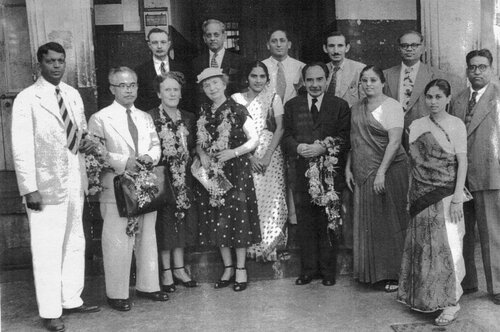 |
| Sanger and other family planning leaders at the IPPF's founding meeting, theThird International Conference on Planned Parenthood, held in Bombay in 1952. |
On the WCD2011 website, specifically targeting youth, you can learn more about contraception and your rights when it comes to sexual and reproductive health.
The WCD2011 website includes a drop-down menu where you can select your country of residence (from a limited list) in order to get more information about where you can access contraception, background information on puberty and anatomy, types of contraception, and STIs, and other resources for teens and youth.
The other major facet of WCD2011 is their release of the results of a multinational survey of youth touching on topics of sexual and reproductive health and education, including access to and use of contraception. Some of the results, including a staggering statistic that
“42% of respondents in Asia Pacific and 28% in Europe who could not get hold of contraception when they needed it claimed it was because they were too embarrassed to ask a healthcare professional,”are available in the press release for WCD2011. The full report is available here.
Income, location, language barriers, legal status within a country, religious/social/parental pressures, and a host of other factors can have an impact on young people’s access to contraception. The fact is that there are any number of ways which infringe upon one’s right to access safe, affordable, accessible, and non-judgmental health care, especially regarding sexual health and even more so as a minor. In the face of such inequality of access, the work that individuals and organizations in the field of sexual and reproductive health advocacy and research do is as important now as it was when Margaret Sanger was alive.
On World Contraception Day, then, it seems appropriate to both celebrate the advances – scientific and social – that generations of sexual and reproductive health pioneers have worked for, and to continue to agitate for truly equal access. So once again, Happy WCD and let’s continue the good work that Sanger began.
repost from MSPP
September 25, 2011
September 16, 2011
death and birth days linx
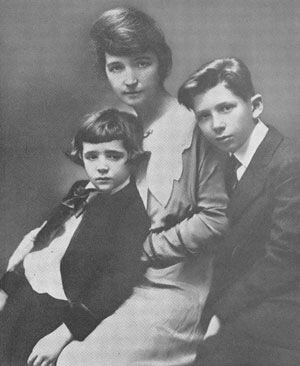 Как известно Сэнгер не дожила несколько дней, чуть больше недели до своего 87го дня рождения, умерла 6 сентября (я родился 3-его, когда умру не знаю, мб, тоже в сентябре:)
Поскольку я подписчик на блоги и новости про Сэнгер к этим дням подошло кое-что позитивное в мутном потоке заурядного ежедневного дерьма, рыться в котором уже изрядно надоело :(
Итак полезные линьки (некоторые оччъ хороши):
- credoreference.com о Сэнгер
- очень хорошая незаезженая фотка
- просто позитивная заметка
- No woman can call herself free who does not own and control her body. No woman can call herself free until she can choose consciously whether she will or will not be a mother (с обсуждением на menstruationresearch.org)
- рисованый портрет со ссылкой на фликр, где есть ещё
- Небольшая статейка про Пинкуса и МС
- epilawg про МС со ссылками
- A free race cannot be born of slave mothers. -- цитатник МС. Имеет смысл обратить на словоуптребление, а то всё свистят про расизьм, в начале века слово было совсем другим :)
- про комстоковщину и первого кандидата в презики США женского пола
- This article is about the birth control pill as a means of contraceptive :)
Russian Republic
Любопытно: если верить этому источнику, 14 сентября Россия была провозглашена республикой
в чём любопытство?
это день рождения МС
в чём любопытство?
это день рождения МС
Subscribe to:
Posts (Atom)


 Posts
Posts


