Массовая миграция из Российской империи в США в конце XIX - начале XX века привела за океан разных людей, поспособствовала ухудшению образа России в Америке, но и обогатила собственно американскую общественную жизнь. Одной из самых ярких представителей этой волны была Эмма Гольдман (1869-1940), анархистка, феминистка, террористка, пацифистка, писательница, активистка рабочего движения, в конце концов высланная из США обратно в Россию - уже советскую, но не прижившуюся там.
July 31, 2020


April 21, 2020
Rudolf Rocker
In 1921, he wrote the pamphlet Der Bankrott des russischen Staatskommunismus (The Bankruptcy of Russian State Communism) attacking the Soviet Union.
кусок из педевикии, каких много — для любознательных, СССР был организован в 1922 году
кусок из педевикии, каких много — для любознательных, СССР был организован в 1922 году
Voltairine de Cleyre
.jpg "Voltairine de Cleyre (Age 35)") Voltairine de Cleyre (November 17, 1866 – June 20, 1912) was an American anarchist known for being a prolific writer and speaker who opposed state power, the capitalism she saw as interconnected with it, and marriage, and the domination of religion over sexuality and women's lives. She is often characterized as a major early feminist because of her views.
Voltairine de Cleyre (November 17, 1866 – June 20, 1912) was an American anarchist known for being a prolific writer and speaker who opposed state power, the capitalism she saw as interconnected with it, and marriage, and the domination of religion over sexuality and women's lives. She is often characterized as a major early feminist because of her views.Born and raised in small towns in Michigan and schooled in a Sarnia, Ontario Catholic convent, de Cleyre began her activist career in the freethought movement. She was initially drawn to individualist anarchism, but evolved through mutualism to what she called anarchism without adjectives, prioritizing a stateless society without the use of force above all else. She was a contemporary of Emma Goldman, with whom she maintained a relationship of respectful disagreement on many issues. Many of her essays were collected in the Selected Works of Voltairine de Cleyre, published posthumously in 1914 by Goldman's magazine Mother Earth.
"Direct Action", her 1912 essay in defense of direct action, is widely cited today. In this essay, de Cleyre points to examples such as the Boston Tea Party, noting that "direct action has always been used, and has the historical sanction of the very people now reprobating it".
In her 1895 lecture entitled Sex Slavery, de Cleyre condemns ideals of beauty that encourage women to distort their bodies and child socialization practices that create unnatural gender roles. The title of the essay refers not to traffic in women for purposes of prostitution, although that is also mentioned, but rather to marriage laws that allow men to rape their wives without consequences. Such laws make "every married woman what she is, a bonded slave, who takes her master's name, her master's bread, her master's commands, and serves her master's passions".
Gregori Maximoff
Born in Smolensk, he studied at the Vladimir Seminary School of Theology, and later at the St. Petersburg School of Agriculture, where he received an agronomist degree. In 1912 he began to agitate for anarchism under the pseudonym Gr. Lapot ("Гр. Лапоть"). Although opposed to the First World War, in 1915 he joined the army to spread revolutionary propaganda among the soldiers. In 1917, Maximoff met his partner, Olga, in Kharkiv. She had been sentenced by Tsarism to 8 years of forced labor for spreading subversive literature, but her sentence was later commuted to exile in Kansk province (Siberia) due to her young age.
During the October Revolution Maximoff participated in the strike movement and in the fighting in Petrograd and was subsequently elected as provincial deputy of the Petrograd factory soviets. In 1918, along with five other colleagues, he was elected as delegate to the First All Russian Congress of Trade Unions. As a member of an anarcho-syndicalist body of the Nabat Confederation, Maximoff collaborated in the drafting of the newspaper Golos Truda.
Between 1918 and 1921 he was imprisoned at least six times by the Bolsheviks. In 1919, he voluntarily enlisted in the Red Army to combat the counter-revolutionary white army, but he was imprisoned in Kharkiv for refusing to disarm workers and suppress protest. On 8 March 1921, during the Kronstadt uprising, he was arrested in Moscow by the Cheka, along with other members of the Nabat confederation. Maximoff was locked in Taganka prison, where he was sentenced to death for spreading anarcho-syndicalist propaganda. After a hunger strike, on December 1921 he managed to attract the attention of workers visiting the Red Trade Union Congress. As a result of pressure from the international community, he and 10 other anarchists were released from prison and expelled from the country.
As a refugee in Berlin, he founded the headquarters of the Anarcho-Syndicalist Confederation abroad, helping anarchists imprisoned in Russia. But he was expelled from Germany on 5 February 1922, for publishing a newspaper named Rabochi Put. He moved to Paris with Olga, and there they participated in the writing of Dielo Truda. In 1925 the couple emigrated to the United States, where they settled in Chicago. There they published the newspaper Golos Truzhenika. Maximoff wrote several works on his experiences in Soviet Russia and his anarchist theories. He also collaborated with the Yiddish newspaper Fraye Arbeter Shtime, was the editor of the anarcho-syndicalist newspaper Dielo Trouda-Probuzhdenie and wrote the book The Guillotine at Work: Twenty Years of Terror in Russia on the Bolshevik repression of anarchists and labor unionists during the 1917 Russian Revolution. He died of a heart attack in New York on 16 March 1950,.
This one of Maximoff's best remembered works in which he analysis the consequences of the Bolshevik seizure of power in the October Revolution. Quoting from Lenin's pamphlet The Threatening Catastrophe and How to Fight It (Sept 1917), he argues that Lenin is the "first theoretician of fascism". However, when the actions of the working class in seizing control of both industrial and commercial enterprises make such a course of action, Maximoff argues that Lenin then calls for the establishment of state capitalism, with other elements of fascism being added from time to time. He bases this argument on his reading of The Next Tasks of the Soviet Power
During the October Revolution Maximoff participated in the strike movement and in the fighting in Petrograd and was subsequently elected as provincial deputy of the Petrograd factory soviets. In 1918, along with five other colleagues, he was elected as delegate to the First All Russian Congress of Trade Unions. As a member of an anarcho-syndicalist body of the Nabat Confederation, Maximoff collaborated in the drafting of the newspaper Golos Truda.
Between 1918 and 1921 he was imprisoned at least six times by the Bolsheviks. In 1919, he voluntarily enlisted in the Red Army to combat the counter-revolutionary white army, but he was imprisoned in Kharkiv for refusing to disarm workers and suppress protest. On 8 March 1921, during the Kronstadt uprising, he was arrested in Moscow by the Cheka, along with other members of the Nabat confederation. Maximoff was locked in Taganka prison, where he was sentenced to death for spreading anarcho-syndicalist propaganda. After a hunger strike, on December 1921 he managed to attract the attention of workers visiting the Red Trade Union Congress. As a result of pressure from the international community, he and 10 other anarchists were released from prison and expelled from the country.
As a refugee in Berlin, he founded the headquarters of the Anarcho-Syndicalist Confederation abroad, helping anarchists imprisoned in Russia. But he was expelled from Germany on 5 February 1922, for publishing a newspaper named Rabochi Put. He moved to Paris with Olga, and there they participated in the writing of Dielo Truda. In 1925 the couple emigrated to the United States, where they settled in Chicago. There they published the newspaper Golos Truzhenika. Maximoff wrote several works on his experiences in Soviet Russia and his anarchist theories. He also collaborated with the Yiddish newspaper Fraye Arbeter Shtime, was the editor of the anarcho-syndicalist newspaper Dielo Trouda-Probuzhdenie and wrote the book The Guillotine at Work: Twenty Years of Terror in Russia on the Bolshevik repression of anarchists and labor unionists during the 1917 Russian Revolution. He died of a heart attack in New York on 16 March 1950,.
The Guillotine at Work: Twenty Years of Terror in Russia
This one of Maximoff's best remembered works in which he analysis the consequences of the Bolshevik seizure of power in the October Revolution. Quoting from Lenin's pamphlet The Threatening Catastrophe and How to Fight It (Sept 1917), he argues that Lenin is the "first theoretician of fascism". However, when the actions of the working class in seizing control of both industrial and commercial enterprises make such a course of action, Maximoff argues that Lenin then calls for the establishment of state capitalism, with other elements of fascism being added from time to time. He bases this argument on his reading of The Next Tasks of the Soviet Power
Senya Fleshin
He worked for Mother Earth, an anarchist journal published by Emma Goldman.
In 1917 Fleshin returned to Russia to take part in the Russian Revolution, where he had an affair with Louise Berger, another of Goldman's Mother Earth employees who had voluntarily decided to return to Russia, and who had accompanied him on the voyage. Fleshin was soon in conflict with the Bolshevik government; Berger eventually left him and went to Odessa to join a group of naletchiki (armed bandits) carrying out 'bank expropriations'. When Fleshin wrote an article criticizing Bolshevist government policies, he was arrested and imprisoned.
Soon after being released he met Molly Steimer, an anarchist who had been deported from the United States. Angered by the communists' suppression of the Russian anarchist movement, Senya and Molly organized the Society to Help Anarchist Prisoners, traveling to assist incarcerated comrades. On 1 November 1922, the two were themselves arrested by the Soviet secret police on charges of "aiding criminal elements in Russia" (i.e. assisting other anarchists) and "maintaining ties with anarchists abroad" (they had been corresponding with Berkman and Goldman, then in Berlin).
Sentenced to two years' exile in a Siberian labor camp by Soviet authorities, Fleshin and Steimer declared a hunger strike on 17 November in jail in Petrograd jail, and released the next day. They were forbidden, however, to leave the city and were ordered to report to the authorities every forty-eight hours. Before long, the couple had resumed their efforts on behalf of their imprisoned comrades. On 9 July 1923, police raided their apartment and they were again placed under arrest, charged with propagating anarchist ideas, in violation of Art. 60–63 of the Soviet Criminal Code. Sequestered from their fellow prisoners, Fleshin and Steimer again declared a hunger strike. Protests to Leon Trotsky by foreign anarcho-syndicalist delegates, including Emma Goldman, who wrote a personal letter of protest to a congress of the Red International of Trade Unions (Profintern) eventually brought about their release. This time, however, they were notified of their impending expulsion from the country. On 27 September 1923, Fleshin and Steimer were officially deported, and placed aboard a ship bound for Germany.
Together with Molly Steimer, Fleshin opened a photographic studio in Berlin. Fleshin was active in the Joint Committee for the Defense of Revolutionaries (1923–26), and the Relief Fund of the International Working Men's Association for Anarchists (1926–32).
When Hitler came to power, Fleshin and Molly Steimer were forced to flee to Paris. On 18 May 1940, Steimer was arrested by the French government and interned at Camp Gurs.
After seven weeks of imprisonment, Steimer, aided by French anarchist friends, including May Picqueray, editor of Le Réfractaire, managed to escape Camp Gurs during its chaotic turnover to Vichy control. Picqueray helped smuggle Fleshin and Steimer out of the country to Mexico, where they settled, running a photography studio.
Senya Fleshin died in Mexico City, on 19 June 1981, aged 86.
In 1917 Fleshin returned to Russia to take part in the Russian Revolution, where he had an affair with Louise Berger, another of Goldman's Mother Earth employees who had voluntarily decided to return to Russia, and who had accompanied him on the voyage. Fleshin was soon in conflict with the Bolshevik government; Berger eventually left him and went to Odessa to join a group of naletchiki (armed bandits) carrying out 'bank expropriations'. When Fleshin wrote an article criticizing Bolshevist government policies, he was arrested and imprisoned.
Soon after being released he met Molly Steimer, an anarchist who had been deported from the United States. Angered by the communists' suppression of the Russian anarchist movement, Senya and Molly organized the Society to Help Anarchist Prisoners, traveling to assist incarcerated comrades. On 1 November 1922, the two were themselves arrested by the Soviet secret police on charges of "aiding criminal elements in Russia" (i.e. assisting other anarchists) and "maintaining ties with anarchists abroad" (they had been corresponding with Berkman and Goldman, then in Berlin).
Sentenced to two years' exile in a Siberian labor camp by Soviet authorities, Fleshin and Steimer declared a hunger strike on 17 November in jail in Petrograd jail, and released the next day. They were forbidden, however, to leave the city and were ordered to report to the authorities every forty-eight hours. Before long, the couple had resumed their efforts on behalf of their imprisoned comrades. On 9 July 1923, police raided their apartment and they were again placed under arrest, charged with propagating anarchist ideas, in violation of Art. 60–63 of the Soviet Criminal Code. Sequestered from their fellow prisoners, Fleshin and Steimer again declared a hunger strike. Protests to Leon Trotsky by foreign anarcho-syndicalist delegates, including Emma Goldman, who wrote a personal letter of protest to a congress of the Red International of Trade Unions (Profintern) eventually brought about their release. This time, however, they were notified of their impending expulsion from the country. On 27 September 1923, Fleshin and Steimer were officially deported, and placed aboard a ship bound for Germany.
Together with Molly Steimer, Fleshin opened a photographic studio in Berlin. Fleshin was active in the Joint Committee for the Defense of Revolutionaries (1923–26), and the Relief Fund of the International Working Men's Association for Anarchists (1926–32).
When Hitler came to power, Fleshin and Molly Steimer were forced to flee to Paris. On 18 May 1940, Steimer was arrested by the French government and interned at Camp Gurs.
After seven weeks of imprisonment, Steimer, aided by French anarchist friends, including May Picqueray, editor of Le Réfractaire, managed to escape Camp Gurs during its chaotic turnover to Vichy control. Picqueray helped smuggle Fleshin and Steimer out of the country to Mexico, where they settled, running a photography studio.
Senya Fleshin died in Mexico City, on 19 June 1981, aged 86.
Émile Armand
Important influences in his writing were Leo Tolstoy, Benjamin Tucker, Walt Whitman and Ralph Waldo Emerson.
Armand was an important propagandist of free love. He advocated free love, naturism and polyamory in what he termed la camaraderie amoureuse. Above all he advocated a pluralism in sex and love matters in which one could find "Here sexual union and family, there freedom or promiscuity". He wrote many propagandist articles on this subject such as "De la liberté sexuelle" (1907) where he advocated not only a vague free love but also multiple partners, which he called "plural love" In the individualist anarchist journal L'EnDehors, he and others continued in this way. Armand seized this opportunity to outline his theses supporting revolutionary sexualism and camaraderie amoureuse that differed from the traditional views of the partisans of free love in several respects.
Later, Armand submitted that from an individualist perspective, nothing was reprehensible about making "love" even if one did not have very strong feelings for one's partner. "The camaraderie amoureuse thesis entails a free contract of association (that may be annulled without notice, following prior agreement) reached between anarchist individualists of different genders, adhering to the necessary standards of sexual hygiene, with a view toward protecting the other parties to the contract from certain risks of the amorous experience, such as rejection, rupture, exclusivism, possessiveness, unicity, coquetry, whims, indifference, flirtatiousness, disregard for others, and prostitution."
He also published Le Combat contre la jalousie et le sexualisme révolutionnaire (1926), followed over the years by Ce que nous entendons par liberté de l'amour (1928), La Camaraderie amoureuse ou “chiennerie sexuelle” (1930), and, finally, La Révolution sexuelle et la camaraderie amoureuse (1934), a book of nearly 350 pages comprising most of his writings on sexuality.
In a text from 1937, he mentioned among the individualist objectives the practice of forming voluntary associations for purely sexual purposes of heterosexual, homosexual, or bisexual nature or of a combination thereof. He also supported the right of individuals to change sex and stated his willingness to rehabilitate forbidden pleasures, non-conformist caresses (he was personally inclined toward voyeurism), as well as sodomy. This led him allocate more and more space to what he called "the sexual non-conformists", while excluding physical violence. His militancy also included translating texts from people such as Alexandra Kollontai and Wilhelm Reich and establishments of free love associations which tried to put into practice la camaraderie amoureuse through actual sexual experiences.
The prestige in the subject of free love of Armand within anarchist circles was such as to motivate the young Argentinian anarchist América Scarfó to ask Armand in a letter on advice as to how to deal with the relationship she had with notorious Italian anarchist Severino Di Giovanni. Di Giovanni was still married when they began the relationship. "The letter was published in L’en dehors" on 20 January 1929 under the title "'An Experience', together with the reply from E. Armand". Armand replied to Scarfó, "Comrade: My opinion matters little in this matter you send me about what you are doing. Are you or are you not intimately in accord with your personal conception of the anarchist life? If you are, then ignore the comments and insults of others and carry on following your own path. No one has the right to judge your way of conducting yourself, even if it were the case that your friend's wife be hostile to these relations. Every woman united to an anarchist (or vice versa), knows very well that she should not exercise on him, or accept from him, domination of any kind."
Émile Armand. Anarchist Individualism and Amorous Comradeship
""Emile Armand and la camaraderie amoureuse – Revolutionary sexualism and the struggle against jealousy." by Francis Rousin" (PDF). iisg.nl. Retrieved 6 April 2018.
http://theanarchistlibrary.org/HTML/America_Scarfo__Emile_Armand__Letter_of_America_Scarfo_to_Emile_Armand.htmlLetter of América Scarfó to Émile Armand
Armand was an important propagandist of free love. He advocated free love, naturism and polyamory in what he termed la camaraderie amoureuse. Above all he advocated a pluralism in sex and love matters in which one could find "Here sexual union and family, there freedom or promiscuity". He wrote many propagandist articles on this subject such as "De la liberté sexuelle" (1907) where he advocated not only a vague free love but also multiple partners, which he called "plural love" In the individualist anarchist journal L'EnDehors, he and others continued in this way. Armand seized this opportunity to outline his theses supporting revolutionary sexualism and camaraderie amoureuse that differed from the traditional views of the partisans of free love in several respects.
Later, Armand submitted that from an individualist perspective, nothing was reprehensible about making "love" even if one did not have very strong feelings for one's partner. "The camaraderie amoureuse thesis entails a free contract of association (that may be annulled without notice, following prior agreement) reached between anarchist individualists of different genders, adhering to the necessary standards of sexual hygiene, with a view toward protecting the other parties to the contract from certain risks of the amorous experience, such as rejection, rupture, exclusivism, possessiveness, unicity, coquetry, whims, indifference, flirtatiousness, disregard for others, and prostitution."
He also published Le Combat contre la jalousie et le sexualisme révolutionnaire (1926), followed over the years by Ce que nous entendons par liberté de l'amour (1928), La Camaraderie amoureuse ou “chiennerie sexuelle” (1930), and, finally, La Révolution sexuelle et la camaraderie amoureuse (1934), a book of nearly 350 pages comprising most of his writings on sexuality.
In a text from 1937, he mentioned among the individualist objectives the practice of forming voluntary associations for purely sexual purposes of heterosexual, homosexual, or bisexual nature or of a combination thereof. He also supported the right of individuals to change sex and stated his willingness to rehabilitate forbidden pleasures, non-conformist caresses (he was personally inclined toward voyeurism), as well as sodomy. This led him allocate more and more space to what he called "the sexual non-conformists", while excluding physical violence. His militancy also included translating texts from people such as Alexandra Kollontai and Wilhelm Reich and establishments of free love associations which tried to put into practice la camaraderie amoureuse through actual sexual experiences.
The prestige in the subject of free love of Armand within anarchist circles was such as to motivate the young Argentinian anarchist América Scarfó to ask Armand in a letter on advice as to how to deal with the relationship she had with notorious Italian anarchist Severino Di Giovanni. Di Giovanni was still married when they began the relationship. "The letter was published in L’en dehors" on 20 January 1929 under the title "'An Experience', together with the reply from E. Armand". Armand replied to Scarfó, "Comrade: My opinion matters little in this matter you send me about what you are doing. Are you or are you not intimately in accord with your personal conception of the anarchist life? If you are, then ignore the comments and insults of others and carry on following your own path. No one has the right to judge your way of conducting yourself, even if it were the case that your friend's wife be hostile to these relations. Every woman united to an anarchist (or vice versa), knows very well that she should not exercise on him, or accept from him, domination of any kind."
Émile Armand. Anarchist Individualism and Amorous Comradeship
""Emile Armand and la camaraderie amoureuse – Revolutionary sexualism and the struggle against jealousy." by Francis Rousin" (PDF). iisg.nl. Retrieved 6 April 2018.
http://theanarchistlibrary.org/HTML/America_Scarfo__Emile_Armand__Letter_of_America_Scarfo_to_Emile_Armand.htmlLetter of América Scarfó to Émile Armand
April 20, 2020
Fraye Arbeter Shtime
The paper's initial years of publication were dogged with financial issues. Foremost, the core audience—impoverished workers—had little money. The paper suspended printing during a typesetter wage dispute beginning in May 1892. Later that year, Alexander Berkman's prominent assassination attempt on Henry Clay Frick divided the movement, as some anarchists left the movement to denounce all forms of terrorism. As the wage dispute came to a close nearly a year later, the United States entered an economic depression, the Panic of 1893. By April 1894, the Fraye Arbeter Shtime group again stopped production, ending an era of Jewish anarchism as the Pioneers of Liberty and other groups waned or went defunct.[10] In these dormant years, Fraye Arbeter Shtime editors assisted in the launch of the monthly Di Fraye Gezelshaft.[11]
Five years later, Fraye Arbeter Shtime revived publication in October 1899 and Jewish interest in anarchism rekindled with it.[12] Its new editor, Saul Yanovsky, would serve through 1919, a heyday for both the newspaper and the Jewish anarchist movement.[11] It was also a period of stability for the paper, with readership above 20,000 prior to World War I. Yanovsky's own column was popular for its wit, and he selected numerous talented writers with fresh views. Alongside Kropotkin, Most, and Solotaroff, the editor added Rudolf Rocker, Max Nettlau, Emma Goldman, Voltairine de Cleyre, and Abraham Frumkin. The paper ran translations of cultural works (e.g., Henrik Ibsen, Olive Schreiner, Oscar Wilde) and pieces by major Yiddish writers (e.g., Avrom Reyzen, H. Leivick). This selection made the paper both readable and alluring among Yiddish readers.[13] The movement had also drifted from the zealous 1880s and 1890s in which social revolution felt imminent and propaganda of the deed justified. Yanovsky turned against terrorism and regarded anarchism as a philosophy of brotherhood, cooperation, and dignity, and the paper took a piecemeal approach to reform, in favor of libertarian schools and cooperative unions. While the 1901 assassination of William McKinley by an anarchist roiled Yanovsky, Fraye Arbeter Shtime bore part of the fallout, as an angry mob trashed the paper's offices and physically attacked its editor. Additionally, anarchist Jews also tempered their antireligious confrontation to be less pronounced, and some took up Zionism after the Kishinev pogrom.[14]
Five years later, Fraye Arbeter Shtime revived publication in October 1899 and Jewish interest in anarchism rekindled with it.[12] Its new editor, Saul Yanovsky, would serve through 1919, a heyday for both the newspaper and the Jewish anarchist movement.[11] It was also a period of stability for the paper, with readership above 20,000 prior to World War I. Yanovsky's own column was popular for its wit, and he selected numerous talented writers with fresh views. Alongside Kropotkin, Most, and Solotaroff, the editor added Rudolf Rocker, Max Nettlau, Emma Goldman, Voltairine de Cleyre, and Abraham Frumkin. The paper ran translations of cultural works (e.g., Henrik Ibsen, Olive Schreiner, Oscar Wilde) and pieces by major Yiddish writers (e.g., Avrom Reyzen, H. Leivick). This selection made the paper both readable and alluring among Yiddish readers.[13] The movement had also drifted from the zealous 1880s and 1890s in which social revolution felt imminent and propaganda of the deed justified. Yanovsky turned against terrorism and regarded anarchism as a philosophy of brotherhood, cooperation, and dignity, and the paper took a piecemeal approach to reform, in favor of libertarian schools and cooperative unions. While the 1901 assassination of William McKinley by an anarchist roiled Yanovsky, Fraye Arbeter Shtime bore part of the fallout, as an angry mob trashed the paper's offices and physically attacked its editor. Additionally, anarchist Jews also tempered their antireligious confrontation to be less pronounced, and some took up Zionism after the Kishinev pogrom.[14]
April 6, 2020
why I am not
Я же женщина. Только женщина!

Люди, я же женщина. Только женщина. У меня узкие запястья, узкие щиколотки и большая разница между талией и бедрами, уж не говорю – грудью. Ее видно глазами, но на ощупь еще вернее. Чего можно от меня требовать? За что меня нужно ругать?
У меня все так, как природа придумала для женщин – где надо узко, где надо широко, где надо впадинка, где надо бугорок. Это для мужчины, это для детей. Я часть пазла. Все подогнано и смазано. Надо совпасть, и оно работает. Только не требуйте от меня других функций. Смотрите, как красиво, когда я закалываю волосы наверх, а одна прядь выбивается. На мне духи пахнут лучше, чем задумывались парфюмером, на мне браслеты звенят как обещание радости… И это обещание выполняется. Чего еще нужно?
И не нужна мне зарплата, такая же, как у мужчин, я вообще не хочу работать. Я хочу быть дома, и чтоб было время на пожарить мясо и на посмотреть в окно. У меня шелковая кожа, волосы, характер. Из этого который год не получается ничего железного. Все это только горит хорошо. Горит, но не закаляется. Не становится тверже. Потрещит, остынет, нарастет новое и снова жаждет не равных прав, а шелковых простыней.
Ну нет во мне таких материалов и веществ, из которых можно сковать твердый нрав и жизнь, полную свершений. Я не могу быть сама по себе. Я сделана для кого-то. Из ребра, ключицы, копчика, плевать, не знаю. И чувствую себя так, будто во мне много меньше костей, чем надо, чтобы твердо стоять, быстро ходить, высоко прыгать и махать руками: Я! Я!
Я лучше пойду сяду в кресло под плед. Или поцелую ребенка. Или обниму мужчину.
Не умею бороться, умею только отступать. Когда вовремя, когда раньше, чем надо. Не кузнец я своего счастья и вообще не кузнец.Чему там учили в Смольном? Языкам, танцам и варенье варить? Вот я хочу варить варенье. Иногда молчать, иногда говорить, иногда болтать. Зачем мне надо столько всего знать, чтобы жить?!! Почему недостаточно талантливо чувствовать, уметь любить, быть тем мягким, во что можно спрятаться? Просто быть.
И не хочу я говорить ни себе, ни другим: «Я справлюсь, я разберусь, я выстою». Я хочу впадать в панику, в обморок, отключаться, чтобы очнуться, и мне сказали: вам нельзя волноваться, вам нужно отдыхать… И правда нужно. И вообще, горизонтально мне комфортней. И не нужно мне продвижение, мне нужен новый лифчик на тоненьких кружевных бретельках. И чулки со швом.
Я умею быть женой и матерью. Я умею быть честной. Для счастья мне достаточно, чтобы меня любили. Достаточно спать по ночам в той выемке у него на плече, которая тоже часть пазла.
November 8, 2019


Happy 140th Birthday Margaret Sanger
 NAME: Margaret Sanger
А я пропустил :(
Sep 14, 2019 Margaret Sanger
Today is the 140th birthday of Margaret Sanger. We all owe her a great deal of gratitude for the her perseverance for a cause we all but take for granted today. The world is a better place because she was in it and still feels the loss that she has left.
BIRTH DATE: September 14, 1879
DEATH DATE: September 6, 1966
EDUCATION: Claverack College, Hudson River Institute
PLACE OF BIRTH: Corning, New York
PLACE OF DEATH: Tucson, Arizona
CAUSE OF DEATH: Heart Failure
REMAINS: Buried, Fishkill Rural Cemetery, Fishkill, NY
BEST KNOWN FOR: Margaret Sanger was an early feminist and women’s rights activist who coined the term “birth control” and worked towards its legalization.
Activist, social reformer. Born Margaret Higgins on September 14, 1879, in Corning, New York. She was one of 11 children born into a Roman Catholic working-class Irish American family. Her mother, Anne, had several miscarriages, and Margaret believed that all of these pregnancies took a toll on her mother’s health and contributed to her early death at the age of 40 (some reports say 50). The family lived in poverty as her father, Michael, an Irish stonemason, preferred to drink and talk politics than earn a steady wage.
Seeking a better life, Sanger attended Claverack College and Hudson River Institute in 1896. She went on to study nursing at White Plains Hospital four years later. In 1902, she married William Sanger, an architect. The couple eventually had three children together.
In 1910, the Sangers moved to New York City, settling in the Manhattan neighborhood of Greenwich Village. The area was a bohemian enclave known for its radical politics at the time, and the couple became immersed in that world. They socialized with the likes of writer Upton Sinclair and anarchist Emma Goldman. Sanger joined the Women’s Committee of the New York Socialist Party and the Liberal Club. A supporter of the Industrial Workers of the World union, she participated in a number of strikes.
Sanger started her campaign to educate women about sex in 1912 by writing a newspaper column called “What Every Girl Should Know.” She also worked as a nurse on the Lower East Side, at the time a predominantly poor immigrant neighborhood. Through her work, Sanger treated a number of women who had undergone back-alley abortions or tried to self-terminate their pregnancies. Sanger objected to the unnecessary suffering endured by these women, and she fought to make birth control information and contraceptives available. She also began dreaming of a “magic pill” to be used to control pregnancy. “No woman can call herself free until she can choose consciously whether she will or will not be a mother,” Sanger said.
In 1914, Sanger started a feminist publication called The Woman Rebel, which promoted a woman’s right to have birth control. The monthly magazine landed her in trouble, as it was illegal to send out information on contraception through the mail. The Comstock Act of 1873 prohibited the trade in and circulation of “obscene and immoral materials.” Championed by Anthony Comstock, the act included publications, devices, and medications related to contraception and abortion in its definition of obscene materials. It also made mailing and importing anything related to these topics a crime.
Rather than face a possible five-year jail sentence, Sanger fled to England. While there, she worked in the women’s movement and researched other forms of birth control, including diaphragms, which she later smuggled back into the United States. She had separated from her husband by this time, and the two later divorced. Embracing the idea of free love, Sanger had affairs with psychologist Havelock Ellis and writer H. G. Wells.
Sanger returned to the United States in October 1915, after charges against her had been dropped. She began touring to promote birth control, a term that she coined. In 1916, she opened the first birth control clinic in the United States. Sanger and her staff, including her sister Ethel, were arrested during a raid of the Brooklyn clinic nine days after it opened. They were charged with providing information on contraception and fitting women for diaphragms. Sanger and her sister spent 30 days in jail for breaking the Comstock law. Later appealing her conviction, she scored a victory for the birth control movement. The court wouldn’t overturn the earlier verdict, but it made an exception in the existing law to allow doctors to prescribe contraception to their female patients for medical reasons. Around this time, Sanger also published her first issue of The Birth Control Review.
In 1921, Sanger established the American Birth Control League, a precursor to today’s Planned Parenthood Federation of America. She served as its president until 1928. In 1923, while with the league, she opened the first legal birth control clinic in the United States. The clinic was named the Birth Control Clinical Research Bureau. Also around this time, Sanger married for her second husband, oil businessman J. Noah H. Slee. He provided much of the funding for her efforts for social reform.
Wanting to advance her cause through legal channels, Sanger started the National Committee on Federal Legislation for Birth Control in 1929. The committee sought to make it legal for doctors to freely distribute birth control. One legal hurdle was overcome in 1936, when the U.S. Court of Appeals allowed for birth control devices and related materials to be imported into the country.
For all of her advocacy work, Sanger was not without controversy. She has been criticized for her association with eugenics, a branch of science that seeks to improve the human species through selective mating. As grandson Alexander Sanger, chair of the International Planned Parenthood Council, explained, “She believed that women wanted their children to be free of poverty and disease, that women were natural eugenicists, and that birth control, which could limit the number of children and improve their quality of life, was the panacea to accomplish this.” Still Sanger held some views that were common at the time, but now seem abhorrent, including support of sterilization for the mentally ill and mentally impaired. Despite her controversial comments, Sanger focused her work on one basic principle: “Every child should be a wanted child.”
Sanger stepped out of the spotlight for a time, choosing to live in Tucson, Arizona. Her retirement did not last long, however. She worked on the birth control issue in other countries in Europe and Asia, and she established the International Planned Parenthood Federation in 1952. Still seeking a “magic pill,” Sanger recruited Gregory Pincus, a human reproduction expert, to work on the problem in the early 1950s. She found the necessary financial support for the project from Katharine McCormick, the International Harvester heiress. This research project would yield the first oral contraceptive, Enovid, which was approved by the Food and Drug Administration in 1960.
Sanger lived to see another important reproductive rights milestone in 1965, when the Supreme Court made birth control legal for married couples in its decision on Griswold v. Connecticut. She died a year later on September 6, 1966, in a nursing home in Tucson, Arizona. Across the nation, there are numerous women’s health clinics that carry the Sanger name—in remembrance of her efforts to advance women’s rights and the birth control movement.
Is the subject of books:
The Margaret Sanger Story and the Fight for Birth Control, 1955, BY: Lawrence Lader, DETAILS: (biography)
Author of books:
What Every Mother Should Know (1917)
My Fight for Birth Control (1931)
Margaret Sanger: An Autobiography (1938, memoir)
November 2, 2019
Bernard Shaw
 |
| Bernard Shaw on Stalin |
- “...И Вы дадите ваше нежное, беззащитное дитя доктору, чтобы он взял эту, соскобленную вместе с грязью, с вымени коровы, дрянь, и втёр в ранку на коже вашего ребенка?” [чистая ложь, в 1929 году вакцина была очищенной и стерильной. Соскобы с вымени коровы делались в 18ом веке и, кстати, сохранили миллионы жизней]
- Бернард Шоу писал и много другого, интересного. В 1931 году, Шоу, посетил СССР, очень полюбил вождя мирового пролетариата, товарища Сталина, полюбил и Советский Союз – «Я уезжаю из СССР, государства надежды и возвращаюсь в наши западные страны — страны отчаяния…» Писал Шоу. Более того Бернард Шоу открыто и яростно выступал на стороне Трофима Лысенко в кампании против ученых-генетиков всего мира (Письмо в газету Labour Monthly).
- Хорошо известно, что Тролли, как правило, мужчины, склонные к нарциссизму. Их собственная личность значит для них гораздо больше, чем окружающие люди, они стремятся заполучить внимание других людей, любым способом. Кроме того, тролли часто поразительно безграмотны и тем отличаются от людей, страстных, профессионалов своего дела.
October 16, 2019
lost and found

сколько нам открытий чюдных готовит гуголь ?
совсем внезапно, работая в трёхпоколенном направлении обнаружил библиотеку, а там — она :)
Margaret (nee: Higgins) Sanger risked scandal, danger, and imprisonment to challenge the legal and cultural obstacles that made controlling fertility difficult and illegal. Ms. Sanger viewed birth control as a woman’s issue and she was prepared to take on the medical establishment, the churches, the legislatures, and the courts. She was persuasive, tireless, single-minded, and unafraid of a fight. On October 16,1916 she opened a birth control clinic in Brooklyn, was arrested, and served thirty days for distributing information about contraceptives. From that experience, Sanger moved on to assume leadership of the struggle for free access to birth control. In 1921 she founded the American Birth Control League, the precursor to the Planned Parenthood Federation, and spent her next three decades campaigning to bring safe and effective birth control into the American mainstream.
September 27, 2019
Birth Strike vs Eugenic Feminism
Differing Conceptions of “Voluntary Motherhood”: Yamakawa Kikue’s Birth Strike and Ishimoto Shizue’s Eugenic Feminism
Sujin Lee U.S.–JAPAN WOMEN’S JOURNAL NO. 52, 2017
Yamakawa Kikue (1890-1980) and Ishimoto Shizue (1897-2001, later Katō Shizue after marrying labor activist Katō Kanju in 1944) were feminist pioneers of the birth control movement and established the first birth control organization in Japan, the Japan Birth Control Research Group (Nihon Sanji Chōsetsu Kenkyūkai), in May 1922, led by Ishimoto. Ishimoto observed Sanger’s birth control movement firsthand during her stay in New York between 1919 and 1920. After returning to Japan in September 1920, Ishimoto worked to introduce birth control to Japanese society.
Although the organization disbanded less than a year later, the birth control movement continued throughout the interwar period as different actors— social reformists, proletarian activists, and feminists—agreed on the need to control population size and improve the “quality” of the Japanese population on eugenic grounds.
...my article analyzes the intersection of population discourses, feminist movements, and transnational birth control campaigns...
The crux of Sanger’s birth control movement was to promote women’s reproductive autonomy to transform the womb from the birthplace of poverty into the birthplace of a healthy race.
Yamakawa introduced Japanese audiences to Sanger’s concept of voluntary motherhood in her 1920 article “The Curse of Pronatalism” (Tasan shugi no noroi) in the magazine Taikan (General Views).
The concept of voluntary motherhood implied a causal link between a mother’s freedom and her potential to improve racial quality. It was therefore gendered and racialized freedom that Sanger pursued through the birth control movement.
both Neo-Malthusianism and socialism shared an economic determinism concerning the relationship between population and resources. Whereas Neo-Malthusianists believed that the balance between population and resources could be acquired by reducing population growth, socialists advocated an equal distribution of wealth or an increase in wealth. Yamakawa positioned herself as a critic of Neo-Malthusianism and socialism to remind both groups of the fact that birth control had to be a permanent goal even after overpopulation or poverty was resolved by the proletarian revolution (Yamakawa 1921a, 284-286). In her view, voluntary motherhood could not be reduced to economic determinism but instead retained its own merit as an expression of individual free will.
Sanger (1920, 9) asserted that the misery of the proletariat originated in their sexuality and, furthermore, that their sexuality served capitalism as its accomplice. Whereas Sanger problematized overpopulation as an immediate reality that working-class mothers themselves created, Yamakawa grasped the ideological tactics of the population problem, which inverted the causation of poverty. Yamakawa reframed birth control as a means of protest against the capitalist system. She advocated birth control as a weapon specically for the proletariat against exploitation and oppression and as a way of ghting the instrumentalization of women as breeding machines.
Yamakawa asserted that women’s rights to reproductive choice had to be protected even in a socialist state. Yamakawa (1921b, 247) asserts:
In short, [in an ideal society], people should be able to choose whether to give birth or not at their free will, just like they do when deciding marriage… I have no doubt that the difculties in getting married for economic reasons would be solved in the future. However, that cannot be directly linked to the conclusion that women will no longer need reproductive choice. In the same manner, the uselessness of contraception for economic reasons should be distinguished from the issue of birth control as women’s rights to decide on motherhood.On the contrary, Ishikawa and many contemporary socialists left reproduction in the realm of nature, that is to say, the depoliticized sexuality of women.
In a pamphlet published by the Japan Birth Control Research Group in 1922, she advances the aim to breed better humans based on individuals’ “self- consciousness” and denes birth control as “a conscious control of population, far from race suicide or advocacy for sinful abortions”
This refashioned feminism, or “eugenic feminism,” was the crux of Ishimoto’s argument for birth control. Ishimoto also found new political potential for women’s reproductive roles by imaging birth control as a scientic solution for overpopulation and racial degeneration.
The motherhood protection debate generally divided Japanese feminists into two camps: 1) those who argued for the rights of the mother, as represented by Hiratsuka, and 2) those who advocated women’s rights in general, led in part by Yosano.
In a pamphlet published by the Japan Birth Control Research Group in 1922, she {Ishimoto} advances the aim to breed better humans based on individuals’ “self- consciousness” and denes birth control as “a conscious control of population, far from race suicide or advocacy for sinful abortions”
these feminists’ concerns about reproduction were simultaneously the symptoms of the politico-economic representation of reproduction and the respective critiques of it, that is, the formation of women’s political subjectivity by means of reproductive autonomy. Regardless of their different ideological visions, both Yamakawa and Ishimoto emphasized the link between the voluntary control of reproduction and women’s autonomy.
September 23, 2019
a true orgasm
May 23 ·

The Future is FemaleLike Page
May 23 ·
A recent study analyzing orgasms experienced by a group of American test participants aged 18 to 56 was conducted to compare orgasm intensity and duration between Females and males, during various sexual activity. Some of the major takeaways from that study:
Females have much longer orgasms than males. While Females of all age groups experienced orgasms averaging 28-96 seconds, the males in the group averaged orgasms of only 3-8 seconds.
Unlike males, Females do not have a refractory (recovery) period between orgasms, meaning Females possess multi-orgasmic ability, allowing them to experience further orgasms if they are stimulated again. The Female subjects in this test averaged between 11-20 orgasms per session, while the males averaged only 1-2.
Orgasm intensity varies greatly between Females and males, and is dramatically different depending on the sex of the partner and method of sexual stimulation:
The highest intensity orgasms were experienced by Females engaging in cunnilingus with Female partners. Female orgasms achieved through oral sex were much more intense when another Female was performing cunnilingus than when a male was attempting the same sex act.
The tongue is mightier than the penis. Female subjects achieved dramatically more intense orgasms through cunnilingus than they did when engaging in (PIV) sexual intercourse. Females also reached orgasm much more consistently and frequently through cunnilingus than they did through (PIV) sexual intercourse.
When it comes to penises, size definitely matters. Females engaging in (PIV) sexual intercourse with a male experienced much more intense orgasms when the male’s penis was 7-inches or greater in length than Females engaging in the same sexual activity with males which had smaller penises. Both penis length and girth were proven to be very important factors in determining sexual pleasure in Females engaging in (PIV) sexual intercourse, with penis length having a slight advantage over penis girth. Not only did Females engaging in (PIV) sexual intercourse with larger penises experience much more intense orgasms, but they also achieved orgasm at a dramatically more consistent rate. The study showed that Females engaging in (PIV) sexual intercourse with males who had longer, thicker erections achieved orgasm 28x more often than Females engaging in (PIV) sexual intercourse with less endowed males. The intensity of Female orgasm achieved during (PIV) sexual intercourse with males with larger penises also averaged 800% more intense than that of Female orgasm when achieved with a male having a smaller penis.
Females have better orgasms than males. Period. Not only do Females experience much longer orgasms than males, in much greater numbers than males, but the average intensity of the male orgasm didn’t even come close to comparing to the average intensity of the Female orgasm. When comparing the Female orgasm and the male orgasm side-by-side, what a male experiences during his ejaculation is nowhere near the power of a Female orgasm. In fact, the male “orgasm”, when compared to the Female orgasm, can barely be called a true orgasm at all.
~ Hannah
The Future is FemaleLike Page
May 23 ·
A recent study analyzing orgasms experienced by a group of American test participants aged 18 to 56 was conducted to compare orgasm intensity and duration between Females and males, during various sexual activity. Some of the major takeaways from that study:
Females have much longer orgasms than males. While Females of all age groups experienced orgasms averaging 28-96 seconds, the males in the group averaged orgasms of only 3-8 seconds.
Unlike males, Females do not have a refractory (recovery) period between orgasms, meaning Females possess multi-orgasmic ability, allowing them to experience further orgasms if they are stimulated again. The Female subjects in this test averaged between 11-20 orgasms per session, while the males averaged only 1-2.
Orgasm intensity varies greatly between Females and males, and is dramatically different depending on the sex of the partner and method of sexual stimulation:
The highest intensity orgasms were experienced by Females engaging in cunnilingus with Female partners. Female orgasms achieved through oral sex were much more intense when another Female was performing cunnilingus than when a male was attempting the same sex act.
The tongue is mightier than the penis. Female subjects achieved dramatically more intense orgasms through cunnilingus than they did when engaging in (PIV) sexual intercourse. Females also reached orgasm much more consistently and frequently through cunnilingus than they did through (PIV) sexual intercourse.
When it comes to penises, size definitely matters. Females engaging in (PIV) sexual intercourse with a male experienced much more intense orgasms when the male’s penis was 7-inches or greater in length than Females engaging in the same sexual activity with males which had smaller penises. Both penis length and girth were proven to be very important factors in determining sexual pleasure in Females engaging in (PIV) sexual intercourse, with penis length having a slight advantage over penis girth. Not only did Females engaging in (PIV) sexual intercourse with larger penises experience much more intense orgasms, but they also achieved orgasm at a dramatically more consistent rate. The study showed that Females engaging in (PIV) sexual intercourse with males who had longer, thicker erections achieved orgasm 28x more often than Females engaging in (PIV) sexual intercourse with less endowed males. The intensity of Female orgasm achieved during (PIV) sexual intercourse with males with larger penises also averaged 800% more intense than that of Female orgasm when achieved with a male having a smaller penis.
Females have better orgasms than males. Period. Not only do Females experience much longer orgasms than males, in much greater numbers than males, but the average intensity of the male orgasm didn’t even come close to comparing to the average intensity of the Female orgasm. When comparing the Female orgasm and the male orgasm side-by-side, what a male experiences during his ejaculation is nowhere near the power of a Female orgasm. In fact, the male “orgasm”, when compared to the Female orgasm, can barely be called a true orgasm at all.
~ Hannah
sex workers don’t want saving
The tactics employed by the club’s opponents are well established and – unlike in this case – usually successful. Campaigns to revoke the licences of strip clubs on the grounds that they exploit women and attract sexually depraved men are nothing new. One of the earliest campaigns was led by the New York Society for the Suppression of Vice which was established in 1873, and targeted burlesque theatres, calling them the “habitats of sex crazed perverts”. Anti-vice activists would sneak into the clubs and report the “disorderly” and “lewd” acts they saw on stage to the licensing committee, demanding the venue’s licence be revoked.
July 10, 2019
oppression by development
Отсюда, любопытное рассуждение:
Наталья Крайнова В смысле - о развитии или об угнетении путем развития? Русскоговорящие специалисты там появились тоже в процессе вот этой культурной экспансии. И да, они круто зарабатывали, потому что были по сути высококвалифицированным персоналом. На месте еще не было.
касательно длинного поста
July 2, 2019
Paris, 1937
Она была дочерью миллионера, сестра жила за границей, муж, врач Алексей Замков, в 1919 году арестовывался Петроградской ЧК по обвинению в участии в белом заговоре и был отпущен лично Менжинским благодаря старому знакомству.
В начале 1930-х годов Мухину высылали из Москвы, а после парижской выставки больше не пускали за границу.
 Вера Мухина и ее германский коллега Йозеф Торак, автор скульптурной композиции "Товарищество" выполнили социальный заказ на мощную энергетику, уверенность и оптимизм. Критики отметили, что Мухина положила в основу образа движение, а обнаженные атлеты Торака вышли статичными.
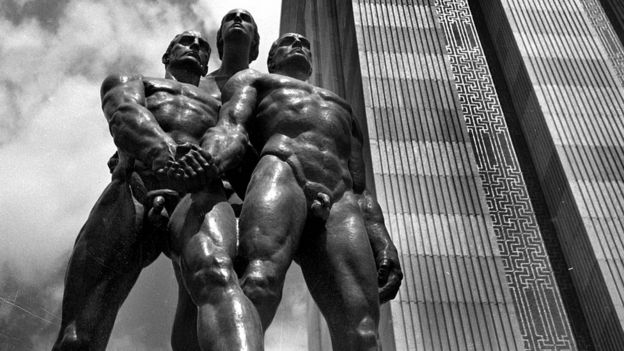 Вера Мухина занималась не только монументальной скульптурой. Созданная ею коллекция одежды выставлялась в 1925 году в Париже. Ей также приписывают создание дизайна знаменитого советского граненого стакана, "пузатой" 500-граммовой пивной кружки и школьной формы для девочек.
А ейный муш не доктор Преображенский?
В начале 1930-х годов Мухину высылали из Москвы, а после парижской выставки больше не пускали за границу.
А ейный муш не доктор Преображенский?
May 30, 2019
suffrage

23 мая решила все таки приобрести эту замечательную книгу Ольги Шныровой! И ни разу не пожалела об этом, читаю с удовольствием! Знаете, мое знакомство с темой суфражизма началось в 2016 году когда я посмотрела фильм режиссёра С. Гаврон ,,Суфражистка,,. Он произвёл на меня огромное впечатление. Тёк кто меня знают ближе скажут, что если я чем-то интересуюсь в любой сфере, я всегда стремлюсь изучить объект со всех сторон как можно более глубоко... так было и здесь, я сразу начала искать литературу... но поняла, что ее очень мало, либо нет. Поэтому я очень обрадовалась, когда заглянула в магазин и увидела эту книгу Ольги Шныровой ,, Суфражизм в истории и культуре Великобритании,,. Сразу хочу сказать, что книга написана очень интересно читается легко, вместе с тем обращает на себя внимание огромная работа проделанная автором. Использовано очень много материалов, документов и т. д. Все это позволяет читателю глубже познакомиться с историей вопроса и проследить развитие феномена. Для меня, как для социолога, такие книги особенно ценны! Хочу выразить огромную благодарность автору и пожелать дальнейших успехов!

May 10, 2019
Yukova
Любопытно:
Елена Васильевна Турбина-Тальберг — один из центральных персонажейромана «Белая Гвардия» и написанной на его основе пьесы «Дни Турбиных»Михаила Булгакова. В романе — Елене 24 года, а в пьесе −23 года.
Анализ дискуссии об абортах, которая развернулась, прежде всего, на страницах профессиональной печати в России на рубеже XIX—XX веков. Эта дискуссия зафиксировала новые практики жизни представителей разных сословий и классов в сфере интимных отношений, обнаружила изменение отноше-ния россиян к многочадию, абортам, контрацепции, правам женщин. Материалы XII Пироговского съезда о «преступных выкидышах» не раз становились предметом анализа историков, демографов, социологов. Данная статья написана на более широком корпусе источников. В частности, на материалах III и XI Пироговских съездов, дискуссий в региональных отделениях Пироговского общества, на ма-териалах IV съезда Общества российских акушеров и гинекологов и Х Общего собрания Русской группы Международного союза криминалистов, а также на ос-нове статей в профессиональных и толстых журналах, таких как «Терапевтическое обозрение», «Врач», «Русский врач», «Журнал акушерства и женских болезней», «Право», «Русское богатство», «Вестник Европы», феминистского журнала «Женский вестник», брошюрах врачей, юристов и социологов.
Наталья Васильевна Тальберг на III съез-де высказалась в поддержку криминализации аборта. Надежда Владимировна Земляницина-Камбарова из Пермской губернии также считала, что «как бы ни были социальные условия тяжелы, — право узаконить выкидыш они не дают» [Двенадцатый…, 1913: 213]
Ольга Петровна Пирожкова (Московская городская больница) по результатам своего статистического исследования делала следующий вывод: «Выход может быть только один: предоставить женщине полную свободу распоряжаться самою собою», «врачи обязаны помочь женщине, т. е. научить ее, как уберечь себя от беременности, по тем или иным причинам ей нежелательной. Только тогда… уменьшится число абортов и сохранится масса молодых женских жизней» [Пирожкова, 1911: 107].
Елена Васильевна Турбина-Тальберг — один из центральных персонажейромана «Белая Гвардия» и написанной на его основе пьесы «Дни Турбиных»Михаила Булгакова. В романе — Елене 24 года, а в пьесе −23 года.
 |
| Приемный зал Императорского воспитательного дома. Прием прошений от женщин, желающих отдать своих детей. 1913. Фотоателье Буллы |
Наталья Васильевна Тальберг на III съез-де высказалась в поддержку криминализации аборта. Надежда Владимировна Земляницина-Камбарова из Пермской губернии также считала, что «как бы ни были социальные условия тяжелы, — право узаконить выкидыш они не дают» [Двенадцатый…, 1913: 213]
Ольга Петровна Пирожкова (Московская городская больница) по результатам своего статистического исследования делала следующий вывод: «Выход может быть только один: предоставить женщине полную свободу распоряжаться самою собою», «врачи обязаны помочь женщине, т. е. научить ее, как уберечь себя от беременности, по тем или иным причинам ей нежелательной. Только тогда… уменьшится число абортов и сохранится масса молодых женских жизней» [Пирожкова, 1911: 107].
March 11, 2019
sex differs
из фб:
Anastasia Ovsiannikova 17 mins ·
Поскольку играю в челлендж про 10 фильмов, перебираю в уме всякое выдающееся мировое кино. Боже мой, сколько же секса было в фильмах 70-х! А также прочитала (милостью чудесных Коалы и Лемуры) две книжки Бена Аароновича, так вот, в одной там прямо секс-секс-секс.
К статус-кво привыкаешь и перестаешь обращать внимание, только когда вдруг вот так где-то сталкиваешься и замечаешь как нечто особенное, нечто эдакое, – понимаешь, до какой степени и как быстро человечество перестало трахаться.
мой камент:
время после революции, а потом откат — всегда так
кстати, возраст 1го соития увеличился в тех местах, по коим статистика есть, в РФ, в частноти
но не сильно
Anastasia Ovsiannikova 17 mins ·
Поскольку играю в челлендж про 10 фильмов, перебираю в уме всякое выдающееся мировое кино. Боже мой, сколько же секса было в фильмах 70-х! А также прочитала (милостью чудесных Коалы и Лемуры) две книжки Бена Аароновича, так вот, в одной там прямо секс-секс-секс.
К статус-кво привыкаешь и перестаешь обращать внимание, только когда вдруг вот так где-то сталкиваешься и замечаешь как нечто особенное, нечто эдакое, – понимаешь, до какой степени и как быстро человечество перестало трахаться.
мой камент:
время после революции, а потом откат — всегда так
кстати, возраст 1го соития увеличился в тех местах, по коим статистика есть, в РФ, в частноти
но не сильно
Subscribe to:
Posts (Atom)


 Posts
Posts


