Массовая миграция из Российской империи в США в конце XIX - начале XX века привела за океан разных людей, поспособствовала ухудшению образа России в Америке, но и обогатила собственно американскую общественную жизнь. Одной из самых ярких представителей этой волны была Эмма Гольдман (1869-1940), анархистка, феминистка, террористка, пацифистка, писательница, активистка рабочего движения, в конце концов высланная из США обратно в Россию - уже советскую, но не прижившуюся там.
Showing posts with label Goldman. Show all posts
Showing posts with label Goldman. Show all posts
July 31, 2020


April 21, 2020
Voltairine de Cleyre
 Voltairine de Cleyre (November 17, 1866 – June 20, 1912) was an American anarchist known for being a prolific writer and speaker who opposed state power, the capitalism she saw as interconnected with it, and marriage, and the domination of religion over sexuality and women's lives. She is often characterized as a major early feminist because of her views.
Born and raised in small towns in Michigan and schooled in a Sarnia, Ontario Catholic convent, de Cleyre began her activist career in the freethought movement. She was initially drawn to individualist anarchism, but evolved through mutualism to what she called anarchism without adjectives, prioritizing a stateless society without the use of force above all else. She was a contemporary of Emma Goldman, with whom she maintained a relationship of respectful disagreement on many issues. Many of her essays were collected in the Selected Works of Voltairine de Cleyre, published posthumously in 1914 by Goldman's magazine Mother Earth.
"Direct Action", her 1912 essay in defense of direct action, is widely cited today. In this essay, de Cleyre points to examples such as the Boston Tea Party, noting that "direct action has always been used, and has the historical sanction of the very people now reprobating it".
In her 1895 lecture entitled Sex Slavery, de Cleyre condemns ideals of beauty that encourage women to distort their bodies and child socialization practices that create unnatural gender roles. The title of the essay refers not to traffic in women for purposes of prostitution, although that is also mentioned, but rather to marriage laws that allow men to rape their wives without consequences. Such laws make "every married woman what she is, a bonded slave, who takes her master's name, her master's bread, her master's commands, and serves her master's passions".
Senya Fleshin
He worked for Mother Earth, an anarchist journal published by Emma Goldman.
In 1917 Fleshin returned to Russia to take part in the Russian Revolution, where he had an affair with Louise Berger, another of Goldman's Mother Earth employees who had voluntarily decided to return to Russia, and who had accompanied him on the voyage. Fleshin was soon in conflict with the Bolshevik government; Berger eventually left him and went to Odessa to join a group of naletchiki (armed bandits) carrying out 'bank expropriations'. When Fleshin wrote an article criticizing Bolshevist government policies, he was arrested and imprisoned.
Soon after being released he met Molly Steimer, an anarchist who had been deported from the United States. Angered by the communists' suppression of the Russian anarchist movement, Senya and Molly organized the Society to Help Anarchist Prisoners, traveling to assist incarcerated comrades. On 1 November 1922, the two were themselves arrested by the Soviet secret police on charges of "aiding criminal elements in Russia" (i.e. assisting other anarchists) and "maintaining ties with anarchists abroad" (they had been corresponding with Berkman and Goldman, then in Berlin).
Sentenced to two years' exile in a Siberian labor camp by Soviet authorities, Fleshin and Steimer declared a hunger strike on 17 November in jail in Petrograd jail, and released the next day. They were forbidden, however, to leave the city and were ordered to report to the authorities every forty-eight hours. Before long, the couple had resumed their efforts on behalf of their imprisoned comrades. On 9 July 1923, police raided their apartment and they were again placed under arrest, charged with propagating anarchist ideas, in violation of Art. 60–63 of the Soviet Criminal Code. Sequestered from their fellow prisoners, Fleshin and Steimer again declared a hunger strike. Protests to Leon Trotsky by foreign anarcho-syndicalist delegates, including Emma Goldman, who wrote a personal letter of protest to a congress of the Red International of Trade Unions (Profintern) eventually brought about their release. This time, however, they were notified of their impending expulsion from the country. On 27 September 1923, Fleshin and Steimer were officially deported, and placed aboard a ship bound for Germany.
Together with Molly Steimer, Fleshin opened a photographic studio in Berlin. Fleshin was active in the Joint Committee for the Defense of Revolutionaries (1923–26), and the Relief Fund of the International Working Men's Association for Anarchists (1926–32).
When Hitler came to power, Fleshin and Molly Steimer were forced to flee to Paris. On 18 May 1940, Steimer was arrested by the French government and interned at Camp Gurs.
After seven weeks of imprisonment, Steimer, aided by French anarchist friends, including May Picqueray, editor of Le Réfractaire, managed to escape Camp Gurs during its chaotic turnover to Vichy control. Picqueray helped smuggle Fleshin and Steimer out of the country to Mexico, where they settled, running a photography studio.
Senya Fleshin died in Mexico City, on 19 June 1981, aged 86.
April 20, 2020
Fraye Arbeter Shtime
The paper's initial years of publication were dogged with financial issues. Foremost, the core audience—impoverished workers—had little money. The paper suspended printing during a typesetter wage dispute beginning in May 1892. Later that year, Alexander Berkman's prominent assassination attempt on Henry Clay Frick divided the movement, as some anarchists left the movement to denounce all forms of terrorism. As the wage dispute came to a close nearly a year later, the United States entered an economic depression, the Panic of 1893. By April 1894, the Fraye Arbeter Shtime group again stopped production, ending an era of Jewish anarchism as the Pioneers of Liberty and other groups waned or went defunct.[10] In these dormant years, Fraye Arbeter Shtime editors assisted in the launch of the monthly Di Fraye Gezelshaft.[11]
Five years later, Fraye Arbeter Shtime revived publication in October 1899 and Jewish interest in anarchism rekindled with it.[12] Its new editor, Saul Yanovsky, would serve through 1919, a heyday for both the newspaper and the Jewish anarchist movement.[11] It was also a period of stability for the paper, with readership above 20,000 prior to World War I. Yanovsky's own column was popular for its wit, and he selected numerous talented writers with fresh views. Alongside Kropotkin, Most, and Solotaroff, the editor added Rudolf Rocker, Max Nettlau, Emma Goldman, Voltairine de Cleyre, and Abraham Frumkin. The paper ran translations of cultural works (e.g., Henrik Ibsen, Olive Schreiner, Oscar Wilde) and pieces by major Yiddish writers (e.g., Avrom Reyzen, H. Leivick). This selection made the paper both readable and alluring among Yiddish readers.[13] The movement had also drifted from the zealous 1880s and 1890s in which social revolution felt imminent and propaganda of the deed justified. Yanovsky turned against terrorism and regarded anarchism as a philosophy of brotherhood, cooperation, and dignity, and the paper took a piecemeal approach to reform, in favor of libertarian schools and cooperative unions. While the 1901 assassination of William McKinley by an anarchist roiled Yanovsky, Fraye Arbeter Shtime bore part of the fallout, as an angry mob trashed the paper's offices and physically attacked its editor. Additionally, anarchist Jews also tempered their antireligious confrontation to be less pronounced, and some took up Zionism after the Kishinev pogrom.[14]
Five years later, Fraye Arbeter Shtime revived publication in October 1899 and Jewish interest in anarchism rekindled with it.[12] Its new editor, Saul Yanovsky, would serve through 1919, a heyday for both the newspaper and the Jewish anarchist movement.[11] It was also a period of stability for the paper, with readership above 20,000 prior to World War I. Yanovsky's own column was popular for its wit, and he selected numerous talented writers with fresh views. Alongside Kropotkin, Most, and Solotaroff, the editor added Rudolf Rocker, Max Nettlau, Emma Goldman, Voltairine de Cleyre, and Abraham Frumkin. The paper ran translations of cultural works (e.g., Henrik Ibsen, Olive Schreiner, Oscar Wilde) and pieces by major Yiddish writers (e.g., Avrom Reyzen, H. Leivick). This selection made the paper both readable and alluring among Yiddish readers.[13] The movement had also drifted from the zealous 1880s and 1890s in which social revolution felt imminent and propaganda of the deed justified. Yanovsky turned against terrorism and regarded anarchism as a philosophy of brotherhood, cooperation, and dignity, and the paper took a piecemeal approach to reform, in favor of libertarian schools and cooperative unions. While the 1901 assassination of William McKinley by an anarchist roiled Yanovsky, Fraye Arbeter Shtime bore part of the fallout, as an angry mob trashed the paper's offices and physically attacked its editor. Additionally, anarchist Jews also tempered their antireligious confrontation to be less pronounced, and some took up Zionism after the Kishinev pogrom.[14]
March 8, 2018
excertpts from Red Emma
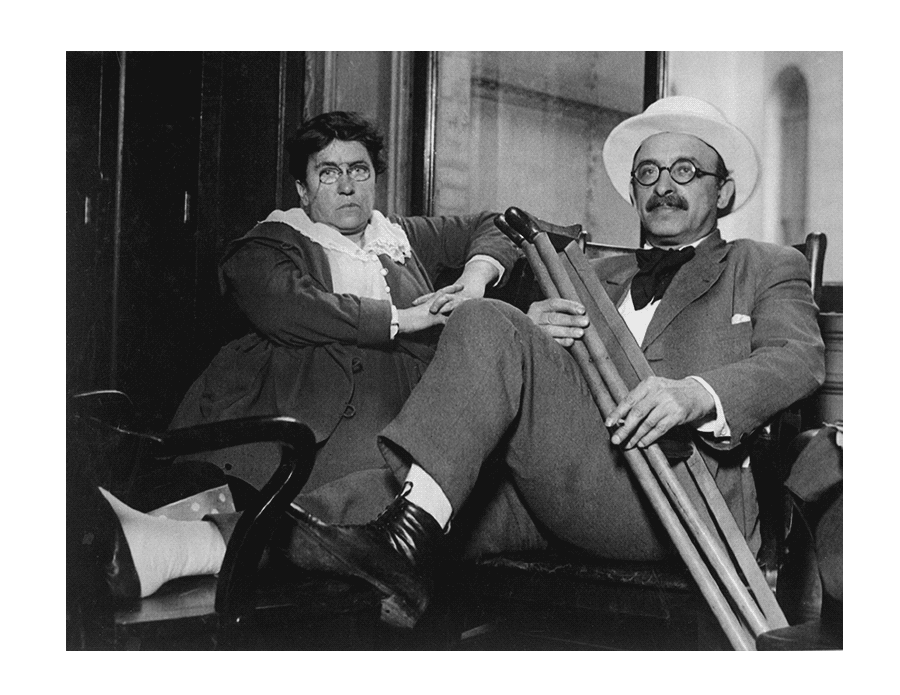
August 31, 2017
Red Emma
из фб:
Olgerta Ostrov added 3 new photos.
August 27 at 12:26am ·
Прочитала первый том автобиографии Эммы Гольдман «Проживая свою жизнь». Не скажу, что чтение увлекательное, но заглянуть в мир «красной Эммы», хотя бы в ту ее часть, которую она сама же и приоткрыла, было любопытно.
 Несмотря на то, что анархизм Эммы Гольдман начался с признания правомерности насилия для достижения политических и социальных целей, сама она насилие не практиковала. Наоборот, как медсестра она готова была оказывать медицинскую помощь тем, в кого стреляли террористы. И вообще, судя по ее письмам, Эмма Гольдман обладала эмпатией и была женщиной сензитивной. Интересен ее рассказ о том, как она сознательно отказалась от материнства, от создания «буржуазной» семьи, поставив служение Делу выше семейного счастья. При этом она легко влюблялась и устанавливала глубокие эмоциональные отношения с мужчинами. То есть «красная Эмма» не была аскеткой и анахореткой. Очень симпатичная, любознательная, живая, остроумная, зачастую неуверенная в себе, сопереживательная, отважная, любящая театр – такой ее воспринимаешь, прочитав книгу.
Особенно мне понравились два эпизода. Первый – где она рассказывает, как лечила хозяйку борделя и как они потом подружились. И второй – о съезде неомальтузианцев. Их заседания пришлось «проводить тайно, поскольку французское правительство запрещало любые организованные попытки ограничить деторождение». «Людей на неомальтузианском съезде было очень мало, не больше десятка делегатов... Но то, чего недоставало из-за количества участников, с лихвой покрывалось живым интересом. Доктор Дрисдейл, почтенный сторонник ограничения роста семьи, был полон энтузиазма по этому вопросу. Мисс Дрисдейл, его сестра, Поль Робен и их коллеги были достойны восхищения за простоту и серьёзность, с которой они представляли тему, а также за храбрость при демонстрировании профилактических методов. Я поражалась их способности обсуждать этот деликатный вопрос так открыто, избегая любых оскорблений. Я думала о своих бывших пациентках с Ист-Сайда и о том, каким благословением для них стали бы противозачаточные средства, которые описывались на заседаниях. Делегаты удивились, когда я рассказала им о своих напрасных попытках в роли акушерки найти способ помочь бедным женщинам в Штатах. Они считали, что, пока Энтони Комсток заведует американской моралью, потребуются годы, прежде чем методы предохранения от зачатия можно будет открыто обсуждать в этой стране. Я заметила, что даже во Франции им приходится встречаться тайно, и уверила их, что знаю много людей в Америке, достаточно смелых, чтобы делать полезную работу, даже если она запрещена. В любом случае я решила заняться этим вопросом по возвращении в Нью-Йорк. Делегаты похвалили меня за убеждения и снабдили литературой и противозачаточными средствами для будущей работы».
Вообще, взгляды Эммы Гольдман на взаимоотношения полов были настолько передовыми, что их не одобряли даже сами анархисты.
Мне видится, что и до сих пор отношение к женщине у анархистов на уровне патриархата. Во всяком случае, у подавляющего большинства. А вот Эмма Гольдман легко выходила за границы властных отношений по дороге свободы, потому что она была на стороне женщин, потому что сама была женщиной. Мужчине выбраться из рамок властных отношений в теории можно, а на практике всегда остается островок, где он – власть, сила, хозяин. Оставить этот последний оплот и перейти к иным отношениям для многих практически невозможно.
Предвкушаю выход переводов второй и третьей частей воспоминаний Эммы Гольдман.
#фемкультура
Olgerta Ostrov added 3 new photos.
August 27 at 12:26am ·
Прочитала первый том автобиографии Эммы Гольдман «Проживая свою жизнь». Не скажу, что чтение увлекательное, но заглянуть в мир «красной Эммы», хотя бы в ту ее часть, которую она сама же и приоткрыла, было любопытно.

Особенно мне понравились два эпизода. Первый – где она рассказывает, как лечила хозяйку борделя и как они потом подружились. И второй – о съезде неомальтузианцев. Их заседания пришлось «проводить тайно, поскольку французское правительство запрещало любые организованные попытки ограничить деторождение». «Людей на неомальтузианском съезде было очень мало, не больше десятка делегатов... Но то, чего недоставало из-за количества участников, с лихвой покрывалось живым интересом. Доктор Дрисдейл, почтенный сторонник ограничения роста семьи, был полон энтузиазма по этому вопросу. Мисс Дрисдейл, его сестра, Поль Робен и их коллеги были достойны восхищения за простоту и серьёзность, с которой они представляли тему, а также за храбрость при демонстрировании профилактических методов. Я поражалась их способности обсуждать этот деликатный вопрос так открыто, избегая любых оскорблений. Я думала о своих бывших пациентках с Ист-Сайда и о том, каким благословением для них стали бы противозачаточные средства, которые описывались на заседаниях. Делегаты удивились, когда я рассказала им о своих напрасных попытках в роли акушерки найти способ помочь бедным женщинам в Штатах. Они считали, что, пока Энтони Комсток заведует американской моралью, потребуются годы, прежде чем методы предохранения от зачатия можно будет открыто обсуждать в этой стране. Я заметила, что даже во Франции им приходится встречаться тайно, и уверила их, что знаю много людей в Америке, достаточно смелых, чтобы делать полезную работу, даже если она запрещена. В любом случае я решила заняться этим вопросом по возвращении в Нью-Йорк. Делегаты похвалили меня за убеждения и снабдили литературой и противозачаточными средствами для будущей работы».
Вообще, взгляды Эммы Гольдман на взаимоотношения полов были настолько передовыми, что их не одобряли даже сами анархисты.
Мне видится, что и до сих пор отношение к женщине у анархистов на уровне патриархата. Во всяком случае, у подавляющего большинства. А вот Эмма Гольдман легко выходила за границы властных отношений по дороге свободы, потому что она была на стороне женщин, потому что сама была женщиной. Мужчине выбраться из рамок властных отношений в теории можно, а на практике всегда остается островок, где он – власть, сила, хозяин. Оставить этот последний оплот и перейти к иным отношениям для многих практически невозможно.
Предвкушаю выход переводов второй и третьей частей воспоминаний Эммы Гольдман.
#фемкультура
December 21, 2013
The Funeral of Peter Kropotkin
в ролике несколько хороших портретов Беркмана и похуже Гольдман, ещё молодцевато выглядевшей :)
на кино навела ФБ френдеска, оттуда же ссылка:
Ярослав ЛЕОНТЬЕВ, Сергей БЫКОВСКИЙ
Из истории последних страниц анархо-движения в СССР: дело А. Барона и С. Рувинского (1934 г.)
34 -- год визита в СССР
December 24, 2012
Anarchy in the U.S.A.
‘Sasha and Emma,’ by Paul Avrich and Karen Avrich
новая книжка про им.порт и импорт.ёров анархии и террора в США, вышла недавно. Пол Аврич -- оч известный историк анархизма, одесситреценция NYT
 |
| Саша и Эмма |
 |
| Выступление Э. Голдман |
непонятная фраза: Except for a brief period after Berkman’s release 14 years later, their sexual relationship ended, but they remained friends and comrades and maintained their — one can only call it love — for the rest of their lives.
(видимо отношения между ними были какой-то разновидностью постреволюционного БДСМ, мб, Тургенев-Виардо, только хуже)-- Berkman was a difficult man, kind to those close to him but constitutionally incapable of accepting authority
любопытно: Candace Falk, the director of the Emma Goldman Papers project
почти Вовочка: Berkman’s life. Born in 1870, the son of a wealthy merchant in Russia, he was inspired by the political ferment that resulted in the assassination of Czar Alexander II in 1881.
фактура: In 1919, after serving their sentences, Goldman and Berkman, neither of whom was an American citizen, were deported to Russia. Critical of the authoritarian Bolsheviks, they left the Soviet Union in 1921 and began years of exile in Europe, mostly in France. Berkman died in Nice in 1936, killing himself in response to continued ill health. Goldman, who had the opportunity to work with anarchist forces during the Spanish Civil War, died in Toronto in 1940.
When she petitioned to be allowed to enter the United States in 1934, her request was supported by Sherwood Anderson, John Dewey, Sinclair Lewis, Margaret Sanger, Eugene O’Neill and Dorothy Canfield Fisher. “Everyone is an anarchist who loves liberty and hates oppression,” Goldman declared during that visit. That would be pretty much everyone.
February 19, 2011
Эмма Голдман
надо бы про неё написать статейку
исходнег и весьма неплохой тут -- см.
When Margaret Sanger, an advocate of access to contraception, coined the term "birth control" and disseminated information about various methods in the June 1914 issue of her magazine The Woman Rebel, she received aggressive support from Goldman. Sanger was arrested in August under the Comstock Law, which prohibited the dissemination of "obscene, lewd, or lascivious articles"—including information relating to birth control. Although they later split from Sanger over charges of insufficient support, Goldman and Reitman distributed copies of Sanger’s pamphlet Family Limitation (along with a similar essay of Reitman’s). In 1915 Goldman conducted a nationwide speaking tour in part to raise awareness about contraception options. Although the nation’s attitude toward the topic seemed to be liberalizing, Goldman was arrested in February 1916 and charged with violation of the Comstock Law. Refusing to pay a $100 fine, she spent two weeks in a prison workhouse, which she saw as an "opportunity" to reconnect with those rejected by society.
Subscribe to:
Posts (Atom)


 Posts


