Showing posts with label eugenics. Show all posts

December 14, 2016

The “Feeble-Minded” and the “Fit”: What Sanger Meant When She Talked about Dysgenics

запись из блога бумажного проекта, как всегда любопытно
13 Tuesday Dec 2016
Posted by Taylor Sullivan in Eugenics ≈ Leave a comment
TagsDysgenics, Francis Galton, Nativists, Unfit

The potential mother is to be shown that maternity need not be slavery but the most effective avenue toward self-development and self-realization. Upon this basis only may we improve the quality of the race.” (SANGER, “THE EUGENIC VALUE OF BIRTH CONTROL PROPAGANDA,” BIRTH CONTROL REVIEW, OCT. 1921, 5)

Margaret Sanger’s discussion of dysgenics provides some of the birth control advocate’s most troubling and problematic texts. Her complex perspectives have both frustrated supporters and offered fodder for those seeking to discredit her life’s work. Attempts by those with ideological, political, or other agendas to mislead opponents by avoiding fact and foregoing accuracy are not unique to the current environment. By extracting misleading soundbites from her forays into eugenics, detractors have painted Sanger as a racist and repurposed birth control as a means of controlling minority populations for decades. Manipulating Sanger’s words to support such a claim is historically inaccurate—a gross misuse of quotes without context. However, given the contested nature of the activist’s attempt to wed the function of birth control to the ideology of progressive eugenicists, exploring Sanger’s actual relationship with terms, such as dysgenics and eugenics, presents a valuable learning opportunity.

Before delving into Sanger’s actual views on the subject, it might be useful to first examine the terms dysgenics and eugenics as they were in the early part of the 20th century. The Oxford English Dictionary (OED) defines dysgenics as referring to “Racial degeneration, or its study”—that is the elements that can lead to the deterioration of the human race or subdivisions within it. Eugenics, according to the OED, is the science of selective breeding designed to improve and strengthen the human race biologically, psychologically, behaviorally, etc.
Francis Galton
Francis Galton

By the end of the nineteenth century, selective breeding as a means of controlling the country’s genetic destiny and evolutionary tract was gaining popularity as a social and political ideal in America. This movement, most popularly linked to nativist groups, possessed two notable influences. First, the popularity of biological determinism encompasses both dysgenics and eugenics and came on the heels of Charles Darwin’s cousin, Francis Galton. Galton has been credited as the father of modern eugenics and for having laid the scientific and ideological groundwork for biological determinism—for many of the selective breeding ideas American eugenicists would eventually trumpet (Selden, Steven, “Transforming Better Babies Into Fitter Families,” Proceedings of the American Philosophical Society 149.2, June 2005, 202).

Then, following Galton’s numerous publications, changes in European emigration patterns began. Americans, who valued Nordic, Germanic, and Anglo-Saxon traits, reacted defensively to new waves of immigrants, who did not possess these traits. In an attempt to both preserve and strengthen the national qualities they valued as “real American,” nativists turned to eugenics. By the early 1920s, as the movement surrounding theories of selective breeding designed to build stronger, healthier Americans had gained notable popularity, applications expanded. No longer did dysgenics and eugenics belong to the American nativists, but to a host of different groups with varying social and political aims (Selden, Steven, “Transforming Better Babies Into Fitter Families,” Proceedings of the American Philosophical Society 149.2, June 2005, 203).

It was in this atmosphere of blossoming enthusiasm that Sanger began to align the functionality of birth control with the ideology of biological determinism. In search of support from respectable professional groups, including eugenicists, Sanger highlighted how con
“The Eugenic Tree,” American Philosophical Society, 1932

traceptives could be used to pursue “the self direction of human evolution.” But, a result of Sanger’s alignment with certain dysgenic and eugenic principles is that her work continues to be challenged even today. Perhaps most deleterious to her character are modern assertions that Sanger was a “racist promoter of genocide.” While Sanger can be considered racist and classist to the extent that many people were during the twentieth century, it is erroneous to overextend that allegation and claim the activist was a proponent of race control (“The Eugenic Tree, Announcements of the Third International Eugenics Congress,” American Philosophical Society, 1932 and Katz, Esther, “The Editor as Public Authority: Interpreting Margaret Sanger,” The Public Historian 17.1, Winter 1995, 44).

Sanger, who aimed to enmesh dysgenics, eugenics, and contraception, was primarily interested in the “racial health” of the human race versus one particular race. What the birth control advocate sought was for contraception to act as a control for the passing of “injurious,” hereditary traits on to future generations. Commenting in 1934 on the German government’s sterilization program, Sanger distinguished which hereditary traits she viewed as injurious and which hereditary traits she did not wish to involve in her eugenic mission:

I admire the courage of a government that takes a stand on sterilization of the unfit and second, my admiration is subject to the interpretation of the word ‘unfit.’ If by ‘unfit’ is meant the physical or mental defects of a human being, that is an admirable gesture, but if ‘unfit’ refers to races or religions, then that is another matter which I frankly deplore.
Sanger rejects race control, but her statement is troubling. Employing birth control and supporting forced sterilization to curtail the reproduction of those with mental or physical challenges causes even her most staunch supporters to raise an eyebrow (Sanger, “Margaret Sanger to Sidney L. Lasell, Jr.,” Feb. 13, 1934).

While unsettling to modern sensibilities, Sanger was not unique in her praise of forced sterilization. As early as 1907, the first compulsory sterilization law was passed in the United States. Specifically, the eugenicist statute passed in the state of Indiana applied to male “criminals, idiots, imbeciles, or rapists.” These groups—“criminals, idiots, imbeciles, or rapists”—coincided with Sanger’s understanding of the unfit. It is important to note that Sanger, along with other eugenicists, believed scientific studies that concluded that those with mental or physical challenges included criminals, alcoholics, drug addicts, etc. and that these groups were incapable of resisting their sexual urges. Her solution at the time, as was the state of Indiana’s solution in 1907, was sterilization. Sanger also considered gender segregation as a possible method for controlling the reproduction of the “unfit.” As science evolved its views, so did Sanger, and after the horrors of World War II, she significantly revised her views of forced sterilization (James B. O’Hara and Sanks, T. Howland, “Eugenic Sterilization,” The Georgetown Law Review 45, 1956, 22)

Beyond compulsory sterilization, Sanger’s alignment with dysgenics and eugenics materialized in her calls for the responsible breeding of the “fit” and the “unfit.” In Sanger’s eyes, “uncontrolled fertility [was] universally correlated with disease, poverty, overcrowding and the transmission of heritable taints”—in so many words, the proliferation of the “unfit.” As a result, she proposed “find[ing] effectual means of controlling & limiting the propagation of the mentally unfit, including feebleminded, psychotic & unstable, mentally retarded individuals.” Worth noting, Sanger specifically meant birth control, not abortion and never infanticide, when she spoke of controlling mentally and physically challenged populations. Her commitment to parents responsibly procreating, via the use of birth control when appropriate, long outlived her tryst with sterilization (Sanger, “The Limitations of Eugenics,” Typed speech, [Sept] 1921, Library of Congress Microfilm, LCM 130:0044 and Sanger, “[Birth Control and Controlling the Unfit Notes],” Autograph draft speech, [1938], Sophia Smith Collection, S71:1050).
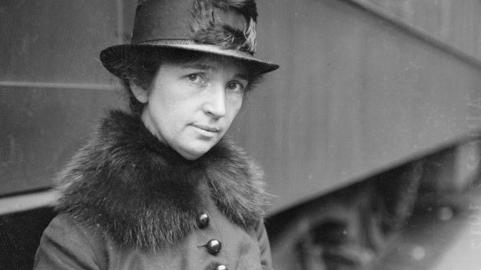
Sanger
Sanger

To summarize Sanger’s relationship with such heated terms as dysgenics and eugenics is a dangerous task. While she married her social mission to that of progressive eugenicists—primarily in an attempt to garner mainstream support for birth control—it is difficult to easily consolidate her beliefs on this complex issue. What we can deduce from the literature she has left behind is that claims of her racism are misguided to say the least and that her dysgenic aims were colorblind. We can also conclude that Sanger understood the eugenic value of contraception to lie in strengthening and empowering the human race. She believed that “the great responsibility of parenthood” was to help diminish the potential of biological weakness in all people, but such beliefs were tempered by the science and the biases of the day. Moreover, these statements are liable to over-simplify perspectives that were more complex in nature and should be taken as the less than exact overviews that they are. Ultimately, Sanger’s campaign for the eugenic benefits of birth control was a divergence from her core mission: that every woman be freed from the shackles of unwanted pregnancy (Sanger, “The Eugenic Value of Birth Control Propaganda,” Birth Control Review, Oct. 1921, 5).

July 3, 2013

todjik eugenics

В ЖЖ Полетаева ссылки на таджикский маразм, но сама мысль довольно характерна:

Религиозно смешанные браки могут разрушить генофонд таджикской нации, считает таджикский депутат Саодат Амиршоева.
«Я против того, чтобы таджикские девушки выходили замуж за мужчин другой религии. За представителей разных наций – русских, китайцев или других, которые не принесут пользу нашим традициям и обычаям, - считает депутат нижней палаты таджикского парламента С. Амиршоева. - Националисткой или кем меня не назовут, я против таких браков».
разрушить генофонд -- хороший стринг для погуглить, число идиотов явно больше, чем 1

June 19, 2013

Hans Harmsen

в ФБ вдруг вплыло имя
немецкого специалиста по демографии СССР, см сабж
далее с античойсового сайта:

Hans Harmsen, a German physician, was an important scientific and academic supporter of Nazi policies in the 1930s and 1940s, such as the inhumane 1933 sterilization law that mandated coercion.

As a bureaucrat in Nazi Germany, he was responsible for approving eugenic sterilizations performed on the disabled. He “supported forced sterilizations of the mentally handicapped and helped to carry them out in the Protestant Inner Mission institutions for which he was responsible.” (Report by Monika Simmel-Joachim and Elke Kiltz to the National Board of Pro Familia, May 16, 1984, quoted and translated in Atina Grossmann, Reforming Sex: The German Movement for Birth Control and Abortion Reform, 1920-1950 [New York: Oxford University Press, 1995], 211)

Harmsen became the president of Pro Familia, the German affiliate of Sanger’s International Planned Parenthood Federation, in 1952. He continued to promote ostensibly “voluntary” eugenic sterilization and campaigned for a new law in the post-Nazi age. In 1980, after decades of leadership roles within Pro Familia, he was awarded an honorary presidency. Only in 1984 was he forced to resign (Grossmann, op. cit., 204-11).

For excerpts a Harmsen speech from 1931, see the German History in Documents and Images site, “Hans Harmsen: Contemporary Questions in Eugenics (1931).”

см Sanger’s Racist Friend: Hans Harmsen

January 30, 2013

Sauvy on population policy

во втором томе на стр 302 он пишет:
мальтузианская политика до второй мировой войны нигде не встречалась
после неё пионером стала Япония со своими евгеническими законами, а также страны, организаторы IPPF и Population Council

December 20, 2012

Darwin museum collected Koltsov memorial

основное сообщение в евгеническом блоге

November 9, 2012

trip to Germany

Sanger's tour of several German cities in the summer of 1920 informed her reform work for years to come. Her insights into the plight of poor German women gave a new urgency to her belief in the need for women everywhere to define and assert their reproductive rights. Her observations of German children shaped her views on eugenics and humanitarianism. Everything she saw reinforced her faith in Malthusian theory--her understanding of how over population inevitably leads to distress and human suffering, and forces political leaders to follow a path of expansionism and war." (Sanger's Hunger Games-A Postwar Germany Odyssey, Fall 2012.)

"The old-fashioned warrior who entered with sword and killed his victims outright has my respect after witnessing the 'Peace' conditions of Germany," she wrote shortly after leaving Europe. She aimed for shock value a few months later in a dinner speech before the Women's Economic Club in Philadelphia, when she suggested that rather than sending aid for starving children in Germany and other European countries, the United States should "send over a quantity of chloroform to put them out of their misery," because that would be the best thing for the children and the future of the world." (Sanger's Hunger Games-A Postwar Germany Odyssey, Fall 2012.)

For much more on Sanger's 1920 tour, see the newsletter article, Sanger's Hunger Games-A Postwar Germany Odyssey, Fall 2012, and Sanger's two-part article, "Women in Germany, Dec. 1920 and Jan. 1921, Birth Control Review.

foto: Margaret Sanger in the fall of 1920 after returning from her trip to Germany. (Courtesy of the Sophia Smith Collection, Smith College)

source 

Neo-Malthusianism, Family Limitation, and Conscious Generation

While she supported some aspects of eugenics when it came to improving health and strengthening the human race, her goal  remained, first and foremost, to give all women the same freedom and autonomy enjoyed by men.  “Feminists,” she wrote in her 1938 autobiography (pp. 107-8), were trying to free women “from the new economic ideology but were doing nothing to free her from her biological subservience to man, which was the true cause of her enslavement.”
Sanger’s launched the movement in 1914 to give women that freedom, but the new movement needed a new name. As she and her colleagues sat around sifting through various options, she recalled,  she found that the terms already in use — Neo-Malthusianism, Family Limitation, and Conscious Generation seemed stuffy and lacked popular appeal.” She didn’t mind the word “control” but found the term “limitation” too narrow. She wrote, “my idea of control was bigger and freer.” Sanger wanted each woman to have the freedom to make her own choices and decisions. So they came up with the phrase “birth control.” That settled it–”the baby” as she dubbed the new movement “was named.”

source

July 19, 2012

complexity of the present and that of the past

"Dear Mr. Grant,

I have been considerably disquieted by the letter you showed me yesterday, suggesting a working alliance between the American Eugenics Society and the American Birth Control League. In my judgement we have everything to lose nothing to gain to such an arrangement.

[The American Birth Control League] is controlled by a group that has be brought up on agitation and emotional appeal instead of on research and education... With this group, we would take on a large quantity of ready-made enemies which it has accumulated, and we would gain allies who, while believing that they are eugenics, really have no conception of what eugenics is and are actually opposed to it.

[At a recent international birth control conference] two members of our advisory council ... put through a resolution at the final meeting, urging that people whose children gave promise of being of exceptional value to the race should have as many children, properly spaced, as they felt that they feasibly could. This is eugenics. It is not the policy of the American Birth Control League leaders, who in the next issue of their monthly magazine came out with an editorial denouncing this resolution as contrary to all the principles and sentiments of their organization.

If it is desirable for us to make a campaign in favor of contraception, we are abundantly able to do so on our own account, without enrolling a lot of sob sisters, grand stand players, and anarchists to help us. We had a lunatic fringe in the eugenics movement in the early days; we have been trying for 20 years to get rid of it and have finally done so. Let's not take on another fringe of any kind as an ornament.

Sincerely,
Paul Popenoe

Birth Control and Eugenics: Uneasy Bedfellows?

December 14, 2011

voice of Russia

вральная статья на голосе России
с упоминанием участия Сэнгер в программе стерилизации

November 23, 2011

likely nice facts, but badly interpreted

Eugenics - the science of improving the human population via selective breeding or reproduction - is not a concept confined to past centuries and decades, nor to locales outside the United States.

That's the finding of recent research by University of Cincinnati historian Wendy Kline, who will present a case study on the topic - a case study that examines the use of the controversial contraceptive injection, Depo-Provera, as a eugenic tool - on Nov. 11 at a conference titled "The Study of Eugenics: Past, Present and Future" to be held in Uppsala, Sweden. Her presentation is titled "Bodies of Evidence: Activists, Patients, and the FDA Regulation of Depo-Provera."

It's research that is particularly timely given that recent national news coverage has featured North Carolina's current plans to compensate surviving victims of forced sterilizations that took place there from the 1920s to the 1970s.

Рахиль Уэлч UC HISTORIAN'S CASE STUDY ON 1983 DEPO-PROVERA HEARINGS

Kline's research into the debate surrounding Depo-Provera in the 1970s and 1980s began when she was visiting the Smith College Women's History Archive where she found a large box of materials still unprocessed and not yet catalogued. This was among 50 to 60 boxes from the National Women's Health Network.

She recalled, "The box contained hundreds of individual files, each detailing a woman's difficulties with the side effects of Depo-Provera or detailing how she had not been informed of those side effects or detailing how she had been given the injection without her consent or by means of manipulation. This coercion, lack of informed consent and testing of the drug has obviously been gathered together in preparation for a class-action suit by the National Women's Health Network that had never gone forward."

But the collection did provide Kline with a rich source of material of examining the history of this contraceptive and the U.S. Food and Drug Administration's public board of inquiry on Depo-Provera held in 1983.

"The use of Depo-Provera captures all of the controversy of this century regarding controlling fertility and who's ultimately making the decision about who gets to reproduce. My research looks at coercion, risks not fully understood and how arguments were made for and against Depo-Provera at the time," she explained.

For instance, it was in the Depo-Provera hearings in Washington that the manufacturer and those in favor of the drug had to first contend with the greater organizational powers and force of the feminist movement - but where that feminist movement had to argue its case by focusing narrowly on the flaws in the scientific research methodology applied when testing Depo-Provera.

In other words, those combating the use of Depo-Provera could not make a case against the drug based on morality or sentiment even though it could easily have been argued that this was a case of eugenics since the testing of the drug in the 1970s at Atlanta's Grady Memorial Hospital Family Planning Clinic involved mostly black women in public assistance.

Instead, because of FDA strictures related to evidence supplied at its board of inquiry hearings, opponents of the drug had to channel their arguments on the science then available on Depo-Provera.

"Of course," said Kline, "It was and is very difficult to separate science from the society that produced it. There was a reason, given the understood risks of Depo-Provera, that its testing was done on poor women in the U.S. and on women in developing countries."

Still, at the Depo-Provera hearings of 1983, those against the use of Depo-Provera were able to introduce the concept that the FDA's established cost/benefit analysis of a drug should include quality of life issues and that dismissing female patient's complaints about crippling side effects was not just "sexist," it was bad science.

Another outcome of the FDA 1983 inquiry into Depo-Provera and the publicity surrounding the hearings was the first national conference on black women's health held in Atlanta in 1983.

The larger message, according to Kline, is that eugenics is more than simply an embarrassing mistake of the past. The popular belief that technology and regulation of sexual fertility (?) would lead to healthier, stronger, more self-reliant population carried over in the 1970s, '80s and even today.

source:
Coercive Birth Control Used As A Form Of Eugenics

it is a salad of arguments ;( 

November 2, 2011

Eugenics, or Scientific Racism, in American Education

One of the evil fruits of the tree of evolution is the idea of eugenics, the notion that human beings can be bred to perfection by the same methods used to breed perfect cattle. Since evolution itself reduces man to the level of animal, it is not surprising that eugenics was adopted by many leaders among the educational elite as the means of solving man’s social problems. But eugenics itself poses a problem: what does one mean by human perfection, and whose definition of perfection should be adopted?
The founder of the eugenics movement, Sir Francis Galton (1822-1911), cousin of Charles Darwin, found his model of perfection in the British elite. But he was painfully aware that the birthrate of the elite was far lower than that of what he considered to be the inferior classes. In this he saw a great danger to civilization. He concluded that ways had to be found to encourage the fertility of the superior stock and to discourage the fertility of the inferior stock.
In order to determine which individuals had superior traits, Galton created an anthropometric laboratory in 1884 for the measurement of man, with the hope that by means of tests he could single out those individuals who should survive. However, Galton realized that physical measurements alone were not enough to determine the criteria he needed. He began searching for ways to investigate psychological differences.
In 1886, he was introduced to James McKeen Cattell, a young American who had just completed two years of study in the laboratories of Prof. Wilhelm Wundt, the world’s leading experimental psychologist, at Leipzig University in Germany. It was there that Cattell conducted his reaction-time experiments which became the “scientific” basis for teaching children to read by the whole-word method. Cattell spent the next two years working in Galton’s lab at Cambridge University where he used experimental techniques to investigate the mental differences among normal individuals. He coined the term “mental test.” Cattell used Galton’s framework of physical and physiological anthropometry in which to conduct his experiments on individual differences.
Born in 1860, Cattell graduated in 1880 from Lafayette College (Easton, Penn.) where his father, a Presbyterian minister, was president. While at college, Cattell studied the ideas of Auguste Comte, the French philosopher who stressed the authority of scientific knowledge over religious or metaphysical forms of thought. This philosophy, known as Positivism, led Cattell to adopt a new “religion” of science.
In 1882-83 Cattell studied at Johns Hopkins University where his classmate was John Dewey and their professor was psychologist G. Stanley Hall. Hall was the first American to study at Leipzig under Prof. Wundt, and he encouraged Cattell to get his doctorate under Wundt at Leipzig.
After completing his studies in Germany and his experiments at Cambridge, Cattell returned to the United States where he became professor of psychology at the University of Pennsylvania. In 1891, Cattell moved to Teachers College, Columbia University, where as professor of experimental psychology he built the nation’s leading department of psychology. He trained many young psychologists who then fanned out across American academia to teach the new gospel of psychology. In 1904, Cattell arranged for his friend John Dewey to come to Columbia as professor of philosophy.
At Teachers College, Cattell’s star pupil was Edward L. Thorndike, who espoused the principles of eugenics and became America’s leading educational psychologist. He devised a new theory of learning based on conditioning techniques used in animal training. His book, Animal Intelligence (1898) laid the groundwork for the school of behaviorism.
Both Cattell and Thorndike were active in applying the principles of eugenics to education. Like Dewey, they held an organic view of society. Socialist Dewey wrote in his famous My Pedogogic Creed:
“I believe that the individual who is to be educated is a social individual and that society is an organic union of individuals…. Examinations are of use only so far as they test the child’s fitness for social life and reveal the place in which he can be of most service and where he can receive the most help.”
This was clearly the educational philosophy of a collectivist state, not a Constitutional republic in which the purpose of government is to secure the God-given rights to life, liberty, and the pursuit of happiness of the individual. The purpose of education in a free society is to provide the individual with the skills needed to make his way in the adult world, not to determine where he can be ”of most service.”
Inherent in Dewey’s creed is the notion that individual human worth is determined by social usefulness, a concept that is taught today in the lifeboat and fallout shelter survival exercises in which students must decide who to throw out of the lifeboat or kill in the fallout shelter. Dewey also wrote in that Creed:
“[T]he teacher is engaged, not simply in the training of individuals, but in the formation of the proper social life....In this way the teacher always is the prophet of the true God and the usherer in of the true kingdom of God.”
It was inevitable that those who believed in eugenics would see society in racial terms and impose racist ideas on American education. The veneer of science made racism respectable among the social-radical progressives who were supposedly only interested in the future good of mankind.
Eugenics conferences were held in the United States to spread the new spirit of scientific racism within academia. G. Stanley Hall, who had become president of Clark University (Worcester, Mass.) in 1889, encouraged his students to develop tests to assess mental capacity. One of his students, Lewis Terman, devised a mental test that was to become the most famous of them all, one that measured the I.Q., or Intelligence Quotient. The I.Q. expressed the ratio of a child’s mental age to his chronological age, multiplied by one hundred. Terman believed that intelligence was a matter of genetic inheritance and that genetic superiority could therefore be determined by this test.
The Anglo-American eugenics movement grew in influence on both sides of the Atlantic. In England it was embraced by Fabian socialists because they believed that an ideal society could be produced only by “superior” people. In America, it drew such progressives as Margaret Sanger, Gifford Pinchot, David Starr-Jordan, Charles M. Eliot, Emma Goldman, and such conservatives as Herbert Hoover and Charles Davenport. Sanger was motivated by her belief in eugenics to start the birth-control movement.
The eugenics movement persuaded Congress to pass new immigration laws to curtail the influx of "inferior" peoples from Eastern and Southern Europe. In 1921, the Second International Congress of Eugenics was held at New York’s Museum of Natural History. Its president was Henry Fairfield Osborn, who wrote in the program:
The right of the state to safeguard the character and integrity of the race or races on which its future depends is, to my mind, as incontestable as the right of the state to safeguard the health and morals of its people. As science has enlightened government in the prevention and spread of disease, it must also enlighten government in the prevention of the spread and multiplication of worthless members of society, the spread of feeble-mindedness, of idiocy, and of all moral and intellectual as well as physical diseases.
It was this philosophy of government which enabled Congress to pass Prohibition, which made it illegal to drink alcoholic beverages. And we all know what a social disaster Prohibition turned out to be. Likewise, Mayor Bloomberg of New York believes that it is government’s highest duty to determine what people should be allowed to eat. It sounds benign and sensible to a statist. But nothing in our Constitution gives government such powers.
However, there was nothing benign about scientific racism which affected more important aspects of life than just eating habits. To eugenicist Thorndike, blacks were inferior and had to be treated differently in education, and he was responsible for changing “certain schools for Negroes from a predominantly literary to a predominantly realistic and industrial curriculum.”
In other words, as a result of “scientific research,” pupils were now no longer being judged as individuals, but as members of different racial groups. Scientific racism became an integral part of progressive education policy.
In 1933, Hitler’s new National Socialist (Nazi) government adopted a Eugenic Sterilization Law that resulted in the compulsory sterilization, within three years, of 275,000 people judged “unfit” by Hereditary Health Courts. In 1939, on the eve of World War II, the Nazi regime inaugurated a policy of euthanasia for the mentally diseased or disabled. Some 70,000 patients were shot and gassed to death. All of this was prelude to the mass extermination of Jews that would take place during the war years.
But all of that is in the dim past. In America today, eugenics has been replaced by multiculturalism, affirmative action, new liberal programs to help minorities advance economically, and special education in the public schools to help the mentally challenged (once dubbed "useless human beings") get a government education. The schools are now dumbing-down everyone, and functional illiteracy is now epidemic. In other words, we’ve gone from one evil to another. Scientific racism rejected Biblical religion, and today’s progressives reject the supernatural. American culture is in a state of total philosophical chaos. The future of America is uncertain because of the raging battles among competing philosophies. Only by repudiating the statists and returning to the sane political philosophy of the Founding Fathers will this nation be able to reconstruct an American future in liberty and economic freedom for all.

Written by Sam Blumenfeld

July 27, 2011

Eugenic Legacy: The Control of Female Fertility

Margaret Sanger's Eugenic Legacy: The Control of Female FertilityMargaret Sanger, the American birth-control and population-control advocate who founded Planned Parenthood, stands like a giant among her contemporaries. With her dominating yet winning personality, she helped generate shifts of opinion on issues that were not even publicly discussed prior to her activism, while her leadership was arguably the single most important factor in achieving social and legislative victories that set the parameters for today’s political discussion of family-planning funding, population-control aid, and even sex education.

source

May 20, 2011

Great Moments in Eugenics History

Charles Davenport was a prominent member of the American Eugenics Society in the early 1900s. Davenport, a biologist, founded the Eugenics Records Office at Cold Spring Harbor Laboratory in 1910, which became the “scientific” crux of the American eugenics movement in the early 1900s. The ERO constructed pedigrees to document the “fitness” or “unfitness” of different American families and lobbied for compulsory sterilization. Davenport maintained extensive ties with German eugenicists Nazi movement in the 1930s. Here is what Margaret Sanger, the eugenicist founder of Planned Parenthood, wrote to Charles Davenport in 1921:
As the subject of the findings of the Eugenics Records Office with which you are connected at Cold Springs Harbor, on the heredity of disease tendencies, is really fundamental to a fair consideration of Birth Control, I am going to ask if you would give a paper on the subject, irrespective of whether you care to speak as an advocate of Birth Control or not…
…at a conference Sanger was then organizing. Ja, rhepeit aftzer me: Ze pedigrees für ze fit und unfit families ahr fündamental to ze Birth Kontrol solution ve ahr planning.

a discussion follows this post

March 17, 2011

живая евгеника

В новом Гэпшире делили бюджет:

Harty then stated, "I wish we had a Siberia so we could ship them all off to freeze to death and die and clean up the population."

A 91-year-old state representative Barrington Republican Martin Harty told Sharon Omand, a Strafford resident who manages a community mental health program, that "the world is too populated

March 7, 2011

Rehabilitating eugenics


Ten years ago, in February 2001, to great fanfare, the draft human genome sequence was published. US President Bill Clinton had celebrated the completion of the project the year before as if man had just landed on Mars: “Genome science will have a real impact on all our lives — and even more, on the lives of our children. It will revolutionize the diagnosis, prevention, and treatment of most, if not all, human diseases.”
That was the hype. The reality is impressive, but hardly revolutionary. As Nature commented in its editorial for the occasion, “the complexity of post-genome biology has dashed early hopes that this trickle of therapies would rapidly become a flood.”
Scientists are acutely aware of the gap between promise and performance. The battle against common diseases still has not advanced much, because so many genes are involved. But somehow their battle-weary scepticism has failed to filter down to the science-dazzled public.
Biopolitical Times, an excellent blog based in California, has taken to running a brief feature called “gene of the week”. These are based on press releases from scientists (normally social scientists) proposing correlations between genes and personality types.
There is the “slut gene” which disposes people to one-night stands, a gene for being in a gang, an early-loss-of-virginity gene. There’s a "ruthless dictator gene”; there are two genes which predispose you to vote; there are genes which dispose you to vote Democrat. There are genes for victimhood, shyness and being a picky eater.
However absurd these sound, they send a serious message. They demonstrate that there is a hunger to believe that we are genetically determined. And wherever there is a hunger to believe, there are people ready to feed that belief.
It comes as no surprise that a Singapore company is marketing a genetic test to anxious parents which promises to test for 68 genes ranging from “Propensity for Teenage Romance Gene” to an “Explosive Power Gene”? (US$$8,871 worth of tests for a one-time-only price of $1,397!)
It’s impossible to know how many people were gullible enough to take the bait for this product. But I suspect that some people have a gene for belief in genetic determinism whose effects are magnified by higher education.
Take this incredible case from New York. A Federal District Court judge in Albany sentenced a man based on an as-yet-undiscovered gene. He spurned reports that a man convicted of possessing child pornography was “at a low to moderate risk to reoffend”. The man clearly had a child-porn-viewing gene which no scientist had ever heard of.
The judge told the defendant, “It is a gene you were born with. And it’s not a gene you can get rid of”. Nor did Judge Sharpe need evidence -- because he was sure that it would be discovered within 50 years. “You are what you’re born with. And that’s the only explanation for what I see here,” the judge said. (The sentence was successfully appealed.)
This speaks volumes about the magical power of genetics to subvert common sense. The belief that all behaviour is genetically determined has obviously sunk deeply into the public consciousness. Using the word “eugenics” has become taboo; believing in eugenics is widespread. 
And even amongst bioethicists.
Julian Savulescu, an Australian who is currently a professor of practical ethics at Oxford, recently declared that parents are morally obliged to genetically engineer their children so that they will have higher IQs. "There are other ethical principles which should govern reproduction, such as the public interest," he said. This policy would reduce welfare dependency, crowding in jails, school dropout rates and poverty. "Cheaper, efficient whole genome analysis makes it a real possibility in the near future."
Anyone who thinks that eugenics is dead and buried with the Nazi regime is deluding himself. Eugenics has clawed its way out of the grave and is being rehabilitated.

Michael Cook is editor of MercatorNet.(ссылка на оригинал)

February 18, 2011

теоретическая евгеника живее всех живых

In painstaking detail, Glad explains how eugenics was a robust, respectable scientific movement in the early 1900s, an “interdisciplinary conceptualization of the genetic consequences of social practices…” which strove to “replace natural selection with scientific selection”. Of course, Glad is right. At one time the ranks of the eugenics movement in the United States and Europe included a remarkable number of eminent figures—university presidents, such as Stanford President David Starr Jordan and Harvard University President A. Lawrence Lowell; Anglican priest William Inge, Dean of St. Paul’s Cathedral; population geneticists Ronald A. Fisher and J.B.S. Haldane; inventor Alexander Graham Bell; economist John Maynard Keynes; Leonard Darwin; H. G. Wells; George Bernard Shaw; Arthur Balfour; Vernon Kellogg (of the prominent cereal family); the Carnegie Institute; Havelock Ellis; Planned Parenthood founder Margaret Sanger; Nobel laureates Herman Muller and William Shockley; award-winning physiologist Dwight J. Ingle, founding editor of Perspectives in Biology and Medicine; Yale University Geographer Ellsworth Huntington;  and scores of other names from the social, biological, and medical sciences.
Glad even reminds readers that Winston Churchill, the much-lionized British Prime Minister during World War II, was an avid eugenicist—a particular irony, given that Marxist-leaning Jewish critics have used guilt-by-association tactics to smear the eugenics movement as crypto-Nazi.

подробнее тут

January 3, 2011

linx


из ранее цитированного блога (полезные ссылки):
One challenge about teaching my scholarship, though, was that I was often groping in the dark when it came to knowing at what level to pitch lecture notes and discussion questions. On the one hand, I wanted to go over specific terms—”eugenics,” “sexology,” “reproductive justice”—in much more detail than these students (who were often fairly familiar with the concepts) needed. On the other hand, I know I sometimes glossed over definitions of terms and historical context—”pessary,” “Comstock Laws,” “Havelock Ellis”—that I had become so familiar with that I forgot they weren’t common knowledge. I’d like in the future to maybe create a class wiki or a collaborative glossary to house references that are necessary, but not central, to the class.

идеи и их следствия

According to Wikipedia:
 
“At its peak of popularity eugenics was supported by prominent people, including Margaret Sanger, Marie Stopes, H. G. Wells, Woodrow Wilson, Theodore Roosevelt, Emile Zola, George Bernard Shaw, John Maynard Keynes, John Harvey Kellogg, Linus Pauling and Sidney Webb. Its most infamous proponent and practitioner was, however, Adolf Hitler who praised and incorporated eugenic ideas in Mein Kampf and emulated Eugenic legislation for the sterilization of ‘defectives’ that had been pioneered in the United States.”
 
 
In class, we studied ideas popular in America during the early 20th century and how they affected American beliefs about the beginnings of the universe, human life, and whether human life had meaning. I called student attention to correlations between Darwinism, eugenics, left-wing political movements and atheism.

December 23, 2010

практическая евгеника живее всех живых

The organization offers a solution that smacks of eugenics. In the 1930s Margaret Sanger, birth control advocate and early eugenicist, was interested in birth control’s usage possibility for population control.  While Sanger believed that birth control was a tool for all women, she was also a product of her time—a time when eugenics was popular—and she thought birth control should be used to reduce the population of “feeble-minded” people and the mentally ill. In the same spirit, CRACK is offering money to a highly vulnerable, economically depressed population it deems undesirable for reproduction.

Children Requiring a Caring Kommunity (CRACK), a non-profit based in California, will give $200 cash to any drug-addicted man or woman willing to undergo sterilization. And they offer a more lucrative option for women: they will pay clients $200/year to take long-term birth control like Depo-Prevara or Norplant.

CRACK’s website
ещё крэк

November 22, 2010

must see

евгеникаай пропустил самое интересное :(

19 ноября 2010 года
в 13:30 в конференц-зале
Государственного Дарвиновского музея

проШОЛ семинар
«Заря генетики человека»


Вступительное слово:

советник РАН Института общей генетики, член-корреспондент РАН
И. А. Захаров-Гезехус

Директор Архива РАН, к. и. н. В. Ю. Афиани
«Н. К. Кольцов и русское евгеническое общество»

Сотрудник Института психологии РАН, д. п. н., профессор Д. В. Ушаков
«Интеллект человека: наследуемость и роль в обществе»

Сотрудник Архива РАН, к. и. н. Н. М. Осипова
«Деятельность Русского евгенического общества в документах архива РАН»

Доцент РГГУ, к. и. н. Е. В. Пчелов
«Русское евгеническое движение в контексте науки и культуры 20-х годов»

Сотрудник Музея и Института антропологии МГУ Т. В. Томашевич
«Евгеническая нива российской антропологии»


Вход свободный

В рамках выставки
«Младшая сестра генетики»
(К 90-летию Русского евгенического общества)

сходил: картинки с выставки