The Song That Made The Pill OK
Casey N. Cep | May 15th, 2014
Loretta Lynn wrote and recorded “The Pill” in 1972. Her label didn’t release it until 1975, but three years wasn’t long enough to cool the controversy stoked by Lynn, one of the biggest names in country music, singing the praises of oral contraception to an audience of “unliberated, work-worn American females.” The Associated Press’s lede about the song in February of that year read, “To some, Loretta Lynn’s new song ‘The Pill’ might be too bitter to swallow. But to the country music star it has the sweet taste of success,” selling some 25,000 copies a day. The New York Times even gave it a few column inches under the headline “Unbuckling The Bible Belt.”
по ссылке ссылок больше
Showing posts with label pill. Show all posts
Showing posts with label pill. Show all posts
May 23, 2014


June 25, 2013
April 24, 2011
Planned Parenthood Predates the Pill

It is impossible for me to think about Easter without thinking about estrus – the peak of female sexuality that takes place when a woman is most fertile. It should be our favourite time of the month and it is good that we honour that every year with this excellent weekend in celebration of fertility. Hard boiled eggs, chicks, bunnies are not things that I think about mid-cycle, but for those who are trying to reproduce (as opposed to desperately trying not to reproduce) these are apt symbols.
So Easter is a good time to talk about fertility, a subject that has fascinated economists ever since Malthus pointed out in the 1780’s that breeding like rabbits was not in the best interests of humanity. As most of us know, fertility is currently at an extremely low level with most of the developed world countries, and in some of the developing world countries, people are not having enough children to sustain the population. What you may not know though is that this fall in fertility is not the result of the introduction of the birth control pill in the 1960’s, but is rather the continuation of a trend that began 200 years ago – before contraceptives were even available.
Before we begin, here is a brief history of contraceptive technology. Before the cervical cap introduced around 1838 there was no real technology that could be used to prevent pregnancy. Sure, Casanova was rumoured to have encouraged the use of hollowed out lemons to prevent pregnancy but I can’t imagine that many woman thought that was a “fun idea”. In the 1850’s, thanks to the efforts of Charles Goodyear to vulcanize rubber, condoms became available that were fairly inexpensive and effective at preventing pregnancy. Diaphragms went on the market in 1882 followed by the IUD in 1909. The queen of all birth control was invented in the early 1950’s but didn’t become legally available in the US until the mid-1960’s and only then thanks to the tireless efforts of Margaret Sanger who fought to have oral contraceptives legalized.
Why this timeline is interesting is that fertility began to decline around 1800, long before contraceptives became available. In the US, for example, fertility fell every decade between 1800 and the beginning of the baby-boom at the end of the 1930’s; from seven children per woman in 1800 to two children per woman in 1940. European countries experienced similar declining fertilities with France, surprisingly, leading the pack. (Ironically, France is a modern poster child for how government policy can effectively be used to raise fertility rates)
So how did women accomplish this decline in fertility without contraceptives? First of all they delayed getting married until their mid to late twenties, cutting their reproductive years short, or didn’t marry at all. They practised colitis interruptus which, when faced with few alternatives, is surprisingly effective. Means for abortions were available and widely used as was infanticide. Sodomy and intercourse without ejaculation were also used to control fertility but these methods were apparently more popular within prostitution than within marriage.
What makes this an economic story is that all of these fertility control methods were available pre-1800 meaning that families in the past could have controlled their fertility more effectively – they didn’t need to wait for the availability of contraceptives – but they chose not to. It is when the Industrial Revolution arrived with increased urbanization, reduced agricultural employment and higher wages for educated workers that families began to reduce their size in response to these economic changes.
Contraceptives when seen in this light are not the catalyst for social change and family sizes are not smaller today because contraceptives are available. Contraceptives are available because people wanted smaller families and contraceptives made it possible to achieve that goal at a lower cost. The fact that the expected number of children born per woman in her child-bearing years in the US today is almost exactly the same level today as it was in the mid-1930’s demonstrates that achieving the current level of fertility was possible even without the birth control pill.
Murphy, Tommy (2010). “Old Habits Die Hard (Sometimes): Can département heterogeneity tell us something about the French fertility decline?” Università Bocconi Working Paper 364.
Greenwood, Jeremy and Ananth Seshadri (2002). “The U.S. Demographic Transition” American Economic Review, vol. 92(2) pages 153-159.
Source
February 18, 2011
Пилюля 2му ватиканскому собору
How the Pill Explodes the Mythology of Vatican II
I realized today something I should have realized a long time ago, something that makes it easy to explode the myth that the decline in Catholic faith and life since the 1960's is directly attributable to the Second Vatican Council. That myth can be debunked in many ways, but perhaps most tellingly with just two words: The Pill.As artifical means of birth control became increasingly common throughout the 20th century, the development of an oral contraceptive was frantically sought by many, including Margaret Sanger in the United States. In the 1950's, a researcher working with Planned Parenthood funding was instrumental in developing a hormone-based pill to prevent conception. This was approved by the FDA in 1957 for treatment of severe menstrual disorders. Over the next two years, millions of women mysteriously developed such disorders so that they could have “the Pill” prescribed for contraceptive use. By 1960, the FDA approved the Pill for long-term use by healthy women for the sole purpose of preventing conception. The same process was going on in Europe.
The growth in popularity of the Pill was so rapid throughout the affluent, secularized West (this was true even in Catholic circles, so please, let us entertain no illusions about the pre-Vatican II Catholic laity), that it was taken up equally rapidly as a kind of cause celebre by Catholic moral theologians who had already largely slipped free of a proper Catholic understanding of the natural law. I’ve said again and again that Modernism had deeply affected the Catholic academy long before the Council, including the formation of priests and bishops, and that this rot emerged into the open in the 1960’s only because it became culturally fashionable at that time to be frank about dissent from traditional Catholic teachings. The treatment of the contraception question is one of many examples of this phenomenon.
As I indicated a few days ago in my review of the new historical materials posted on Germain Grisez’ web site detailing the battle against contraception, Pope Paul VI was aware of the challenge of widespread contraception even before the Council, when he was still a cardinal, but when he became Pope after the Council opened, he thought that the Council itself would be an unwieldy forum for addressing it. That’s why he chose to have a commission study it and, ultimately, to issue an encyclical on the subject (Humane Vitae).
It is, I think, self-evident that the premier moral crisis of the modern West is a crisis of sexual morality, and that this crisis is particularly tied to easy, pre-meditated, long-term, effective contraception, which has so thoroughly undermined the connection between sex and reproduction. This is as true within the Catholic Church as elsewhere in society. Thus sexual issues are the number one source and motive for dissent, just as they are the number one source and motive for the general desire to secularize Catholicism and render it compatible with worldly values.
All of this began before the Second Vatican Council. All of this developed rapidly independently of the Council. The Council caused none of it; in fact the reality is quite the reverse. It was the growing secularization of the theologians and other leaders within the Church, all strongly influenced by the trends in the surrounding culture, which caused them to seize upon the work of the Council and twist it to their own purposes. This strong secular cultural agenda led directly to a deformed implementation of the Council throughout the West.
I don’t mean to argue that the only factors at work were sexual, but it is inescapably true that the problem of so-called “sexual liberation” is at the center of the crisis of Western culture and, along with it, Catholic culture in the Western world. It is important to get a basic grasp of cause and effect in these matters. So let me say once again to anyone who will listen: We must stop blaming the Second Vatican Council for the Catholic problems which have manifested themselves in the West over the past fifty years. The seeds of these immense problems were sown both elsewhere and earlier.
The Second Vatican Council did not undermine either the Church or the culture. It was rather the deteriorating culture that undermined the Church, and with it the effort to implement the renewal outlined by the Council. For the Council necessarily operated under the guidance of the Holy Spirit. Western culture, while seemingly a greater and a stronger thing, sadly had no such guarantee.
By Dr. Jeff Mirus | February 08, 2011 5:34 PM
January 3, 2011
linx
из ранее цитированного блога (полезные ссылки):
One challenge about teaching my scholarship, though, was that I was often groping in the dark when it came to knowing at what level to pitch lecture notes and discussion questions. On the one hand, I wanted to go over specific terms—”eugenics,” “sexology,” “reproductive justice”—in much more detail than these students (who were often fairly familiar with the concepts) needed. On the other hand, I know I sometimes glossed over definitions of terms and historical context—”pessary,” “Comstock Laws,” “Havelock Ellis”—that I had become so familiar with that I forgot they weren’t common knowledge. I’d like in the future to maybe create a class wiki or a collaborative glossary to house references that are necessary, but not central, to the class.
November 29, 2010
Waking Up From the Pill
By Vanessa Grigoriadis
On a cold night in mid-October, a couple hundred bejeweled women in gowns file into the Pierre with their dates for a very special 50th-birthday party. Before retiring to a three-hour lobster-and-steak dinner in the hotel’s main ballroom, they collect oversize spoons of foie gras as Gloria Gaynor’s “I Will Survive” blasts from overhead speakers in a robin’s-egg-blue reception room, with a bar festooned with the kind of miniature silver stars that teachers give exemplary students. Neat stacks of East Village party napkins with illustrations of women in vintage clothing rest next to rows of Champagne glasses, each with a different quip at the bottom: “Let’s ignore our mother’s well-meant advice,” says one; “She thought of him fondly as ‘Plan B,’ ” says another; and a wide-eyed Lucille Ball covers her mouth with a yellow-gloved hand in shock at some mishap on the next, asking, “Has anyone seen my hormones?” In the middle of the room, on a tall pedestal, there’s an enormous cake, with lettering that spells out ONE SMALL PILL. ONE GIANT LEAP FOR WOMANKIND. ONE MONUMENTAL MOMENT IN HISTORY.
Yes, the birth-control pill, approved by the FDA in 1960, is the “birthday girl” at tonight’s gala, which is sponsored by Israeli company Teva Pharmaceutical, the biggest maker of generic drugs in the world. Medications don’t usually have their own black-tie events—there aren’t galas for antibiotics, or chemotherapy, or blood thinners—but the Pill, after all, is so much more than just a pill. It’s magic, a trick of science that managed in one fell swoop to wipe away centuries of female oppression, overly exhausting baby-making, and just marrying the wrong guy way too early. “The Pill created the most profound change in human history,” declares Kelli Conlin, president of the National Institute for Reproductive Health, grabbing the mike on a small stage draped with black curtains dotted with a larger version of the same silver stars from the bar. “Today, we operate on a simple premise—that every little girl should be able to grow up to be anything she wants, and she can only do so if she has the ability to chart her own reproductive destiny.”
A series of toasts follows, from Kate White, the editor of Cosmopolitan magazine, who talks about “vajayjays,” to Dr. Ruth, who, though considerably shrunken from her heyday in the mid-eighties, still giddily declares that tonight’s event is “better than sex!” Even the grandson of Planned Parenthood founder Margaret Sanger has stopped by to collect his award, an “honorable mention.” “What a treat!” says Alexander Sanger, jumping onstage. “You know, Margaret thought two or, at the outside, three children was the exact right number. Now I’m fourth of six. When my mom told Margaret the news, there was a long pause as she did the math. Then she said, ‘You’ve disgraced me. I’m going to Europe.’ ” The crowd laughs loudly. “And let me add one thing,” says Sanger, his voice rising triumphantly. “I think it’s time we had a male Pill also. I’d like to be around for that pill’s 50th birthday!”
It’s an endless parade of speakers, actually, with the hullabaloo lasting until 10 p.m., including a slideshow of female icons—Jackie O., Wonder Woman, Murphy Brown, Hillary, Oprah, Sarah Palin—and a constant stream of jokes from buoyant mistress of ceremonies Cybill Shepherd, in a red off-the-shoulder pantsuit that could be from her Moonlighting days. “When I grew up in Tennessee, everything I learned about sex my mother told me,” she says, wiggling this way and that. “She said, ‘It’s disgusting, and you’ll hate it, and whatever you do, don’t do it before you get married.’ Did I mention ‘disgusting’?” She shakes her head. “Nevertheless, I became sexually active as a teenager. One day, my mom took me to my family doctor. He wrote something on a prescription pad and said, ‘Take one of these every day, and all your periods will be regular.’ ” She laughs heartily. “What a thrill! He didn’t even tell me it was birth control.”
Shepherd pauses for dramatic effect. “Can you imagine how different my life would have been if I hadn’t gotten the Pill?” she says. “In the South in the sixties, you had limited choices—you could be a wife, a mother, a nurse, or a teacher. If you were really lucky, Miss America.” She cocks her head. “Wasn’t I Miss America? There’s a lot I can’t remember. Oh, right, Model of the Year.” Soon, she passes the mike to The Daily Show’s Samantha Bee, who raises yet another glass. “Today, even though we have pills for everything—to make you calm, make you sleep, and engorge your genitals beyond comprehension—you, the Pill, are so important,” says Bee. “So here’s to my tiny daily dose of freedom, and also estrogen and progesterone. A combination of the three, really.” She smiles, a little bit knowingly. “Interestingly, it’s the freedom that causes the bloating.”
Even if it is laid on a little thick, there’s no question that these women are right: The Pill changed the world. These days, women’s twenties are as free and fabulous as they can be, a time of boundless freedom and experimentation, of easily trying on and discarding identities, careers, partners. The Pill, which is the most popular form of contraception in the U.S., is still the symbol of that freedom. As a young woman, you feel chic throwing that light plastic pack of dainty pills into your handbag, its retro pastel-colored wheel design or neat snap-to-close box sandwiched between lipstick and cell phone, keys and compact. It’s easy to believe the assurances of the guests at the Pierre gala that the Pill holds the answers to empowerment and career success, to say nothing of sexual liberation—the ability to have sex in the same way that guys always have, without guilt, fear, or strings attached. The Pill is part of what makes one a modern woman, conferring adulthood and cool with the swipe of a doctor’s pen. “I started taking the Pill when I was a freshman in college, before I even was having sex,” says Sahara, 33. “Everyone else was doing it, so I wanted to do it, too.”
The Pill is so ingrained in our culture today that girls go on it in college, even high school, and stay on it for five, ten, fifteen, even twenty years. It’s not at all out of the ordinary for a woman to be on the Pill from ages 18 to 35, her prime childbearing years. While it is remarkably safe, almost like taking a vitamin, that’s a long time to turn one’s body into an efficient little non-procreative machine. The Pill (and other hormonal methods of birth control, like the patch and the ring) basically tricks your body into thinking it’s pregnant. The medicine takes control of your reproductive processes, pulsing progesterone and estrogen to suppress ovulation. On the Pill, every woman’s cycle is exactly the same, at 28 days, even though that is rarely the case in nature, where the majority of periods occur every 26 to 32 days but can take up to 40 or even 50 days. This is a nice effect, but it’s not real. And there’s a cost to this illusion, one that the women at the Pierre weren’t discussing.
The fact is that the Pill, while giving women control of their bodies for the first time in history, allowed them to forget about the biological realities of being female until it was, in some cases, too late. It changed the narrative of women’s lives, so that it was much easier to put off having children until all the fun had been had (or financial pressures lessened). Until the past couple of decades, even most die-hard feminists were still married at 25 and pregnant by 28, so they never had to deal with fertility problems, since a tiny percentage of women experience problems conceiving before the age of 28. Now many New York women have shifted their attempts at conception back about ten years. And the experience of trying to get pregnant at that age amounts to a new stage in women’s lives, a kind of second adolescence. For many, this passage into childbearing—a Gail Sheehy–esque one, with its own secrets and rituals—is as fraught a time as the one before was carefree.
Suddenly, one anxiety—Am I pregnant?—is replaced by another: Can I get pregnant? The days of gobbling down the Pill and running out to CVS at 3 a.m. for a pregnancy test recede in the distance, replaced by a new set of obsessions. The Pill didn’t create the field of infertility medicine, but it turned it into an enormous industry. Inadvertently, indirectly, infertility has become the Pill’s primary side effect.
And ironically, this most basic of women’s issues is one that traditional feminism has a very hard time processing—the notion that this freedom might have a cost is thought to be so dangerous it shouldn’t be mentioned. Earlier this decade, there was an outcry when the American Society for Reproductive Medicine commissioned an ad campaign on New York City buses featuring a baby bottle fashioned as an upside-down hourglass (around the same time, Sylvia Ann Hewlett, an economist, made headlines with a suggestion that women would be better off having their kids in their twenties and entering the workforce a half-dozen or so years later). The National Organization for Women called the city bus ads a “scare campaign.” now’s president even wrote an editorial claiming that “women are, once again, made to feel anxious about their bodies and guilty about their choices.”
The Pill should be defended from attacks. An absurd fight is beginning on Capitol Hill to try to boot it from the category of “preventative care” in the health-care bill—“as though the Pill isn’t the very definition of preventative care,” says Vanessa Cullins, vice-president for medical affairs at Planned Parenthood, drily. In its intimacy, the Pill and its consequences are hard to talk about in public: The publicist for the Pierre gala confesses that she’s never had a harder time booking celebrities for an event than this one, and the stars that do attend, like AnnaLynne McCord, of the CW’s 90210, can be heard wondering what they should say on the red carpet. “Should I be honest about this?” McCord whispers to her publicist before confessing publicly that she went, alone, to Planned Parenthood for birth-control pills against her family’s wishes at age 17. “I don’t want any of my fans to go through what I had to go through,” says McCord, blinking rapidly. “So tweet me, guys, if you want to talk.”
But there’s also no reason not to talk about the more complex changes long-term use of the Pill has wrought, instead of finger-pointing over compromising women’s choices. After all, these days, there’s not as much pressure to procreate as one may imagine. Most mothers, who were at least tangentially part of feminism’s early waves, know better than to stress women out about when they’re having children, even if an aunt puts her foot in her mouth from time to time. And, of course, bosses would rather women were around all the time, thumbing their BlackBerrys in the off-hours. “There’s a strain of feminist thought that’s still trapped in the mind-set that the male patriarchy wants women pregnant and has been withholding things like abortion and contraception from them because of it,” says Liza Mundy, author of Everything Conceivable, a comprehensive book about fertility treatments in America. “To me, that’s a laughably simplistic view of the world.”
The whole point of the Pill from the beginning has been population control. Even though America was consuming more than 50 percent of the world’s resources in the late fifties (with 6 percent of the world’s population), eugenicist fears of the developing world’s excessive procreation ran rampant during the Cold War. According to Andrea Tone’s fascinating history of contraception in America, Devices and Desires, Cold War–era birth-control proponents used the terms family planning, birth control, and population control interchangeably. Women’s rights weren’t the primary impetus to approve the Pill, but they were part of the package, too, of course. “The Pill symbolized the redemption of science,” writes Tone, “showing it capable of developing a technology to stabilize a world order that it simultaneously threatened to destroy.”
The Pill wasn’t the world’s first attempt at contraception. Egyptians fashioned vaginal suppositories for themselves out of crocodile dung and gum, West Africans used plugs of crushed root, and Greeks in classical times coated their cervices with olive oil. Casanova even wore condoms made of animal intestines, though he reported that he was revolted by “shut[ting] myself up in a piece of dead skin to prove I am perfectly alive.” Some women even relied on the rhythm method, though they had the science wrong: For years, the medical community thought ovulation occurred during menstruation. It wasn’t until the twenties that everyone realized that women are fertile in the middle of their cycle, not at the end.
In nineteenth-century America, home-brewed abortifacients made from pennyroyal were eventually replaced by an amazing array of contraceptives made from Charles Goodyear’s vulcanization technology, like mass-produced condoms, IUDs, and “womb veils,” as diaphragms were called at the time. But this freedom was not to last for long. By the 1870s, in the midst of the burgeoning social-purity movement, the delivery of contraception through the mail was abolished, and there were crackdowns on prostitution, gambling, and alcohol, enforced by the New York Society for the Suppression of Vice, backed by powerful New Yorkers like J. Pierpont Morgan and Samuel Colgate. These laws remained in force from 1873 till 1918, during which time women relied primarily on a black market of diaphragms and cervical caps. Then in the fifties, Sanger recruited a scientists at work on infertility problems to help her achieve her dream, the Pill.
When the Pill was finally approved in 1960, American women embraced it immediately. In the sixties, the high doses of estrogen in the original pills may have been responsible for a disturbing spate of blood clots and the size of many women’s bosoms—the sale of C-cup bras increased 50 percent during the decade, as many Joans and Peggys popped their medicine—but these days, there are few blood clots with most pills and rare side effects with the “mini-Pill,” made only of progesterone. It’s unfortunate that the Pill doesn’t protect against STDs, but as a matter of medicine, it’s a triumph, with very few serious drawbacks.
Some versions of the Pill even reduce acne, soften the experience of painful periods, and significantly decrease the chance of endometrial and ovarian cancer (when a woman ovulates less, her cells divide less). This October, Bayer, the biggest maker of contraceptives in the world, even came out with Beyaz, a Pill that includes the same folic acid that women who are trying to conceive are supposed to take every day to reduce the incidence of some birth defects—just in case the Pill doesn’t work. But forget a male Pill: With the high cost of clinical trials, the lack of interest in upending cultural norms, and the need to make a pill with zero side effects (after all, this Pill is being taken by a man), this formulation hasn’t gone much beyond forays in the mid-sixties, when a male Pill, tested in Oregon prisons, turned men’s eyeballs red when combined with alcohol.
With the pill’s relative safety today, it’s suprising that so many women still complain of side effects. Women’s blogs like Jezebel are swarming with women who attribute a whole host of side effects and medical problems to the Pill, most of which are most likely unrelated (though there may be some loss of libido with the Pill, which ties up the body’s free testosterone). Earlier this decade, when women were offered the chance to eliminate menstruation with extended-cycle pills like Seasonale and Seasonique, which promise the visit of “Aunt Flo” only four times a year, not many women chose to take it. (The period a woman gets on the Pill is artificial—it’s just the withdrawal of the Pill’s hormones—and there is no medical reason for it.) That’s amazing: Who would have ever imagined that women would turn down the chance to abolish periods?
The reason for this may be that women are half-consciously rebelling against the artificiality of the Pill’s regime. Removal from one’s true biological processes was more appealing in the Mad Men era, when machines were going to save the world and pills could fix everything, even the ennui of housewives. But for the wheatgrass-and-yoga generation, there’s something about taking a pill every day that’s insulting to one’s sense of self, as an accomplished, adult woman. “I feel like I’ve gotten a message over the years that the less I have to do with the nitty-gritty biological stuff of being a woman, the better, and that’s a weird message,” says Sophia, 35, who was on the Pill for fourteen years. “In my ninth-grade health class, I remember the teacher saying, ‘You can get pregnant any day of the month, so always use protection,’ and I kind of knew that wasn’t true, but because I was on the Pill, I never really cared about finding out the right answer. The Pill takes a certain knowledge away from you, and that knowledge is empowering.”
But the most popular new natural method is the Fertility Awareness Method (FAM)—a more sophisticated version of the rhythm method—which was popularized by fertility guru Toni Weschler, a mellow, soft-spoken 55-year-old from Seattle. “Oh, I’m not a guru,” she says, calling from the West Coast. “I’m just a regular Josephina.” Weschler doesn’t have any kids—“I am an unadulterated weenie,” she says, giggling, “I can’t deal with a splinter, so I don’t know how I would handle taking care of a kid who banged his head”—but she’s devoted herself to helping women start their families or just get in touch with their bodies. In some ways, her 400-page book Taking Charge of Your Fertility has become the Our Bodies, Ourselves for our time. Alternately silly, whimsical, and exhaustingly specific, the book was published fifteen years ago and is ranked higher by customers on Amazon than all other books except the third and fourth Harry Potters.
Weschler’s method is precise, though it requires some organization. Every day, women have to take their temperature first thing in the morning with a basal body thermometer and then monitor their “cervical mucus,” which, in addition to being a great name for a riot-grrrl group, is one of the best signals of impending ovulation (monitoring your “cervical position,” which Weschler advises doing in a squatting position, is optional). All this information is written down on “the chart,” a piece of paper with a series of boxes that looks like a primitive Excel document. Cervical mucus (or fluid, the word that Weschler prefers) means that estrogen has risen dramatically and ovulation is about to occur. A rise in temperature tells a woman that she has ovulated. A sudden drop means a period is about to begin. 

ещё немного:
According to Grigoriadis, because of the pill, "Suddenly, one anxiety -- Am I pregnant? -- [was] replaced by another: Can I get pregnant?" Grigoriadis argues that the pill "didn't create the field of infertility medicine, but it turned it into an enormous industry," adding, "Inadvertently, indirectly, infertility has become the pill's primary side effect." (ссылка)
Fifty years ago, birth-control pills gave women control of their bodies, while making it easy to forget their basic biology—until in some cases, it’s too late.
 |
(Photo: Christopher Bucklow/Courtesy of Danziger Projects, NY) |
Yes, the birth-control pill, approved by the FDA in 1960, is the “birthday girl” at tonight’s gala, which is sponsored by Israeli company Teva Pharmaceutical, the biggest maker of generic drugs in the world. Medications don’t usually have their own black-tie events—there aren’t galas for antibiotics, or chemotherapy, or blood thinners—but the Pill, after all, is so much more than just a pill. It’s magic, a trick of science that managed in one fell swoop to wipe away centuries of female oppression, overly exhausting baby-making, and just marrying the wrong guy way too early. “The Pill created the most profound change in human history,” declares Kelli Conlin, president of the National Institute for Reproductive Health, grabbing the mike on a small stage draped with black curtains dotted with a larger version of the same silver stars from the bar. “Today, we operate on a simple premise—that every little girl should be able to grow up to be anything she wants, and she can only do so if she has the ability to chart her own reproductive destiny.”
A series of toasts follows, from Kate White, the editor of Cosmopolitan magazine, who talks about “vajayjays,” to Dr. Ruth, who, though considerably shrunken from her heyday in the mid-eighties, still giddily declares that tonight’s event is “better than sex!” Even the grandson of Planned Parenthood founder Margaret Sanger has stopped by to collect his award, an “honorable mention.” “What a treat!” says Alexander Sanger, jumping onstage. “You know, Margaret thought two or, at the outside, three children was the exact right number. Now I’m fourth of six. When my mom told Margaret the news, there was a long pause as she did the math. Then she said, ‘You’ve disgraced me. I’m going to Europe.’ ” The crowd laughs loudly. “And let me add one thing,” says Sanger, his voice rising triumphantly. “I think it’s time we had a male Pill also. I’d like to be around for that pill’s 50th birthday!”
It’s an endless parade of speakers, actually, with the hullabaloo lasting until 10 p.m., including a slideshow of female icons—Jackie O., Wonder Woman, Murphy Brown, Hillary, Oprah, Sarah Palin—and a constant stream of jokes from buoyant mistress of ceremonies Cybill Shepherd, in a red off-the-shoulder pantsuit that could be from her Moonlighting days. “When I grew up in Tennessee, everything I learned about sex my mother told me,” she says, wiggling this way and that. “She said, ‘It’s disgusting, and you’ll hate it, and whatever you do, don’t do it before you get married.’ Did I mention ‘disgusting’?” She shakes her head. “Nevertheless, I became sexually active as a teenager. One day, my mom took me to my family doctor. He wrote something on a prescription pad and said, ‘Take one of these every day, and all your periods will be regular.’ ” She laughs heartily. “What a thrill! He didn’t even tell me it was birth control.”
Shepherd pauses for dramatic effect. “Can you imagine how different my life would have been if I hadn’t gotten the Pill?” she says. “In the South in the sixties, you had limited choices—you could be a wife, a mother, a nurse, or a teacher. If you were really lucky, Miss America.” She cocks her head. “Wasn’t I Miss America? There’s a lot I can’t remember. Oh, right, Model of the Year.” Soon, she passes the mike to The Daily Show’s Samantha Bee, who raises yet another glass. “Today, even though we have pills for everything—to make you calm, make you sleep, and engorge your genitals beyond comprehension—you, the Pill, are so important,” says Bee. “So here’s to my tiny daily dose of freedom, and also estrogen and progesterone. A combination of the three, really.” She smiles, a little bit knowingly. “Interestingly, it’s the freedom that causes the bloating.”
 |
(Photo: Andrew Bettles) |
The Pill is so ingrained in our culture today that girls go on it in college, even high school, and stay on it for five, ten, fifteen, even twenty years. It’s not at all out of the ordinary for a woman to be on the Pill from ages 18 to 35, her prime childbearing years. While it is remarkably safe, almost like taking a vitamin, that’s a long time to turn one’s body into an efficient little non-procreative machine. The Pill (and other hormonal methods of birth control, like the patch and the ring) basically tricks your body into thinking it’s pregnant. The medicine takes control of your reproductive processes, pulsing progesterone and estrogen to suppress ovulation. On the Pill, every woman’s cycle is exactly the same, at 28 days, even though that is rarely the case in nature, where the majority of periods occur every 26 to 32 days but can take up to 40 or even 50 days. This is a nice effect, but it’s not real. And there’s a cost to this illusion, one that the women at the Pierre weren’t discussing.
The fact is that the Pill, while giving women control of their bodies for the first time in history, allowed them to forget about the biological realities of being female until it was, in some cases, too late. It changed the narrative of women’s lives, so that it was much easier to put off having children until all the fun had been had (or financial pressures lessened). Until the past couple of decades, even most die-hard feminists were still married at 25 and pregnant by 28, so they never had to deal with fertility problems, since a tiny percentage of women experience problems conceiving before the age of 28. Now many New York women have shifted their attempts at conception back about ten years. And the experience of trying to get pregnant at that age amounts to a new stage in women’s lives, a kind of second adolescence. For many, this passage into childbearing—a Gail Sheehy–esque one, with its own secrets and rituals—is as fraught a time as the one before was carefree.
Suddenly, one anxiety—Am I pregnant?—is replaced by another: Can I get pregnant? The days of gobbling down the Pill and running out to CVS at 3 a.m. for a pregnancy test recede in the distance, replaced by a new set of obsessions. The Pill didn’t create the field of infertility medicine, but it turned it into an enormous industry. Inadvertently, indirectly, infertility has become the Pill’s primary side effect.
And ironically, this most basic of women’s issues is one that traditional feminism has a very hard time processing—the notion that this freedom might have a cost is thought to be so dangerous it shouldn’t be mentioned. Earlier this decade, there was an outcry when the American Society for Reproductive Medicine commissioned an ad campaign on New York City buses featuring a baby bottle fashioned as an upside-down hourglass (around the same time, Sylvia Ann Hewlett, an economist, made headlines with a suggestion that women would be better off having their kids in their twenties and entering the workforce a half-dozen or so years later). The National Organization for Women called the city bus ads a “scare campaign.” now’s president even wrote an editorial claiming that “women are, once again, made to feel anxious about their bodies and guilty about their choices.”
 |
(Photo: Christopher Bucklow/Courtesy of Danziger Projects, NY) |
But there’s also no reason not to talk about the more complex changes long-term use of the Pill has wrought, instead of finger-pointing over compromising women’s choices. After all, these days, there’s not as much pressure to procreate as one may imagine. Most mothers, who were at least tangentially part of feminism’s early waves, know better than to stress women out about when they’re having children, even if an aunt puts her foot in her mouth from time to time. And, of course, bosses would rather women were around all the time, thumbing their BlackBerrys in the off-hours. “There’s a strain of feminist thought that’s still trapped in the mind-set that the male patriarchy wants women pregnant and has been withholding things like abortion and contraception from them because of it,” says Liza Mundy, author of Everything Conceivable, a comprehensive book about fertility treatments in America. “To me, that’s a laughably simplistic view of the world.”
The whole point of the Pill from the beginning has been population control. Even though America was consuming more than 50 percent of the world’s resources in the late fifties (with 6 percent of the world’s population), eugenicist fears of the developing world’s excessive procreation ran rampant during the Cold War. According to Andrea Tone’s fascinating history of contraception in America, Devices and Desires, Cold War–era birth-control proponents used the terms family planning, birth control, and population control interchangeably. Women’s rights weren’t the primary impetus to approve the Pill, but they were part of the package, too, of course. “The Pill symbolized the redemption of science,” writes Tone, “showing it capable of developing a technology to stabilize a world order that it simultaneously threatened to destroy.”
The Pill wasn’t the world’s first attempt at contraception. Egyptians fashioned vaginal suppositories for themselves out of crocodile dung and gum, West Africans used plugs of crushed root, and Greeks in classical times coated their cervices with olive oil. Casanova even wore condoms made of animal intestines, though he reported that he was revolted by “shut[ting] myself up in a piece of dead skin to prove I am perfectly alive.” Some women even relied on the rhythm method, though they had the science wrong: For years, the medical community thought ovulation occurred during menstruation. It wasn’t until the twenties that everyone realized that women are fertile in the middle of their cycle, not at the end.
In nineteenth-century America, home-brewed abortifacients made from pennyroyal were eventually replaced by an amazing array of contraceptives made from Charles Goodyear’s vulcanization technology, like mass-produced condoms, IUDs, and “womb veils,” as diaphragms were called at the time. But this freedom was not to last for long. By the 1870s, in the midst of the burgeoning social-purity movement, the delivery of contraception through the mail was abolished, and there were crackdowns on prostitution, gambling, and alcohol, enforced by the New York Society for the Suppression of Vice, backed by powerful New Yorkers like J. Pierpont Morgan and Samuel Colgate. These laws remained in force from 1873 till 1918, during which time women relied primarily on a black market of diaphragms and cervical caps. Then in the fifties, Sanger recruited a scientists at work on infertility problems to help her achieve her dream, the Pill.
When the Pill was finally approved in 1960, American women embraced it immediately. In the sixties, the high doses of estrogen in the original pills may have been responsible for a disturbing spate of blood clots and the size of many women’s bosoms—the sale of C-cup bras increased 50 percent during the decade, as many Joans and Peggys popped their medicine—but these days, there are few blood clots with most pills and rare side effects with the “mini-Pill,” made only of progesterone. It’s unfortunate that the Pill doesn’t protect against STDs, but as a matter of medicine, it’s a triumph, with very few serious drawbacks.
 |
(Photo: Christopher Bucklow/Courtesy of Danziger Projects, NY) |
With the pill’s relative safety today, it’s suprising that so many women still complain of side effects. Women’s blogs like Jezebel are swarming with women who attribute a whole host of side effects and medical problems to the Pill, most of which are most likely unrelated (though there may be some loss of libido with the Pill, which ties up the body’s free testosterone). Earlier this decade, when women were offered the chance to eliminate menstruation with extended-cycle pills like Seasonale and Seasonique, which promise the visit of “Aunt Flo” only four times a year, not many women chose to take it. (The period a woman gets on the Pill is artificial—it’s just the withdrawal of the Pill’s hormones—and there is no medical reason for it.) That’s amazing: Who would have ever imagined that women would turn down the chance to abolish periods?
The reason for this may be that women are half-consciously rebelling against the artificiality of the Pill’s regime. Removal from one’s true biological processes was more appealing in the Mad Men era, when machines were going to save the world and pills could fix everything, even the ennui of housewives. But for the wheatgrass-and-yoga generation, there’s something about taking a pill every day that’s insulting to one’s sense of self, as an accomplished, adult woman. “I feel like I’ve gotten a message over the years that the less I have to do with the nitty-gritty biological stuff of being a woman, the better, and that’s a weird message,” says Sophia, 35, who was on the Pill for fourteen years. “In my ninth-grade health class, I remember the teacher saying, ‘You can get pregnant any day of the month, so always use protection,’ and I kind of knew that wasn’t true, but because I was on the Pill, I never really cared about finding out the right answer. The Pill takes a certain knowledge away from you, and that knowledge is empowering.”
The Pill didn’t create the field of infertility medicine, but it turned it into an enormous industry.Consequently, a cult market has cropped up catering to women in the process of rediscovering their bodies when they go off the Pill. There are ovulation kits, though they carry a hefty price tag ($30 for a pack of seven tests, while Viagra is covered by health insurance—how revolting), and Whole Foods carries a set of plastic beads with colors that indicate when a woman is fertile and when not, called CycleBeads, a collaboration between a private company and Georgetown’s Institute for Reproductive Health. CycleBeads use a twelve-day “fertile window,” because even though an egg is able to be fertilized for only 24 hours, sperm can last up to five days inside a woman’s reproductive tract—though a more realistic estimate of a woman’s true fertility window is more like three days, certainly for women whose fertility is declining because of age.
But the most popular new natural method is the Fertility Awareness Method (FAM)—a more sophisticated version of the rhythm method—which was popularized by fertility guru Toni Weschler, a mellow, soft-spoken 55-year-old from Seattle. “Oh, I’m not a guru,” she says, calling from the West Coast. “I’m just a regular Josephina.” Weschler doesn’t have any kids—“I am an unadulterated weenie,” she says, giggling, “I can’t deal with a splinter, so I don’t know how I would handle taking care of a kid who banged his head”—but she’s devoted herself to helping women start their families or just get in touch with their bodies. In some ways, her 400-page book Taking Charge of Your Fertility has become the Our Bodies, Ourselves for our time. Alternately silly, whimsical, and exhaustingly specific, the book was published fifteen years ago and is ranked higher by customers on Amazon than all other books except the third and fourth Harry Potters.
Weschler’s method is precise, though it requires some organization. Every day, women have to take their temperature first thing in the morning with a basal body thermometer and then monitor their “cervical mucus,” which, in addition to being a great name for a riot-grrrl group, is one of the best signals of impending ovulation (monitoring your “cervical position,” which Weschler advises doing in a squatting position, is optional). All this information is written down on “the chart,” a piece of paper with a series of boxes that looks like a primitive Excel document. Cervical mucus (or fluid, the word that Weschler prefers) means that estrogen has risen dramatically and ovulation is about to occur. A rise in temperature tells a woman that she has ovulated. A sudden drop means a period is about to begin.
“There’s no reason for girls to have to worry about getting their period in gym class at school, or for women to be worried about wearing their white pants,” says Weschler. “There is no mystery here. If you take your temperature, you will know when you’ve ovulated and when you get your period.” She sighs. “Think about a woman who gets pregnant accidentally when she’s on the Pill, because she missed a few pills: How come she doesn’t know that if she feels a lot of fluid, which I like to call ‘egg-white cervical fluid,’ her estrogen is rising, and one of the eggs hasn’t been suppressed? In fact, she’s about to release it. For no other reason, all women should know that, so they can say, ‘Oh, dear, my estrogen seems to be rising, something is wrong.’ ”
You’re not going to find anyone, male or female, who isn’t a little grossed out by the words egg-white cervical fluid, but it’s just basic biology. “The egg-white stuff is just my body preparing for ovulation, which is the time to hop into bed,” says Barrie, 35, a FAM enthusiast. “It’s the glue that transports the sperm into my uterus.”
To arrive at the stage when one stops taking the Pill and starts timing one’s ovulations is to enter a new and anxious universe. After that, if you’re unlucky, you may enter a kind of medical and bureaucratic purgatory of doctors’ waiting rooms and insurance companies and worries that’s very far indeed from the freedom you enjoyed before.
On the Pill, it’s easy to forget the truths about biology. Specifically, that as much as athleticism or taut cheekbones are, fertility is a gift of youth. The body that you wake up with after fifteen or more years on the Pill is, in significant ways, not the one you started out with. With age, body rhythms change. Cystic conditions, endometriosis, and a whole host of complicated ailments are more common. And whatever “irregularities” a woman may have experienced in her teenage years before going on the Pill will likely be around when she goes off it. “Some women who come off the Pill in their thirties are surprised that it takes a few cycles to get their periods back, or that they may have very long cycles, or cycles without ovulation,” says Jill Blakeway, founder of acupuncture center Yinova near Union Square and a co-author of the cult book Making Babies. “The Pill didn’t create these problems: In most cases, the problems were there all the time, but because they were on the Pill, these women were never motivated to deal with them. And now they have a time issue.”
But the biggest issue for aging women, of course, is that over time, their stockpile of eggs becomes depleted, and the ones they still have are not of top quality. Fifty percent of women over 35 will fail to get pregnant over the course of eight months, and after that the odds keep dropping.
And as it turns out, it’s difficult to predict how hard it will be for any given woman to conceive. “We don’t completely know what determines who is fertile and who is not,” says Dr. Jamie Grifo, the compassionate, plainspoken program director of NYU Langone’s Fertility Center. “The only test is trying to get pregnant and getting pregnant. That’s it.”
For women who have spent so much of their lives pressing the off button on their bodies while on the Pill, it’s upsetting to learn that there’s no magic pill that causes instant impregnation. (The same is not the case for men: With the advent, in the nineties, of a technology that can fertilize an egg with a single sperm, almost every man can be a father.) In fact, fertility doctors have a surprisingly small suite of options for women who are having trouble conceiving—and very few that don’t involve the risk of multiple births. There’s Clomid, a neurological drug that encourages ovulation and can trick a woman’s body into making more than one egg a month; a bioengineered follicle-stimulating hormone, originally synthesized from the urine of postmenopausal nuns, which also makes the body produce multiple eggs; and in vitro fertilization (IVF), or test-tube babies, which has been the gold standard of infertility treatments since 1978 (the British doctor who pioneered it received the Nobel Prize this year).
IVF has never been more effective than it is today, but cycle by cycle, it still fails more than it succeeds. NYU has one of the best IVF programs in New York—the other is the Weill Cornell Medical Center, part of New York–Presbyterian—and its success rates put it near the top in the country. But a look at these rates should give one pause. In a single cycle of IVF, about 64 percent of 30-year-old women wound up with a child. At 35, 47 percent were successful; at 40, only 28 percent; at 43, only 13 percent; and at 44 and over, it’s 2 percent.
You’re not going to find anyone, male or female, who isn’t a little grossed out by the words egg-white cervical fluid, but it’s just basic biology. “The egg-white stuff is just my body preparing for ovulation, which is the time to hop into bed,” says Barrie, 35, a FAM enthusiast. “It’s the glue that transports the sperm into my uterus.”
To arrive at the stage when one stops taking the Pill and starts timing one’s ovulations is to enter a new and anxious universe. After that, if you’re unlucky, you may enter a kind of medical and bureaucratic purgatory of doctors’ waiting rooms and insurance companies and worries that’s very far indeed from the freedom you enjoyed before.
On the Pill, it’s easy to forget the truths about biology. Specifically, that as much as athleticism or taut cheekbones are, fertility is a gift of youth. The body that you wake up with after fifteen or more years on the Pill is, in significant ways, not the one you started out with. With age, body rhythms change. Cystic conditions, endometriosis, and a whole host of complicated ailments are more common. And whatever “irregularities” a woman may have experienced in her teenage years before going on the Pill will likely be around when she goes off it. “Some women who come off the Pill in their thirties are surprised that it takes a few cycles to get their periods back, or that they may have very long cycles, or cycles without ovulation,” says Jill Blakeway, founder of acupuncture center Yinova near Union Square and a co-author of the cult book Making Babies. “The Pill didn’t create these problems: In most cases, the problems were there all the time, but because they were on the Pill, these women were never motivated to deal with them. And now they have a time issue.”
But the biggest issue for aging women, of course, is that over time, their stockpile of eggs becomes depleted, and the ones they still have are not of top quality. Fifty percent of women over 35 will fail to get pregnant over the course of eight months, and after that the odds keep dropping.
And as it turns out, it’s difficult to predict how hard it will be for any given woman to conceive. “We don’t completely know what determines who is fertile and who is not,” says Dr. Jamie Grifo, the compassionate, plainspoken program director of NYU Langone’s Fertility Center. “The only test is trying to get pregnant and getting pregnant. That’s it.”
For women who have spent so much of their lives pressing the off button on their bodies while on the Pill, it’s upsetting to learn that there’s no magic pill that causes instant impregnation. (The same is not the case for men: With the advent, in the nineties, of a technology that can fertilize an egg with a single sperm, almost every man can be a father.) In fact, fertility doctors have a surprisingly small suite of options for women who are having trouble conceiving—and very few that don’t involve the risk of multiple births. There’s Clomid, a neurological drug that encourages ovulation and can trick a woman’s body into making more than one egg a month; a bioengineered follicle-stimulating hormone, originally synthesized from the urine of postmenopausal nuns, which also makes the body produce multiple eggs; and in vitro fertilization (IVF), or test-tube babies, which has been the gold standard of infertility treatments since 1978 (the British doctor who pioneered it received the Nobel Prize this year).
IVF has never been more effective than it is today, but cycle by cycle, it still fails more than it succeeds. NYU has one of the best IVF programs in New York—the other is the Weill Cornell Medical Center, part of New York–Presbyterian—and its success rates put it near the top in the country. But a look at these rates should give one pause. In a single cycle of IVF, about 64 percent of 30-year-old women wound up with a child. At 35, 47 percent were successful; at 40, only 28 percent; at 43, only 13 percent; and at 44 and over, it’s 2 percent.
Many women try IVF four or five times, hoping for a successful cycle; even when it is unlikely, getting pregnant becomes an obsession. Insurance companies rarely cover the costs, which run up to about $15,000 per cycle including medication—a shortsighted policy, as they are on the hook for covering any preterm costs for multiple births, which are much more likely when financially struggling patients transfer three or more embryos in hopes of finally achieving success. Patients also need to factor in possible costs for donor eggs, surrogates, or adoption, which usually runs into the tens of thousands. Adoption is also a more difficult prospect now than it has ever been in American history, with far fewer infants available to adopt these days, since China, Vietnam, and Guatemala are effectively closing their borders (like Angie and Brad, many parents are turning to Ethiopia).
All of these decisions involve heartbreak and stress, and it’s easier to pretend that the clock isn’t ticking. “I’ve got 44-year-olds who show up in my office after trying two months and say, ‘I don’t understand, my gynecologist told me I was fine,’ ” says Grifo. “Now, he didn’t say, ‘You’re going to be fertile forever.’ But they didn’t hear that part—they heard the part where he said they’re healthy. And for these women, if IVF doesn’t work, it’s very hard to recover. They have to grieve and mourn and make a life. These women, the 44-year-olds, are the ones that struggle the most, because they are so angry. And they’re angry at one person, but they won’t admit it. They’re angry at themselves.”
Sexual freedom is a fantastic thing, worth paying a lot for. But it’s not anti-feminist to want to be clearer about exactly what is being paid. Anger, regret, repeated miscarriages, the financial strain of assisted reproductive technologies, and the inevitable damage to careers and relationships in one’s thirties and forties that all this involve deserve to be weighed and discussed. The next stage in feminism, in fact, may be to come to terms, without guilt trips or defensiveness, with issues like this.
Choice is a more accurate word when the chooser—us—is aware of all the possible consequences of taking different possible paths. But reality has a hard time getting into these areas, let alone the Brave New World of infertility medicine. Women have certainly come a long way—and this, a sense of reality about these most fundamental of issues, may be the next stage. “The fear of reproductive-rights groups is that if you regulate or say no to procedures like reducing a twin to a singleton after IVF, or whether extra embryos should be thawed, it will chip away at the fundamental concept of choice when it comes to abortion,” says Liza Mundy, the author. “These groups might want to say no to some of these, like sex selection of embryos, because that might privilege boy babies or girl babies. But if they say no to sex selection, does that mean they’re not pro-choice?” She sighs. “The easiest thing for them to do is not engage with any of this.”
The Pill may seem to promise eternal youth, but doctors have only middling odds of recapturing fertility when a woman has crossed into early middle age. There’s an easy answer to this conundrum, even though it’s a little weird: freezing eggs in one’s twenties. The technology has come a long way in the past five years, and women with frozen eggs now have a very good shot at successfully thawing and implanting them later in life. In 2009, NYU had a baby born from a woman who froze her eggs at 38, and it’s now posting the same rates of success with frozen eggs as it does with embryos frozen during IVF.
That may be the world to which many are heading—even more medicalized and technologized, where all women freeze their eggs and submit to assisted reproductive technologies, and with it, more complicated choices and questions that bioethecists love to hash over. Even Carl Djerassi, one of the inventors of the Pill (before he became a Stanford professor, playwright, and sci-fi novelist), has suggested that all forms of birth control will eventually become obsolete and the Pill “will end up in a museum.” In his imaginings, girls and boys will deposit their eggs and sperm in a reproductive bank to be frozen at 20 or so and then get sterilized. They’ll want to do this because genetic diagnoses of embryos will become increasingly sophisticated, and no one will want to risk having a child with birth defects, let alone a child of an unpreferred gender or one predisposed to a hairy back. When these people want to have children, either one or six, at 30 or 60 years old, they’ll make a withdrawal from the bank.
But that’s a long-term vision, a place that few of us will ever see—even if we want to. In the shorter term, Djerassi once wrote, “many a woman in our affluent society may conclude that the determination of when and whether she is ovulating should be a routine matter of personal information to which she is entitled as a matter of course.”
Now he tells us.
All of these decisions involve heartbreak and stress, and it’s easier to pretend that the clock isn’t ticking. “I’ve got 44-year-olds who show up in my office after trying two months and say, ‘I don’t understand, my gynecologist told me I was fine,’ ” says Grifo. “Now, he didn’t say, ‘You’re going to be fertile forever.’ But they didn’t hear that part—they heard the part where he said they’re healthy. And for these women, if IVF doesn’t work, it’s very hard to recover. They have to grieve and mourn and make a life. These women, the 44-year-olds, are the ones that struggle the most, because they are so angry. And they’re angry at one person, but they won’t admit it. They’re angry at themselves.”
Sexual freedom is a fantastic thing, worth paying a lot for. But it’s not anti-feminist to want to be clearer about exactly what is being paid. Anger, regret, repeated miscarriages, the financial strain of assisted reproductive technologies, and the inevitable damage to careers and relationships in one’s thirties and forties that all this involve deserve to be weighed and discussed. The next stage in feminism, in fact, may be to come to terms, without guilt trips or defensiveness, with issues like this.
Choice is a more accurate word when the chooser—us—is aware of all the possible consequences of taking different possible paths. But reality has a hard time getting into these areas, let alone the Brave New World of infertility medicine. Women have certainly come a long way—and this, a sense of reality about these most fundamental of issues, may be the next stage. “The fear of reproductive-rights groups is that if you regulate or say no to procedures like reducing a twin to a singleton after IVF, or whether extra embryos should be thawed, it will chip away at the fundamental concept of choice when it comes to abortion,” says Liza Mundy, the author. “These groups might want to say no to some of these, like sex selection of embryos, because that might privilege boy babies or girl babies. But if they say no to sex selection, does that mean they’re not pro-choice?” She sighs. “The easiest thing for them to do is not engage with any of this.”
The Pill may seem to promise eternal youth, but doctors have only middling odds of recapturing fertility when a woman has crossed into early middle age. There’s an easy answer to this conundrum, even though it’s a little weird: freezing eggs in one’s twenties. The technology has come a long way in the past five years, and women with frozen eggs now have a very good shot at successfully thawing and implanting them later in life. In 2009, NYU had a baby born from a woman who froze her eggs at 38, and it’s now posting the same rates of success with frozen eggs as it does with embryos frozen during IVF.
That may be the world to which many are heading—even more medicalized and technologized, where all women freeze their eggs and submit to assisted reproductive technologies, and with it, more complicated choices and questions that bioethecists love to hash over. Even Carl Djerassi, one of the inventors of the Pill (before he became a Stanford professor, playwright, and sci-fi novelist), has suggested that all forms of birth control will eventually become obsolete and the Pill “will end up in a museum.” In his imaginings, girls and boys will deposit their eggs and sperm in a reproductive bank to be frozen at 20 or so and then get sterilized. They’ll want to do this because genetic diagnoses of embryos will become increasingly sophisticated, and no one will want to risk having a child with birth defects, let alone a child of an unpreferred gender or one predisposed to a hairy back. When these people want to have children, either one or six, at 30 or 60 years old, they’ll make a withdrawal from the bank.
But that’s a long-term vision, a place that few of us will ever see—even if we want to. In the shorter term, Djerassi once wrote, “many a woman in our affluent society may conclude that the determination of when and whether she is ovulating should be a routine matter of personal information to which she is entitled as a matter of course.”
Now he tells us.
ещё немного:
According to Grigoriadis, because of the pill, "Suddenly, one anxiety -- Am I pregnant? -- [was] replaced by another: Can I get pregnant?" Grigoriadis argues that the pill "didn't create the field of infertility medicine, but it turned it into an enormous industry," adding, "Inadvertently, indirectly, infertility has become the pill's primary side effect." (ссылка)
August 21, 2010
NEW LEGISLATION, NEW PILL, OLD PROBLEM FOR AMERICAN WOMEN
For OpEdNews: Elayne Clift - Writer
www.elayneclift.com
Elayne Clift is a writer,lecturer, workshop leader and activist. She is senior correspondent for Women's Feature Service, columnist for the Keene (NH) Sentinel and Brattleboro (VT) Commons and a contributor to various publications internationally
The recent success of mega-wealthy, so-called Pro-Life Republican women in their political campaigns for U.S. Senate and several gubernatorial seats, coupled with new legislation by some states to curb abortion, and the conservative right's attempts to stop a new contraceptive pill, are reason for concern. For women of childbearing age, and those who care about them, it's déjà vu all over again as they try to keep abortion available, legal, and punishment-free, and to keep contraceptive choices available.
The use of ultrasound to stop a woman having an abortion has been mounting for the past several years. To date twenty states have enacted legislation to encourage or require the use of ultrasound to this end. For example, Alabama, Louisiana, and Mississippi require abortion providers to use ultrasound in order to give women a chance to peek into their wombs prior to terminating a pregnancy.
Oklahoma went a step further. The Republican-controlled legislature there forced through a law over the governor's veto requiring that women be shown an ultrasound image and that they be given a detailed verbal description of the fetus's developmental stage. While women needing an abortion for emergency medical reasons are exempt, victims of rape or incest are not. The law has since been suspended because of a pending legal challenge. Limited research on this practice shows that while women may well choose to view what's going on in their uterus, it does not alter their abortion decision. Sometimes it reinforces it.
Ultrasound isn't the only way to stress out women who have made one of life's most difficult and private -- decisions. In Mississippi Gov. Haley Barbour, who could be a Republican presidential candidate in 2012, signed a bill that bars insurance companies from covering abortion in insurance exchanges as called for under new federal health regulations. In Oklahoma, Gov. Brad Henry's veto was overridden by a zealous Republican legislature which now requires doctors who perform abortions to answer a set of more than three dozen questions about each procedure they do, including the woman's reason for ending her pregnancy. Arizona, which has a conservative woman governor, passed a law banning coverage of abortion in the state employees' health plan while in Nebraska all abortions are banned after twenty weeks even though the Supreme Court ruled in Roe v. Wade that viability occurs at twenty-six weeks. In view of that, the Nebraska law is likely to face a legal challenge.
According to the well-respected Guttmacher Institute, close to 400 state bills regulating abortion have been introduced this year and at least two dozen of them have passed. These bills are "of serious consequence" according to the Center for Reproductive Rights, which describes the onslaught of new legislation as "an avalanche." The Center has filed suits against six of the laws to date while the National Right to Life Committee calls 2010 "a good year" in a "friendlier climate."
Meanwhile a battle was mounted recently against a new "morning after" contraceptive pill developed by a French company and currently available in 22 countries. The drug, called Ella, works for 120 hours after sexual intercourse, notably longer than Plan B's 72 hours. But Ella is chemically similar to the controversial RU-486 in that it also acts to block the action of progesterone. While RU-486 can induce abortion, it is unclear whether Ella would do that; still, "Pro-Lifers" wanted to see it banned. The Food and Drug Administration convened an advisory panel to consider Ella in June. The panel voted unanimously that the FDA should approve the drug, which it did last month.
American women have been fighting for the right to reproductive privacy and self-determination ever since Margaret Sanger began her struggle to provide sex education and contraception to women in the early 20th century. They've made many gains since then, to be sure. Still, ten years into the 21st century women continue to confront forces that present serious challenges to their human right to bear children if and when they choose. The latest challenges, whether from repressive state legislators or misguided individual zealots, are a reminder that the task is far from complete.
Elayne Clift is a writer,lecturer, workshop leader and activist. She is senior correspondent for Women's Feature Service, columnist for the Keene (NH) Sentinel and Brattleboro (VT) Commons and a contributor to various publications internationally
August 19, 2010
Without women's voice in government, these laws might not exist
If in 1920, the 19th Amendment had never been ratified, many rights and laws that women (and in many cases men) enjoy today may never have passed.
If in 1920, the 19th Amendment had never been ratified, many rights and laws that women (and in many cases men) enjoy today may never have passed. Here are some of the most significant rulings that may have always been “What Ifs” if it weren’t for early suffragists.
The Pill (1960)
Prior to 1960, women used Lysol and lemons to stop procreation. Almost 50 years before that, Margaret Sanger became the voice of birth control. She began trying to overturn the Comstock Law — birth control legislation that outlawed contraceptives — as early as 1916.
In 1936, she helped bring the case of United States v. One Package to the U.S. Circuit Court of Appeals. That decision allowed physicians to legally mail birth control devices and information throughout the country.
In May 1960, the Federal Drug Administration approved the birth-control pill. On Aug. 18, 1960, it was sold for the first time. By 1963, 1.2 million women were on the pill.
Finally, in 1965, the Supreme Court case of Griswold v. Connecticut overturned the Comstock Law, ruling that the private use of contraceptives was a constitutional right.
Title IX (1972)
At the time it was passed, fewer than 30,000 female students participated in sports at NCAA member institutions. To put that in perspective, that’s the average amount of students in total that attend Texas Tech — and that was nationwide. Today, thanks in large part to Title IX, that number has increased six-fold. At the high school level, the number of girls participating in athletics has increased ten-fold.
The origins of Title IX arose from the feminist movements of the late 1950s and 1960s. However, sports were not the only arena the law affected. Research shows that females in the classrooms of colleges and office environments felt its rippling effects across America.
Roe v. Wade (1973)
Fought and won by two female lawyers, this historic Supreme Court decision overturning a Texas interpretation of abortion law and making abortion legal in the United States is still one of the most controversial verdicts by the court. The Roe v. Wade decision held that a woman, with her doctor, could choose abortion in earlier months of pregnancy without restriction, and with restrictions in later months, based on the right to privacy. The alias “Jane Roe” was used for Norma McCorvey, on whose behalf the suit was originally filed, alleging the abortion law in Texas violated her constitutional rights and the rights of other women.
Sexual harassment (1986)
A law that gave women the right to fight back against workplace cat calls and indecent proposals, the U.S. Supreme Court declared in Vinson v. Meriton Savings Bank that sexual harassment can be illegal sexual discrimination under Title VII of the 1964 Civil Rights Act. The court held that sexual harassment is illegal when the workplace is permeated with “discriminatory intimidation, ridicule and insult” that changes the conditions of the victims’ employment and creates an abusive working environment.
Family Leave Act (1993)
Thank this law if you announced you were pregnant to your employers and didn’t lose your job. The FMLA is a labor law requiring larger employers to provide employees job-protected unpaid leave due to a serious health condition that makes the employee unable to perform his or her job, or to care for a sick family member, or to care for a new child (including by birth, adoption or foster care). Prior to its passing, the provision of leave for family or medical reasons (i.e., a hysterectomy, breast cancer) were up to the discretion of the individual employers. At the time, if you announced you were expecting, you could be expecting to find a new job.
The Lilly Ledbetter Act (2009)
It was passed, but it hasn’t truly kicked in yet. The Lilly Ledbetter Fair Pay Act was signed into law by President Obama as an amendment to the Civil Rights Act of 1964.
It all began when Lilly Ledbetter, a production supervisor at a Goodyear tire plant in Alabama, filed an equal-pay lawsuit regarding pay discrimination.
The ruling ensures that women everywhere can effectively challenge unequal pay for doing the same job as a man.
To comment on this story:
shelly.gonzales@lubbockonline.com • 766-8747
August 4, 2010
Little white pills that may end the abortion impasse
link
Could the decades-long global impasse over abortion worldwide be overcome - by little white pills costing around 60p each?
That seems possible, for these pills are beginning to revolutionise abortion around the world, especially in poor countries. One result may be tens of thousands of women's lives saved each year.
Five-sixths of abortions take place in developing countries, where poor sterilisation and training often make the procedure dangerous. Up to 70,000 women die a year from complications of abortions, according to the World Health Organisation. But researchers are finding an alternative that is safe, cheap and very difficult for governments to restrict - misoprostol, a medication originally intended to prevent stomach ulcers.
"I feel like people must have felt when they discovered the nuclear bomb," said Dr Beverly Winikoff, president of Gynuity Health Projects, a non-profit research institution on reproductive health. "This technology is world-shaking."
This pharmaceutical approach is called "medical abortion". In Europe and the US, it typically consists of two sets of "M" pills. The first is mifepristone, formerly known as RU-486, and then a day or two later the misoprostol. Using the drugs in combination produces a miscarriage more than 95 per cent of the time in early pregnancy. But mifepristone is difficult to obtain in much of the world as it is used only to induce abortions. In contrast, misoprostol is widely available and can't easily be banned because it is also used for ulcers and can save lives of women with postpartum haemorrhages. Whatever one thinks of misoprostol for abortions, it also is a potential lifesaver.
Researchers are finding that if women take misoprostol alone, effectiveness drops to 80 to 85 per cent. That may sound low, but it's typically far better and safer than alternatives that women turn to, Dr Winikoff noted.
"Medical abortion represents a revolution in women's reproductive health," said Dana Hovig, chief executive of Marie Stopes International, which provides women's reproductive health services in 43 countries. "It saves women's lives and has potential to increase access to safe abortion."
Medical abortion causes a miscarriage that is indistinguishable from a natural one. That's important for women in countries where they risk arrest if they seek hospital aid after a botched abortion. The risks to a woman seem no greater than with a natural miscarriage, and there's no known harm to a woman who turns out not to have been pregnant after all. One serious downside is that misoprostol is suspected of causing birth defects, perhaps 1 per cent of the time, but only if it fails and the pregnancy continues to term.
It's not clear how late in pregnancy medical abortion is feasible.
Source: Nicholas Kristof, The Scotsman, 3 August 2010
Could the decades-long global impasse over abortion worldwide be overcome - by little white pills costing around 60p each?
That seems possible, for these pills are beginning to revolutionise abortion around the world, especially in poor countries. One result may be tens of thousands of women's lives saved each year.
Five-sixths of abortions take place in developing countries, where poor sterilisation and training often make the procedure dangerous. Up to 70,000 women die a year from complications of abortions, according to the World Health Organisation. But researchers are finding an alternative that is safe, cheap and very difficult for governments to restrict - misoprostol, a medication originally intended to prevent stomach ulcers.
"I feel like people must have felt when they discovered the nuclear bomb," said Dr Beverly Winikoff, president of Gynuity Health Projects, a non-profit research institution on reproductive health. "This technology is world-shaking."
This pharmaceutical approach is called "medical abortion". In Europe and the US, it typically consists of two sets of "M" pills. The first is mifepristone, formerly known as RU-486, and then a day or two later the misoprostol. Using the drugs in combination produces a miscarriage more than 95 per cent of the time in early pregnancy. But mifepristone is difficult to obtain in much of the world as it is used only to induce abortions. In contrast, misoprostol is widely available and can't easily be banned because it is also used for ulcers and can save lives of women with postpartum haemorrhages. Whatever one thinks of misoprostol for abortions, it also is a potential lifesaver.
Researchers are finding that if women take misoprostol alone, effectiveness drops to 80 to 85 per cent. That may sound low, but it's typically far better and safer than alternatives that women turn to, Dr Winikoff noted.
"Medical abortion represents a revolution in women's reproductive health," said Dana Hovig, chief executive of Marie Stopes International, which provides women's reproductive health services in 43 countries. "It saves women's lives and has potential to increase access to safe abortion."
Medical abortion causes a miscarriage that is indistinguishable from a natural one. That's important for women in countries where they risk arrest if they seek hospital aid after a botched abortion. The risks to a woman seem no greater than with a natural miscarriage, and there's no known harm to a woman who turns out not to have been pregnant after all. One serious downside is that misoprostol is suspected of causing birth defects, perhaps 1 per cent of the time, but only if it fails and the pregnancy continues to term.
It's not clear how late in pregnancy medical abortion is feasible.
Source: Nicholas Kristof, The Scotsman, 3 August 2010
July 29, 2010
The drug of choice
SOCIETY: America and the Pill: A History of Promise, Peril, and Liberation, by Elaine Tyler May, Basic Books, 171pp, $25.95
IT WAS going to cure everything that ailed us – marital strife, unwanted pregnancies, war. By lowering the birth rate in the developing world, it would create healthy markets and decrease poverty, acting as a “magic bullet” against communism. As the first nearly-one-hundred-percent-effective form of birth control that required neither the co-operation nor the knowledge of men, it would enable women to take control of their lives. It was the pill, and it is celebrating its 50th birthday.
In her new book, American historian Elaine Tyler May traces the pill’s development, reception, and social, political and cultural ramifications. The pill was approved by the US Food and Drug Administration (FDA) in 1960 for use as an oral contraceptive (it first became available in Ireland in 1963 as a “cycle regulator”). It grew out of the combined efforts of several individuals – scientists Carl Djerassi, John Rock and Gregory Pincus, along with feminist activists Margaret Sanger and Katharine Dexter McCormick (McCormick effectively bankrolled the R&D). Highly controversial, it created unlikely bedfellows on both sides of the divide. Would-be social engineers allied both with feminists and with the Playboy brigade, who celebrated the pill because it liberated female sexuality for men.
The Church was against it. But so were male Black Power leaders (claiming it promoted genocide) and certain Beats. Poet Richard Brautigan equated his girlfriend’s use of the pill with the Springhill mine disaster, in which scores of miners died. Many men felt it undermined masculinity, by nullifying their procreative power.
The pill quickly became embroiled in policy debates. US presidents from Kennedy to Carter supported family planning programmes as part of foreign aid. Reagan reversed the position, suspending government support to any agency at home or abroad that used its own funds to support abortion services, counselling or referral. Clinton reversed the ruling five days into office. George W Bush restored it three days into his term. Four days after his swearing in, Obama reversed it again.
The pill’s safety record was initially troubling. As May points out, it was linked in the early years with blood clots – fatal, in some cases. It carried an increased risk of stroke. (While a minority of women today experience negative side-effects, the lower hormone dosages have resulted in decreased risks.) May also looks at efforts, so far unsuccessful, to develop a pill for men, and asks whether the hurdles are physiological or psychological. She notes that Viagra, a drug that enhances the potential for men to impregnate women, was the most successful prescription drug ever launched in the US.
The pill serves throughout the book as a keyhole through which to view history. “Without the political and cultural upheavals of the last 50 years,” May writes, “ . . . the pill would have been just one more contraceptive . . . Instead, it became a flash point for major social transformation.” Debates around its safety contributed to standards of informed consent in medical research and regulations on consumer information. It disrupted power relationships between genders, and – in light of the Church’s continued ban on artificial birth control – it weakened the power of the official Church and turned many Catholics away altogether.
May’s interesting and accessible history also illuminates how the world has changed around the pill. Once, young women had to pretend that they were married in order to obtain it; now they sometimes complain of being pressured into it when other forms of contraception are more suitable. Women use the pill for reasons their foremothers wouldn’t have dreamed of – to arrest menstruation during military service, for instance. And, what once seemed a boon to women – taking full responsibility for their fertility – now seems to many an unfair burden.
Molly McCloskey is a novelist, essayist and short story writer
IT WAS going to cure everything that ailed us – marital strife, unwanted pregnancies, war. By lowering the birth rate in the developing world, it would create healthy markets and decrease poverty, acting as a “magic bullet” against communism. As the first nearly-one-hundred-percent-effective form of birth control that required neither the co-operation nor the knowledge of men, it would enable women to take control of their lives. It was the pill, and it is celebrating its 50th birthday.
In her new book, American historian Elaine Tyler May traces the pill’s development, reception, and social, political and cultural ramifications. The pill was approved by the US Food and Drug Administration (FDA) in 1960 for use as an oral contraceptive (it first became available in Ireland in 1963 as a “cycle regulator”). It grew out of the combined efforts of several individuals – scientists Carl Djerassi, John Rock and Gregory Pincus, along with feminist activists Margaret Sanger and Katharine Dexter McCormick (McCormick effectively bankrolled the R&D). Highly controversial, it created unlikely bedfellows on both sides of the divide. Would-be social engineers allied both with feminists and with the Playboy brigade, who celebrated the pill because it liberated female sexuality for men.
The Church was against it. But so were male Black Power leaders (claiming it promoted genocide) and certain Beats. Poet Richard Brautigan equated his girlfriend’s use of the pill with the Springhill mine disaster, in which scores of miners died. Many men felt it undermined masculinity, by nullifying their procreative power.
The pill quickly became embroiled in policy debates. US presidents from Kennedy to Carter supported family planning programmes as part of foreign aid. Reagan reversed the position, suspending government support to any agency at home or abroad that used its own funds to support abortion services, counselling or referral. Clinton reversed the ruling five days into office. George W Bush restored it three days into his term. Four days after his swearing in, Obama reversed it again.
The pill’s safety record was initially troubling. As May points out, it was linked in the early years with blood clots – fatal, in some cases. It carried an increased risk of stroke. (While a minority of women today experience negative side-effects, the lower hormone dosages have resulted in decreased risks.) May also looks at efforts, so far unsuccessful, to develop a pill for men, and asks whether the hurdles are physiological or psychological. She notes that Viagra, a drug that enhances the potential for men to impregnate women, was the most successful prescription drug ever launched in the US.
The pill serves throughout the book as a keyhole through which to view history. “Without the political and cultural upheavals of the last 50 years,” May writes, “ . . . the pill would have been just one more contraceptive . . . Instead, it became a flash point for major social transformation.” Debates around its safety contributed to standards of informed consent in medical research and regulations on consumer information. It disrupted power relationships between genders, and – in light of the Church’s continued ban on artificial birth control – it weakened the power of the official Church and turned many Catholics away altogether.
May’s interesting and accessible history also illuminates how the world has changed around the pill. Once, young women had to pretend that they were married in order to obtain it; now they sometimes complain of being pressured into it when other forms of contraception are more suitable. Women use the pill for reasons their foremothers wouldn’t have dreamed of – to arrest menstruation during military service, for instance. And, what once seemed a boon to women – taking full responsibility for their fertility – now seems to many an unfair burden.
Molly McCloskey is a novelist, essayist and short story writer
June 23, 2010
Let the Pill Go Free
Last month, the 50th anniversary of the Food and Drug Administration’s approval of the birth control pill was marked by a lot of discussion about the ways in which the pill has failed to deliver on its promises. It did not solve women’s problems juggling work and family life — nor did it end gender discrimination or eliminate unintended pregnancies. Clearly, approving the use of the pill was only the beginning of the effort to meet women’s contraception needs.
The pill remains part of the solution, but its usefulness has been limited because it’s available only by prescription. As every woman who has run out of pills on a Sunday or forgotten to take them along on vacation knows, refills are not always easy to come by.
What’s more, the difficulties involved in obtaining a pill prescription, especially for women without access to a doctor, can cause gaps in contraceptive use. And the birth control methods that are available without prescription — condoms, spermicide and the sponge — have higher failure rates than the pill.
But there is something we could do to help the pill live up to its potential: let women purchase it over the counter. A half-century of evidence shows us that it’s safe to dispense the pill without a prescription.
The pill meets F.D.A. criteria for over-the-counter medications. Women don’t need a doctor to tell them whether they need the pill — they know when they are sexually active and want to avoid pregnancy. Pill instructions are easy to follow: Take one each day. There’s no chance of becoming addicted. Taking too many will make you nauseated, but won’t endanger your life, in contrast to some over-the-counter drugs, like analgesics. (There are even side benefits to taking the pill, like reduced risks of ovarian and uterine cancer.)
It’s true that the pill could be dangerous for women with certain conditions. Women who are 35 or older and smoke, and those with high blood pressure, are at greater risk of a heart attack or stroke if they take oral contraceptives that combine estrogen and progestin. But these are not complicated conditions to identify; women already have to tell their doctor about their health problems when they get a prescription, and research shows that women can screen themselves for contraindications almost as well as providers do.
Progestin-only pills, or minipills, might be an ideal option for an initial over-the-counter switch since they have fewer (and rarer) contraindications and potential complications. Along with the change, the pharmaceutical company, nonprofits and the government should collaborate on an educational campaign, including pamphlets packaged with the pills and public service announcements that would give women information about how to use the pill, deal with side effects, recognize serious complications and of course remind them to get regular checkups for preventative care like Pap smears.
The United States has one of the highest teenage pregnancy rates in the developed world, and better access to the pill is part of the solution to this problem. During the debate leading up to F.D.A. approval of the emergency contraception pill called Plan B for over-the-counter sale, some people expressed concern about expanding access to contraception for young women without doctors’ oversight, and they might say the same about the birth control pill. But there are no special health risks for younger women on the pill, and sexually active women, whatever their age, should have freer access to the full range of options to prevent pregnancy.
We also need to address the problem of pricing. Plan B became more expensive when it went over the counter. If that happened to the pill, it could be unaffordable for many women on Medicaid whose prescriptions are now covered. In some states Medicaid already covers over-the-counter contraception like condoms; Medicaid coverage in all states should be extended to all over-the-counter methods, including the pill.
Women don’t need a doctor to tell them if they need cold medicine or condoms, and they shouldn’t need a doctor’s permission to take the pill. Over-the-counter sales would expand access to safe, effective contraception, and help women take control over their sexual and reproductive lives.
Source: Kelly Blanchard, New York Times, 21 June 2010
The pill remains part of the solution, but its usefulness has been limited because it’s available only by prescription. As every woman who has run out of pills on a Sunday or forgotten to take them along on vacation knows, refills are not always easy to come by.
What’s more, the difficulties involved in obtaining a pill prescription, especially for women without access to a doctor, can cause gaps in contraceptive use. And the birth control methods that are available without prescription — condoms, spermicide and the sponge — have higher failure rates than the pill.
But there is something we could do to help the pill live up to its potential: let women purchase it over the counter. A half-century of evidence shows us that it’s safe to dispense the pill without a prescription.
The pill meets F.D.A. criteria for over-the-counter medications. Women don’t need a doctor to tell them whether they need the pill — they know when they are sexually active and want to avoid pregnancy. Pill instructions are easy to follow: Take one each day. There’s no chance of becoming addicted. Taking too many will make you nauseated, but won’t endanger your life, in contrast to some over-the-counter drugs, like analgesics. (There are even side benefits to taking the pill, like reduced risks of ovarian and uterine cancer.)
It’s true that the pill could be dangerous for women with certain conditions. Women who are 35 or older and smoke, and those with high blood pressure, are at greater risk of a heart attack or stroke if they take oral contraceptives that combine estrogen and progestin. But these are not complicated conditions to identify; women already have to tell their doctor about their health problems when they get a prescription, and research shows that women can screen themselves for contraindications almost as well as providers do.
Progestin-only pills, or minipills, might be an ideal option for an initial over-the-counter switch since they have fewer (and rarer) contraindications and potential complications. Along with the change, the pharmaceutical company, nonprofits and the government should collaborate on an educational campaign, including pamphlets packaged with the pills and public service announcements that would give women information about how to use the pill, deal with side effects, recognize serious complications and of course remind them to get regular checkups for preventative care like Pap smears.
The United States has one of the highest teenage pregnancy rates in the developed world, and better access to the pill is part of the solution to this problem. During the debate leading up to F.D.A. approval of the emergency contraception pill called Plan B for over-the-counter sale, some people expressed concern about expanding access to contraception for young women without doctors’ oversight, and they might say the same about the birth control pill. But there are no special health risks for younger women on the pill, and sexually active women, whatever their age, should have freer access to the full range of options to prevent pregnancy.
We also need to address the problem of pricing. Plan B became more expensive when it went over the counter. If that happened to the pill, it could be unaffordable for many women on Medicaid whose prescriptions are now covered. In some states Medicaid already covers over-the-counter contraception like condoms; Medicaid coverage in all states should be extended to all over-the-counter methods, including the pill.
Women don’t need a doctor to tell them if they need cold medicine or condoms, and they shouldn’t need a doctor’s permission to take the pill. Over-the-counter sales would expand access to safe, effective contraception, and help women take control over their sexual and reproductive lives.
Source: Kelly Blanchard, New York Times, 21 June 2010
June 18, 2010
Geopolitics and the Pill
Mistaken prophecies about the impact of oral contraception

When the Food and Drug Administration approved oral contraception in 1960, everybody understood that it was a big deal. But according to Elaine Tyler May, author of America + The Pill: A History of Promise, Peril, and Liberation, an awful lot of people were wrong about why it was a big deal. Contrary to the expectations of the time, the Pill did not 1) defuse the population bomb, 2) end the Cold War, or 3) turn American women into sexually ravenous maneaters.
When it appeared on the market, American women, who during the previous decade had been marrying young and spawning vigorously, went on the Pill in droves; 6.5 million of them were taking a daily dose by 1964. But high-level debate over the contraceptive’s potential impact involved far more masculine concerns. The Pill would prove decisive in the twilight struggle against the Soviets. The Pill would prevent overpopulation. Optimists argued that if men were freed to have more sex there would be fewer wars. Pessimists pondered the dangerous social effects of unleashing female sexuality. All those big thinkers were so busy analyzing the ways the Pill was going to change the world that they missed the real revolution.
But there were two women who knew from the beginning what the Pill’s real impact would be. In the early 1950s, word of scientific research involving Mexican yams and a bunch of infertile rabbits reached the ears of crusaders Margaret Sanger and Katharine McCormick. Sanger, a political firebrand who had coined the phrase birth control, was the grand dame of the contraception movement. McCormick was the purse (and the brains) of the duo. They made contact with chemist Carl Djerassi, who had discovered that Mexican yams could be a cheap source of synthetic progesterone, a hormone used to inhibit ovulation. Djerassi didn’t have contraception in mind when he undertook his research; his lab was simply looking for inexpensive ways to make a bunch of different biologically relevant compounds. But another Sanger scientist, Gregory Pincus, quickly saw the potential of the new, cheap progestin.
McCormick, the first woman to get a science degree from MIT, used the fortune of her schizophrenic husband to drop about $2 million—$15 million in today’s money—on the Pill project during the next several years. While Sanger’s interest was linked to her geopolitical concerns (she had a sideline in eugenics), she and McCormick were mainly aiming to liberate married women from the drudgery of bearing and rearing an unpredictable number of children. But the people, mostly men, who worked on the actual development and promotion of the Pill weren’t too interested in how it would affect individual women. They had agendas of their own.
Elaine Tyler May’s previous book was about family life during the Cold War, which gives her a slightly different approach to the topic than the usual feminist interpretation. A professor of history and American studies at the University of Minnesota, May touches on women’s reactions to the Pill, but her best passages describe the male counterpoints to those feminine conversations. In the 1960s, in many ways, the male chatter still mattered more. America + The Pill is slim, and it relies heavily on secondary sources. But it is packed with the words of bewildered men so desperately trying to use the Pill to alleviate geopolitical concerns that they failed to understand the private revolution under their noses.
Change came more slowly than you might think. In 1967 only 45 percent of the nation’s colleges had health services that were prescribing the Pill for female students. At the University of Kansas, the Pill was only on offer for married students over the age of 18. According to May, when Lawrence, Kansas, officials finally approved the Pill for single women, they did so not to support female empowerment but on the grounds that it would put a dent in overpopulation.
The population bomb was the global warming of the 1960s and ’70s. The problem was urgent, no one quite knew how to fix it, and the proposals offered by the most radical reformers, such as forced sterilization, made the general public understandably squeamish. Still, there was a wide consensus that there were too many people on the earth and that we were barreling toward global starvation and resource war.
And as with carbon dioxide emissions, Americans who felt uneasy about their own production—of babies, in this case—could comfort themselves by looking to an even more egregious situation abroad. World population increased by half a billion people in the 1950s, with more than half of that growth in Asia. Lyndon Johnson raised funding for domestic family planning from $8.6 million to $56.3 million as part of his War on Poverty. But making fewer children at home was deemed less important than making fewer children overseas. U.S. funding for international birth control jumped from $2.1 million in 1965 to $131.7 million in 1969.
Those population fears eventually faded. To the extent that they linger, the Pill is rarely the method of choice for Western-funded birth control initiatives in the developing world. Even in the 1960s, the IUD—which could be put in place and remain effective for years without any attention on the part of the woman or her doctor—was the favored option. This was especially true in Third World countries where population control strategies took a more coercive form; better a one-time operation than a daily private choice.
In public rhetoric, the population bomb was linked closely to the hydrogen bomb. Before Paul Ehrlich’s The Population Bomb, which sold 2 million copies between 1968 and 1974, there was Hugh Moore’s 1954 pamphlet “The Population Bomb.” Moore, who ran the Dixie Cup corporation, thought “voluntary sterilization” could be a weapon in the Cold War. His pamphlet, which was widely distributed by the Hugh Moore Fund for International Peace, declared: “We’re not primarily interested in the sociological or humanitarian aspects of birth control. We are interested in the use…which the Communists make of hungry people.” Overpopulation leads to hunger, Moore argued, and “hunger brings turmoil—and turmoil, as we have learned, creates the atmosphere in which the communists seek to conquer the earth.”
Moore may have been an extremist, but as May notes, even Margaret Sanger, who wasn’t shy about her extreme left-wing views, advocated “national security through birth control.” Not every Cold Warrior cared for contraception; Sen. Joe McCarthy (R-Wis.) worried that the promotion of birth control in America was a plot to spread immorality. But the skeptics were in the minority.
Since healthy, happy people were thought less likely to go red, some alert citizens favored birth control at home to sow good cheer. As early as 1940, a statement from Planned Parenthood declared: “A nation’s strength does not depend upon armaments and manpower alone; it depends upon the contentment…of its people. To the extent that birth control contributes to the health and morale of our people, it makes them less receptive to subversive propaganda, more ready to defend our national system.” The worry then was about Nazis, not communists, but activists had no trouble updating the rhetoric when the Cold War followed World War II. By 1965 this view had percolated up to the mainstream, with President Johnson declaring in his State of the Union address that year, in a section entitled “The Non-Communist World,” that “I will seek new ways to use our knowledge to help deal with the explosion in world population and the growing scarcity of world resources.”
Even when people did discuss the prospect that liberating women from the paralyzing fear of conception might help them enjoy sex a bit more, the focus remained on the geopolitical implications of ladies’ relaxing into nookie. The same year that Moore was warning against the communizing effect of high birth rates, one of the clinical researchers who developed the Pill, John Rock, declared, “The greatest menace to world peace and decent standards of life today is not atomic energy but sexual energy.” For Rock, uncontrolled breeding was a threat to civilization. The oral contraceptive, he thought, could fix all that, and if it were developed quickly enough “the H-bomb need never fall.”
Rock wasn’t alone in comparing sexuality to an explosion. Moore called the burgeoning population “as disruptive and dangerous as the explosion of the atom, and with as much influence on the prospects for progress or disaster, war or peace.”
While Rock and Moore looked to protect America’s shores, Hugh Hefner was maintaining the defense of America’s bachelor pads. During much of its first decade in the 1950s and early ’60s, Playboy largely ignored the question of contraception. As Hefner made his case for no-strings sex, he initially did not focus on the interior lives of the women involved. When the magazine did acknowledge the topic, it did so by running letters in the mid-1960s from men and Freudian psychologists freaked out at the prospect that, freed from the fear of pregnancy, the women of America would suddenly become sexually rapacious while the men of America would discover that they were unable to satisfy their wives and girlfriends. One expert explained that the American husband was coming home “mentally and physically spent—in no mood to satisfy his newly libidinous, pill-taking wife.”
As the 1960s wore on and the Pill became more commonplace, Hefner came around to the male upside. He became increasingly insistent, in May’s words, that female conscientious objectors to the Pill were “neurotic, prudish, hostile to men, or unwilling to take responsibility for contraception.”
But adoption of the Pill, while rapid for married women, was slower for the singles who interested Hefner most. Throughout the 1960s, premeditated sex (as evidenced by taking precautions such as the Pill) was considered a worse cultural crime than sex committed in the heat of passion. Birth control technology changed, but for at least a decade after the release of the Pill, women were more likely to be gatekeepers than maneaters.
The sexual revolution was the result of a complex convergence of circumstances, not a chemical reaction and a biological response. As Gloria Steinem put it in 1962, “the pill is obviously important to the sexual and contraceptive revolutions but it is not the opening bombshell of either one.”
Steinem’s observation can be extended to the other revolutionary hopes people had for the tablet. The fantasy of a single pill that offers a quick fix for the problems of modern life is powerful and enduring, and when a new form of birth control appeared it was easy to overestimate the ways it might fix the most stubborn problems of the day. The big thinkers were so obsessed with the sweeping geopolitical changes they saw on the horizon that they missed what was happening in front of the medicine cabinets of America millions of times a day: individual women engaging in a small act that gave them more control over a vital, personal area of their lives.
Katherine Mangu-Ward (kmw@reason.com) is a senior editor at reason.
June 6, 2010
they menstruate
But if they menstruate, no one ever mentions it; and if they visit a family planning clinic, they do it off the page, well out of sight of the gentle reader. In The Group, however, biology, and how to pull a fast one on it, are centre stage.
Когда я ещё был в невинном возрасте, тоже сильно удивлялся -- почему в кино не сикают и не какают. Поскольку все фильмы были про войну, самым большим ужасом войны мне казалось терпеть несколько лет, по кр. мере год, как в Гуссарской балладе
Когда я ещё был в невинном возрасте, тоже сильно удивлялся -- почему в кино не сикают и не какают. Поскольку все фильмы были про войну, самым большим ужасом войны мне казалось терпеть несколько лет, по кр. мере год, как в Гуссарской балладе
- a "pessary" (this is American for a diaphragm)
- Now, 21st-century women's novels deal with the IVF clinic, not contraception.
- (From time to time, of course, the odd relic will bemoan its effect on our morals, usually at the behest of the Daily Mail. Last month it was the turn of Raquel Welch on CNN. The pill has destroyed marriage, she said: "Seriously, folks, if an ageing sex symbol like me starts waving the red flag of caution over how low moral standards have plummeted, you know it's gotta be pretty bad."
- In the 20-24 age group, two-thirds of British women take it every morning
- people who worked in the clinics fitting them were rather unfriendly and punitive
- People were very afraid of abortion; it threatened you. The pill also meant people were able to keep the integrity of the family. Of course people had affairs before the pill, but with more anxiety, and there were mixed children, and some told, and some didn't tell. Afterwards that was no longer the case.
- !!!
- thanks to Joe McCarthy's war on communism, birth control was widely regarded as part of a Bolshevik conspiracy
- "You caused this," she told her father, over the coffin. "Mother is dead from having too many children."
- when he was declared legally insane, was awarded control of his estate), and one wholly committed to the cause of finding a way to help women limit their families, with or without their husbands' help.
- As Lara V Marks points out in her 2001 history of the pill, Sexual Chemistry, this was complex work.
- The American feminist Gloria Steinem has always insisted that the pill's effect on the wider sexual revolution was overstated, and perhaps she has a point (social mores changed for a variety of complex reasons, of which the pill was only one). Germaine Greer believes its advent meant that "a morally neutral reason" for refusing penetrative sex had ceased to exist: "Women no longer had an acceptable reason for refusing the kind of sex that was most likely to be brutish and short. Once they had made the investment in sexual activity by taking a daily medication in order to be available, there was no sense in being unavailable. Having accepted the idea of themselves as sexually active, they had to be sexually active or be failures." In other words, she believes that it benefited men far more than it did women.
- "The pill only suits a woman who is on a regimen, who has a regular sex life. And who does have a regular sex life? Basically that means the middle classes. The rest [of the population], that's a lot of women. I just don't think the pill has reached, or will reach, everybody. I never used it because I was having an irregular sex life. Some people don't expect to have sex that often. Sex just… comes up [occasionally]. Those women don't take a pill every day. (Susan Brownmiller)
- Brownmiller feels that it is those who can't get pregnant who now dominate the media. "This pro-natalism. I haven't seen anything like it since the 1950s. Everything is baby, baby, baby." In this context, she believes, abortion rights become more vulnerable, and abortion itself more taboo.
- some 3.75 million are currently using it in the UK alone (worldwide, more than 200 million have used it since it was first approved).
- Last March the Royal College of GPs published the results of research which studied 46,000 women over almost 40 years. It found that women who have taken the pill were also less likely to die from cancer, heart disease or stroke.
June 2, 2010
Elaine Tyler May
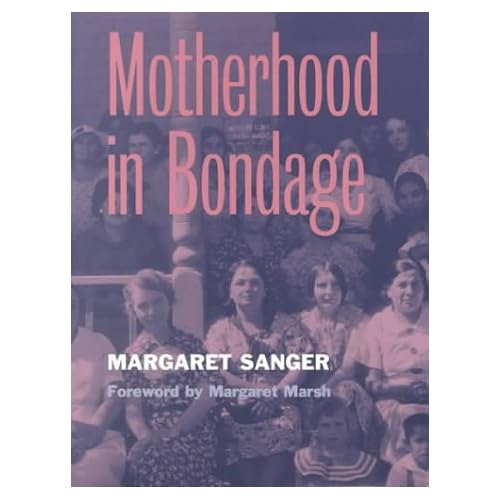
New Book "America and the Pill" Traces the Pill's Influence on Women Wash. Post: In "America and the Pill," Elaine Tyler May traces the pill's influence on women, by Elaine Tyler May:
AMERICA AND THE PILL: A History of Promise, Peril, and Liberation
"I would be perfectly happy if not for the same old thing -- too many babies too close together," wrote a young mother to birth control pioneer Margaret Sanger in a letter Sanger included in her 1928 book "Motherhood in Bondage." Like many women seeking Sanger's advice about contraception, this mother was probably poor, uneducated and, by her own admission, desperate. One pictures her at her kitchen table, pen in hand, a child in each arm and on a knee. "My third baby was born a week after the first one's third birthday," she went on. "Just three babies in three years and I am only twenty-two years old. . . . I am also so nervous sometimes I don't know what to do." . . .
June 1, 2010 in Books, Contraception, Poverty, Women, General | Permalink
TrackBack URL for this entry:http://www.typepad.com/services/trackback/6a00d8341bfae553ef0133ef52bb3e970b
Listed below are links to weblogs that reference New Book "America and the Pill" Traces the Pill's Influence on Women:
May 30, 2010
Get to know the pill
Match the numbered question in pink to its corresponding lettered answer in blue
For the answers, scroll down.
1. True or false: Women who take the pill are more likely to die prematurely.
2. Which of the following items have been used for contraception: a) crocodile dung; b) frankincense oil; c) a lemon; d) sheep intestines; e) all of them.
3. What percent of women ages 15 to 44 currently use the pill a) 19 percent; b) 33 percent; c) 52 percent
4. What percentage of women of childbearing age have ever taken the pill? a) 33 percent; b) 52 percent; c) 80 percent
5. Who coined the phrase "birth control" in 1914?
6. How many children did the average American woman have in 1800?
7. Until recently, which decade did the United States experience its highest rate of childlessness? a) 1900s; b) 1940s; c) 1960s
8. How effective is the pill? a) 50 percent b) 80 percent; c) 92 percent
9. What musician was so thrilled with the invention of the pill that she wrote a song about it in 1975? a) Loretta Lynn; b) Carole King; c) Dolly
10. True or false: In 1960, the pill became available to all women.
11. True or false: The pill can decrease the likelihood that a woman will have a stroke.
12. True or false: Women on the pill have a higher likelihood of developing a sexual dysfunction.
13. What are the two hormones commonly found in the pill?
14. How does the morning-after pill work?
A. False. Less likely to die prematurely
B. E. All have been used for contraception.
C: A. 19 percent
D. C. 80 percent
E. Margaret Sanger
F. Seven
G. A. The 1900s
H. C. 92 percent
I. A. Loretta Lynn
J. False. It was illegal in some states and Planned Parenthood required women to be married.
K. False. There is an increased risk.
L. True.
M. Progestin and Estrogen
N. It contains hormones similar to those in the regular pill but in higher doses.
1. False. Women who take the pill are less likely to die prematurely from any cause, including heart disease and cancer. (1)
2. All have been used for contraception. Ancient Egyptians created a paste from the dung to be used as a vaginal insert; frankincense oil was used as a spermicide, per Aristotle’s suggestion; Casanova used a half a lemon as a cervical cap; Dr. Condom is often credited with creating the first condom, from sheep intestines, for King Charles II of England. (1)
3. A. Nineteen percent of women ages 15 to 44 are currently on the pill. (2)
4. C. Eighty percent of women have taken the pill. (3)
5. Margaret Sanger coined the term. She also founded the Birth Control League in 1942, a group that eventually changed its name to the Planned Parenthood Federation of America (1)
6. The average American woman had seven children in 1800. (3)
7. A. The 1900s, due to a combination of contraception, abortion, not having sex and late or no marriage. (3)
8. C. The pill is 92 percent effective. (1)
9. A. Loretta Lynn’s “The Pill” celebrated the new birth control method. (3)
10. False. After the FDA approved the pill, it was still illegal in some states to prescribe it to single women. Planned Parenthood, too, required that women be married to get the pill. (1)
11. False. The pill increases the likelihood that a woman will have a stroke, although the increase is small in healthy women. It is not recommended that women who have had a stroke, blood clots, a heart attack, vein inflammation and high blood pressure take the pill. (2)
12. True. Thirty-three percent of women studied were at risk for a sexual problem, and 87 percent of those women had used contraception over the last half year. Those in the highest risk group were the women on oral hormonal birth control. (4)
13. The pill includes progestin, which keeps sperm from reaching the egg and keeps a fertilized egg from implanting in the uterus, and estrogen, which keeps the ovaries from releasing eggs. (5)
14. After unprotected sex, a woman takes the “morning-after” pill, which contains hormones similar to those in the regular pill but in higher doses. Because conception rarely occurs immediately after intercourse, there is time for the progestin and estrogen to work. If a pregnancy has already occurred, the morning-after pill will not affect the pregnancy. (5)
Sources: Time (1), Planned Parenthood (2), The Washington Post (3) National Institutes of Health (4) MayoClinic.com (5) взято отсюда
For the answers, scroll down.
1. True or false: Women who take the pill are more likely to die prematurely.
2. Which of the following items have been used for contraception: a) crocodile dung; b) frankincense oil; c) a lemon; d) sheep intestines; e) all of them.
3. What percent of women ages 15 to 44 currently use the pill a) 19 percent; b) 33 percent; c) 52 percent
4. What percentage of women of childbearing age have ever taken the pill? a) 33 percent; b) 52 percent; c) 80 percent
5. Who coined the phrase "birth control" in 1914?
6. How many children did the average American woman have in 1800?
7. Until recently, which decade did the United States experience its highest rate of childlessness? a) 1900s; b) 1940s; c) 1960s
8. How effective is the pill? a) 50 percent b) 80 percent; c) 92 percent
9. What musician was so thrilled with the invention of the pill that she wrote a song about it in 1975? a) Loretta Lynn; b) Carole King; c) Dolly
10. True or false: In 1960, the pill became available to all women.
11. True or false: The pill can decrease the likelihood that a woman will have a stroke.
12. True or false: Women on the pill have a higher likelihood of developing a sexual dysfunction.
13. What are the two hormones commonly found in the pill?
14. How does the morning-after pill work?
A. False. Less likely to die prematurely
B. E. All have been used for contraception.
C: A. 19 percent
D. C. 80 percent
E. Margaret Sanger
F. Seven
G. A. The 1900s
H. C. 92 percent
I. A. Loretta Lynn
J. False. It was illegal in some states and Planned Parenthood required women to be married.
K. False. There is an increased risk.
L. True.
M. Progestin and Estrogen
N. It contains hormones similar to those in the regular pill but in higher doses.
1. False. Women who take the pill are less likely to die prematurely from any cause, including heart disease and cancer. (1)
2. All have been used for contraception. Ancient Egyptians created a paste from the dung to be used as a vaginal insert; frankincense oil was used as a spermicide, per Aristotle’s suggestion; Casanova used a half a lemon as a cervical cap; Dr. Condom is often credited with creating the first condom, from sheep intestines, for King Charles II of England. (1)
3. A. Nineteen percent of women ages 15 to 44 are currently on the pill. (2)
4. C. Eighty percent of women have taken the pill. (3)
5. Margaret Sanger coined the term. She also founded the Birth Control League in 1942, a group that eventually changed its name to the Planned Parenthood Federation of America (1)
6. The average American woman had seven children in 1800. (3)
7. A. The 1900s, due to a combination of contraception, abortion, not having sex and late or no marriage. (3)
8. C. The pill is 92 percent effective. (1)
9. A. Loretta Lynn’s “The Pill” celebrated the new birth control method. (3)
10. False. After the FDA approved the pill, it was still illegal in some states to prescribe it to single women. Planned Parenthood, too, required that women be married to get the pill. (1)
11. False. The pill increases the likelihood that a woman will have a stroke, although the increase is small in healthy women. It is not recommended that women who have had a stroke, blood clots, a heart attack, vein inflammation and high blood pressure take the pill. (2)
12. True. Thirty-three percent of women studied were at risk for a sexual problem, and 87 percent of those women had used contraception over the last half year. Those in the highest risk group were the women on oral hormonal birth control. (4)
13. The pill includes progestin, which keeps sperm from reaching the egg and keeps a fertilized egg from implanting in the uterus, and estrogen, which keeps the ovaries from releasing eggs. (5)
14. After unprotected sex, a woman takes the “morning-after” pill, which contains hormones similar to those in the regular pill but in higher doses. Because conception rarely occurs immediately after intercourse, there is time for the progestin and estrogen to work. If a pregnancy has already occurred, the morning-after pill will not affect the pregnancy. (5)
Sources: Time (1), Planned Parenthood (2), The Washington Post (3) National Institutes of Health (4) MayoClinic.com (5) взято отсюда
Subscribe to:
Posts (Atom)


 Posts
Posts


