из фб:
Anastasia Ovsiannikova 17 mins ·
Поскольку играю в челлендж про 10 фильмов, перебираю в уме всякое выдающееся мировое кино. Боже мой, сколько же секса было в фильмах 70-х! А также прочитала (милостью чудесных Коалы и Лемуры) две книжки Бена Аароновича, так вот, в одной там прямо секс-секс-секс.
К статус-кво привыкаешь и перестаешь обращать внимание, только когда вдруг вот так где-то сталкиваешься и замечаешь как нечто особенное, нечто эдакое, – понимаешь, до какой степени и как быстро человечество перестало трахаться.
мой камент:
время после революции, а потом откат — всегда так
кстати, возраст 1го соития увеличился в тех местах, по коим статистика есть, в РФ, в частноти
но не сильно
Showing posts with label sex education. Show all posts
Showing posts with label sex education. Show all posts
March 11, 2019


October 17, 2018
Putzi Hanfstaengl
He attended Harvard University and became acquainted with Walter Lippmann and John Reed. A gifted pianist, he composed several songs for Harvard's football team. He graduated in 1909.
more here
more here
January 14, 2014
William
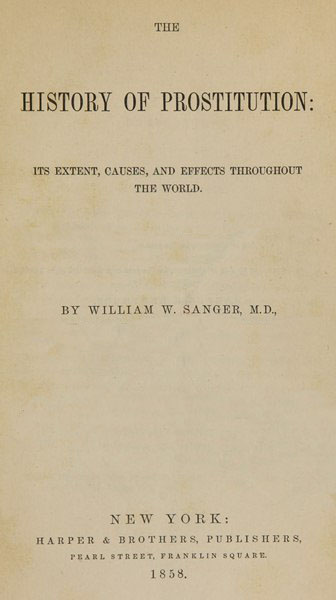
на гутенберговском проекте присутствуют три работы МС, а рядом талмуд Уильяма Сэнгера про историю проституции -- любоптыно, не так ли?

November 9, 2012
Helen Gurley Brown
Though Brown is best known as the editor-in-chief of Cosmopolitan Magazine, it was her first book, Sex and the Single Girl that brought her to the public eye and secured her position at Cosmo. The book was a celebration of a single life in which women enjoyed as much sexual freedom as men did.....
Born in Green Forest, Arkansas, an outpost of the Ozarks, to a “hillbilly” family, Brown remembered her difficult upbringing as she searched for an alternate road; one unlike that of which her parents had experienced. Offering women a different view, and celebrating a lifestyle that didn’t conform to the societal norms for women at the time, was what drove her career....
Helen Gurley Brown’s landmark work Sex and the Single Girl was published in 1962 on the brink of the Sexual Revolution. Featuring the terms “sex” and “single girl,” the title alone was enough to incite collective gasps amongst traditionalists emerging from the sexually suffocating 1950s, a decade dedicated to celebrating the ins-and-outs of housewifery. Sex and the Single Girl offered a new path, one for women who failed to fit into the happily married mold....
What Every Girl Should Know was considered so controversial that the Post Office banned one of the columns since it dealt with venereal diseases. Because the words “gonorrhea” and “syphilis” were included in the article, they violated the Comstock Law of 1873, which outlawed lewd, lascivious, indecent, and obscene publications. Instead of the column, its readers turned to the The Call one Sunday morning, to see the article masthead — “What Every Girl Should Know” and then the words: “NOTHING by order of the Post Office.”..... (как же жывучы идиоты :)
Хелен Гёрли Браун (18 февраля 1922, Гринфорест, Арканзас - 13 августа 2012, Нью-Йорк) — американская писательница и журналистка, феминистка, знаменитый редактор женского журнала Cosmopolitan.
Sanger, “Tell Girls Things they Should Know,” 1916
Born in Green Forest, Arkansas, an outpost of the Ozarks, to a “hillbilly” family, Brown remembered her difficult upbringing as she searched for an alternate road; one unlike that of which her parents had experienced. Offering women a different view, and celebrating a lifestyle that didn’t conform to the societal norms for women at the time, was what drove her career....
Helen Gurley Brown’s landmark work Sex and the Single Girl was published in 1962 on the brink of the Sexual Revolution. Featuring the terms “sex” and “single girl,” the title alone was enough to incite collective gasps amongst traditionalists emerging from the sexually suffocating 1950s, a decade dedicated to celebrating the ins-and-outs of housewifery. Sex and the Single Girl offered a new path, one for women who failed to fit into the happily married mold....
What Every Girl Should Know was considered so controversial that the Post Office banned one of the columns since it dealt with venereal diseases. Because the words “gonorrhea” and “syphilis” were included in the article, they violated the Comstock Law of 1873, which outlawed lewd, lascivious, indecent, and obscene publications. Instead of the column, its readers turned to the The Call one Sunday morning, to see the article masthead — “What Every Girl Should Know” and then the words: “NOTHING by order of the Post Office.”..... (как же жывучы идиоты :)
Хелен Гёрли Браун (18 февраля 1922, Гринфорест, Арканзас - 13 августа 2012, Нью-Йорк) — американская писательница и журналистка, феминистка, знаменитый редактор женского журнала Cosmopolitan.
Sanger, “Tell Girls Things they Should Know,” 1916
June 12, 2011
Why some of America's most prominent minds fell for the wildly eccentric ideas of Wilhelm Reich
By HENRY ALLEN
The spiritual hysteria that Reich inspired in the America of the 1940s and early '50s is as hard to explain now as the madness that 1920s crowds felt hearing Bix Beiderbecke play the cornet, especially when you consider that most Reichians were supposed to be educated skeptics and cultural critics. Even—or especially—intellectuals are not immune to America's chronic and recurring religious revivals in their various forms....
Reich was big, handsome and sexy, with a frenetic innocence about him, along with a martyred air that was emphasized by the stigmata of severe psoriasis. The German accent helped—would any American have paid attention to Freud if he'd been Seth Hawkins from Brattleboro, Vt.? Reich was greeted as a rogue saint by educated progressives who had been inspired to rebel against puritans and Victorians by sexologists such as Havelock Ellis and by birth-control advocate Margaret Sanger.
April 8, 2011
другой путь
BY SUSIE WILSON NEWJERSEYNEWSROOM.COM
SEX MATTERS
 Who was Mary Ware Dennett, and why does Lynn Lederer, the director of professional and community programs at Middlesex County College, call her “a radical sex educator”?
Late last month, while we were still technically celebrating Women’s History Month, Dr. Lederer defended the dissertation she wrote for a doctoral degree in the social and philosophical foundations of education at Rutgers University. Its title: “The Dynamic Side of Life: The Emergence of Mary Coffin Ware Dennett as a Radical Sex Educator.”
I interviewed Dr. Lederer about Dennett, and it convinced me that Dennett deserves more recognition for her contributions to the sex education field. Her beliefs were certainly radical for her time and worthy of the word today.
Mary Ware Dennett (April 4, 1872–July 25, 1947) was raised in Boston and lived most of her life in New York City. Her ancestors included numerous social reformers, and Dennett learned the importance of social equality from them. One of her relatives was Lucretia Coffin Mott, an American Quaker abolitionist, social reformer, and proponent of women’s suffrage.
As a young adult, Dennett became involved in the “arts and crafts movement.” The movement had an anti-modern sentiment, concerned with the economic inequalities that industrialization exaggerated. It advocated “a return to the land” and the simpler things of life. Dennett’s accomplishments included founding the design school at Drexel University in Philadelphia and becoming a founder of the American Civil Liberties Union. According to Dr. Lederer, she was “principled and pragmatic and didn’t care whose feathers she ruffled,” as she became an advocate for sex education, birth control, women’s suffrage, and other causes.
Personal events, family history, and the social and political context of the early twentieth century fostered Dennett’s interest in birth control and sex education. Married to Hartley Dennett, an architect, she suffered “three horrible pregnancies, one of which resulted in the death of the baby.”
Her doctor ordered her not to have any more children, yet he prescribed no method of prevention other than abstinence. Eventually, Dennett divorced her husband, who was having a romantic relationship right under her nose. In the early twentieth century, seeking a divorce was itself somewhat of “a scandal” and required a courageous spirit. Dennett became a single mother, raising two young sons in New York, where she worked for the National American Women’s Suffrage Association (NAWSA).
Questions about sex from her 14-year-old son, Carleton, away at a small New England boarding school, started Dennett down the sex education road. She did not shy away from the questions and began to seek age-appropriate materials for him and her younger, 10-year-old son, Devon. She found most of the materials unsatisfactory and lacking in candor: They did not mention or describe the sex act itself.
Since Dennett believed that “sex is the very greatest physical and emotional pleasure there is in the world,” she confidently undertook the challenge of answering her son’s questions using her own research and discussions with doctors.
The result of her dedication to “truth-telling” was a 16-page manual that she wrote in 1915, The Sex Side of Life, an Explanation for Young People. It covered many topics forthrightly, including the “physiological, scientific, moral, and emotional aspects of sexuality.” Dennett used anatomically accurate words for male and female body parts and included pictures with the parts clearly labeled. She described the actual sex act and encouraged her sons to understand that sex should be for pleasure as well as reproduction. This was radical indeed when placed beside views of the Victorian era, which influenced sexual behavior when Dennett was growing up.
Dennett told her sons that she believed sex was part of a “special relationship” and counseled “against sex without love.” (Critics today might complain that Dennett’s manual did not mention gay and lesbian relationships.) To her credit, she discussed masturbation, although she hinted that her sons should not “do it too much.”
Ironically, given her own personal experience using abstinence as the only form of birth control, there is no mention at all of methods, which must have existed, crude as they might have been. Venereal diseases get only a brief mention.
What makes this manual truly radical is not only the scope of its information for young people, but also its tone. There is hardly a hint of adult or parental control or repression about young people’s sexuality and no emphasis on fear or shame as ways to control behavior. Rather, Dennett emphasizes a humanist, civil libertarian approach that engenders respect for young people’s rights to all the information they need to make a personal decision about sexuality, whether good or bad.
Although some might think these next lines from the manual quaint—even naïve, in today’s sexually saturated culture—they convey its spirit and tone. Dennett wrote to her sons: “When boys and girls get into their ‘teens,’ a side of them begins to wake up which has been asleep, or only partly developed ever since they were born, that is the sex side of them. It is the most wonderful and interesting part of growing up. This waking up is partly of the mind, partly of the body, and partly of the feelings or emotions.”
But her sons, their friends, other parents, and the medical profession itself did not find Dennett’s information and counsel quaint. Her manual created quite a buzz and was copied and passed along from family to family, colleague to colleague, and clergy to clergy. After it was published in its entirety—and received a glowing introduction in the highly regarded The Medical Review of Reviews in 1918—thousands of copies were distributed and sold (at $.25 a copy) to institutions and individuals worldwide. This demand revealed the intense need at the time for honest, medically accurate information about sexuality for young people.
But when sex education is involved, controversy is often not far behind. In 1928, Dennett was arrested for distributing copies of The Sex Side of Life through the U.S. mail and charged with promoting “obscenity” under the repressive Comstock laws. Her arrest became a “cause célèbre.” (The New York Times covered her trial.)
Dennett fought the charges, saying, “Talking about sex is not obscene.” She argued against the prevailing wisdom that talking about sex with young people encourages them to engage in it—an argument some still make today when arguing against comprehensive sex education. Rather, she maintained that sex education “empowers” young people, and every person “must have access to all the knowledge that is available to them” to make their own decisions.
Lederer’s dissertation details that a jury of 12 white men heard the case “and Mrs. Dennett was quickly convicted and fined $300, with a possible jail sentence of one year.” Dennett refused to pay the fine, explaining: “If I have corrupted the youth of America, a year in jail is not enough for me, and I will not pay the fine!” On appeal, the Circuit Court of Appeals set aside the conviction, finding that The Sex Side of Life hardly measured up to the definition of obscenity in the repressive statute.
There is no record that Mary Ware Dennett ever became more involved in sex education after scoring a victory for her manual. However, she was involved in the birth control movement, where she and the far more famous Margaret Sanger chose different paths in their attempts to gain access for women to these lifesaving devices.
Sanger convinced legislators to introduce “The Doctors-Only Bill,” to permit women to obtain birth control devices only from a member of the medical profession. Dennett—believing that women should be free to get birth control devices from multiple sources and that there should not be “a medical monopoly of knowledge and information”— searched for backers of the more liberal, far-seeing legislation known as the “Clean Bill.” Of the two women, Dennett’s approach was far more radical than Sanger’s, although it was the latter’s political effort that prevailed.
I asked Dr. Lederer what Dennett might think of the progress we’ve made to date with sex education in the U.S.
“The issues Dennett fought for 100 years ago are still being fought today, a century later. She would be saddened that we still have not attained her goal that every person has the right to knowledge and information about sexuality,” she said.
For Dr. Lederer, Dennett’s “unequivocal conviction that all members of a truly democratic society have the right to know is still radical today because [it implies that] with knowledge, ordinary people have the ability and the responsibility to chart their own course in life without control from those at the top of the social hierarchy.”
“Dennett was a true humanist, trusting in the ability of ordinary people,” Dr. Lederer added.
Surely, radical Mary Ware Dennett deserves a prominent place in the pantheon of sex education heroines and in women’s history.
SEX MATTERS

Late last month, while we were still technically celebrating Women’s History Month, Dr. Lederer defended the dissertation she wrote for a doctoral degree in the social and philosophical foundations of education at Rutgers University. Its title: “The Dynamic Side of Life: The Emergence of Mary Coffin Ware Dennett as a Radical Sex Educator.”
I interviewed Dr. Lederer about Dennett, and it convinced me that Dennett deserves more recognition for her contributions to the sex education field. Her beliefs were certainly radical for her time and worthy of the word today.
Mary Ware Dennett (April 4, 1872–July 25, 1947) was raised in Boston and lived most of her life in New York City. Her ancestors included numerous social reformers, and Dennett learned the importance of social equality from them. One of her relatives was Lucretia Coffin Mott, an American Quaker abolitionist, social reformer, and proponent of women’s suffrage.
As a young adult, Dennett became involved in the “arts and crafts movement.” The movement had an anti-modern sentiment, concerned with the economic inequalities that industrialization exaggerated. It advocated “a return to the land” and the simpler things of life. Dennett’s accomplishments included founding the design school at Drexel University in Philadelphia and becoming a founder of the American Civil Liberties Union. According to Dr. Lederer, she was “principled and pragmatic and didn’t care whose feathers she ruffled,” as she became an advocate for sex education, birth control, women’s suffrage, and other causes.
Personal events, family history, and the social and political context of the early twentieth century fostered Dennett’s interest in birth control and sex education. Married to Hartley Dennett, an architect, she suffered “three horrible pregnancies, one of which resulted in the death of the baby.”
Her doctor ordered her not to have any more children, yet he prescribed no method of prevention other than abstinence. Eventually, Dennett divorced her husband, who was having a romantic relationship right under her nose. In the early twentieth century, seeking a divorce was itself somewhat of “a scandal” and required a courageous spirit. Dennett became a single mother, raising two young sons in New York, where she worked for the National American Women’s Suffrage Association (NAWSA).
Questions about sex from her 14-year-old son, Carleton, away at a small New England boarding school, started Dennett down the sex education road. She did not shy away from the questions and began to seek age-appropriate materials for him and her younger, 10-year-old son, Devon. She found most of the materials unsatisfactory and lacking in candor: They did not mention or describe the sex act itself.
Since Dennett believed that “sex is the very greatest physical and emotional pleasure there is in the world,” she confidently undertook the challenge of answering her son’s questions using her own research and discussions with doctors.
The result of her dedication to “truth-telling” was a 16-page manual that she wrote in 1915, The Sex Side of Life, an Explanation for Young People. It covered many topics forthrightly, including the “physiological, scientific, moral, and emotional aspects of sexuality.” Dennett used anatomically accurate words for male and female body parts and included pictures with the parts clearly labeled. She described the actual sex act and encouraged her sons to understand that sex should be for pleasure as well as reproduction. This was radical indeed when placed beside views of the Victorian era, which influenced sexual behavior when Dennett was growing up.
Dennett told her sons that she believed sex was part of a “special relationship” and counseled “against sex without love.” (Critics today might complain that Dennett’s manual did not mention gay and lesbian relationships.) To her credit, she discussed masturbation, although she hinted that her sons should not “do it too much.”
Ironically, given her own personal experience using abstinence as the only form of birth control, there is no mention at all of methods, which must have existed, crude as they might have been. Venereal diseases get only a brief mention.
What makes this manual truly radical is not only the scope of its information for young people, but also its tone. There is hardly a hint of adult or parental control or repression about young people’s sexuality and no emphasis on fear or shame as ways to control behavior. Rather, Dennett emphasizes a humanist, civil libertarian approach that engenders respect for young people’s rights to all the information they need to make a personal decision about sexuality, whether good or bad.
Although some might think these next lines from the manual quaint—even naïve, in today’s sexually saturated culture—they convey its spirit and tone. Dennett wrote to her sons: “When boys and girls get into their ‘teens,’ a side of them begins to wake up which has been asleep, or only partly developed ever since they were born, that is the sex side of them. It is the most wonderful and interesting part of growing up. This waking up is partly of the mind, partly of the body, and partly of the feelings or emotions.”
But her sons, their friends, other parents, and the medical profession itself did not find Dennett’s information and counsel quaint. Her manual created quite a buzz and was copied and passed along from family to family, colleague to colleague, and clergy to clergy. After it was published in its entirety—and received a glowing introduction in the highly regarded The Medical Review of Reviews in 1918—thousands of copies were distributed and sold (at $.25 a copy) to institutions and individuals worldwide. This demand revealed the intense need at the time for honest, medically accurate information about sexuality for young people.
But when sex education is involved, controversy is often not far behind. In 1928, Dennett was arrested for distributing copies of The Sex Side of Life through the U.S. mail and charged with promoting “obscenity” under the repressive Comstock laws. Her arrest became a “cause célèbre.” (The New York Times covered her trial.)
Dennett fought the charges, saying, “Talking about sex is not obscene.” She argued against the prevailing wisdom that talking about sex with young people encourages them to engage in it—an argument some still make today when arguing against comprehensive sex education. Rather, she maintained that sex education “empowers” young people, and every person “must have access to all the knowledge that is available to them” to make their own decisions.
Lederer’s dissertation details that a jury of 12 white men heard the case “and Mrs. Dennett was quickly convicted and fined $300, with a possible jail sentence of one year.” Dennett refused to pay the fine, explaining: “If I have corrupted the youth of America, a year in jail is not enough for me, and I will not pay the fine!” On appeal, the Circuit Court of Appeals set aside the conviction, finding that The Sex Side of Life hardly measured up to the definition of obscenity in the repressive statute.
There is no record that Mary Ware Dennett ever became more involved in sex education after scoring a victory for her manual. However, she was involved in the birth control movement, where she and the far more famous Margaret Sanger chose different paths in their attempts to gain access for women to these lifesaving devices.
Sanger convinced legislators to introduce “The Doctors-Only Bill,” to permit women to obtain birth control devices only from a member of the medical profession. Dennett—believing that women should be free to get birth control devices from multiple sources and that there should not be “a medical monopoly of knowledge and information”— searched for backers of the more liberal, far-seeing legislation known as the “Clean Bill.” Of the two women, Dennett’s approach was far more radical than Sanger’s, although it was the latter’s political effort that prevailed.
I asked Dr. Lederer what Dennett might think of the progress we’ve made to date with sex education in the U.S.
“The issues Dennett fought for 100 years ago are still being fought today, a century later. She would be saddened that we still have not attained her goal that every person has the right to knowledge and information about sexuality,” she said.
For Dr. Lederer, Dennett’s “unequivocal conviction that all members of a truly democratic society have the right to know is still radical today because [it implies that] with knowledge, ordinary people have the ability and the responsibility to chart their own course in life without control from those at the top of the social hierarchy.”
“Dennett was a true humanist, trusting in the ability of ordinary people,” Dr. Lederer added.
Surely, radical Mary Ware Dennett deserves a prominent place in the pantheon of sex education heroines and in women’s history.
Subscribe to:
Posts (Atom)


 Posts
Posts


